
A suave and sobre politician, Inder Kumar Gujral belonged to that genre of intellectuals who made a mark in the country's foreign policy and a slice of luck catapulted him to the prime minister's office, though briefly.
As India faces increasing dissonance and even hostility from its neighbours, there is increasing recognition that only government efforts are far from adequate. Assertive people-to-people contacts are essential to supplement and even supplant government efforts to normalise some inter-state relations, says Nilova Roy Chaudhury.

'6 shooters went to kill Dawood in Pakistan.'

Experts tell Carnegie Endowment for International Peace that a Modi government may be Asia oriented, but the US will remain a deep influence. Aziz Haniffa reports

Historian Stanley Wolpert, author of several books on India, passed into the ages recently. We remember Professor Wolpert with Rajeev Srinivasan's March 1997 interview published on the occasion of his controversial book on Jawaharlal Nehru.

'Pakistan's negativism should be seen as the reason for India losing interest in SAARC.'
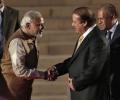
'India had nothing to gain by the talks except for some brownie points from the US for being reasonable. Pakistan desperately needed the talks to get arms and money from the Americans,' says T P Sreenivasan.
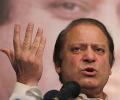
The biggest success of Nawaz Sharif's visit to India is that it will lessen mistrust between the two countries, writes Amir Mateen from Islamabad.

'How do we explain that on the economic, internal security and strategic fronts, India's unstable coalitions have acted more decisively and boldly than all our full-majority governments yet?' asks Shekhar Gupta.

'Until India fully absorbs the fundamentals of international relations, it will continue to get evil for good,' says Brahma Chellaney.
