
Leading stock exchange NSE on Tuesday reported a 94 per cent year-on-year surge in consolidated profit after tax to Rs 3,834 crore for three months ended December 2024. It posted a Profit After Tax (PAT) of Rs 1,975 crore in the year-ago period.

'From the tiniest to mid-level organisations and even some at the lower end of the large-scale ones would say that computerisation and the extensive documentation and regulatory requirements for GST have made the compliance process worse in many cases.'
The collections from Goods and Services Tax (GST) grew by 15 per cent to over Rs 1.49 lakh crore in December 2022, indicating improved manufacturing output and consumption demand, besides better compliance. This is the 10th month in a row that the revenues have remained above the Rs 1.4 lakh crore mark. The collection in November was about Rs 1.46 lakh crore. "The gross GST revenue collected during December 2022 is Rs 1,49,507 crore, of which CGST is Rs 26,711 crore, SGST is Rs 33,357 crore, IGST is Rs 78,434 crore (including Rs 40,263 crore collected on import of goods) and cess is Rs 11,005 crore (including Rs 850 crore collected on import of goods)," the ministry said in a statement.

GST revenue for May stood at nearly Rs 1.41 lakh crore, a 44 per cent increase over the same month last year, the finance ministry said on Wednesday. Bucking the month-on-month increasing trend of the last two months, the Goods and Services Tax (GST) revenues came in lower than the record high collection in April at Rs 1.68 lakh crore. In March GST revenues were at Rs 1.42 lakh crore, while in February it was Rs 1.33 lakh crore.
GST collections in June witnessed a 56 per cent year-on-year increase to over Rs 1.44 lakh crore on economic recovery and better anti-evasion measures, the finance ministry said on Friday. Goods and Services Tax (GST) collections in June, 2021 stood at Rs 92,800 crore. Speaking at the GST Day celebrations, Finance Minister Nirmala Sitharaman said Rs 1.4 lakh crore is the "rough bottom line" for monthly GST revenue collections.

There are challenges galore before him, and it is not going to be easy. In the next four years, he has to conjure a system that changes the optics about him and the BJP both nationally and internationally so that he can ride back on his own, claim the top slot, and not have to lean on a coalition, asserts Ramesh Menon as Modi 3.0 completes a year in power.
The government on Tuesday informed Rajya Sabha that GST compensation of Rs 17,176 crore is pending to states as on June 2022. Replying to supplementaries during the Question Hour, Minister of State for Finance Pankaj Chaudhary said the Centre is giving GST compensation to states for five years. He said even during Covid times when no GST was collected, the Government of India had given compensation to states after taking loans of Rs 1.1 lakh crore and 1.59 lakh crore during 2020-21 and 2021-22.
All GST anti-profiteering complaints would be dealt with by the Competition Commission of India (CCI) from December 1 as the extended tenure of National Anti-profiteering Authority ends this month, an official said on Tuesday. A notification in this regard is expected to be issued by the finance ministry later this month, the official added. The National Anti-profiteering Authority (NAA) was set up in November 2017 under Section 171A of Goods and Services Tax (GST) law to check unfair profiteering activities by registered suppliers.

It will also be new Revenue Secretary Sanjay Malhotra's first GST Council meeting. He will take charge after the incumbent Tarun Bajaj retires on November 30.

The GST Council on Tuesday approved changes in tax rates on some goods and services while allowing states to issue an e-way bill for intra-state movement of gold and precious stones, officials said. The Council, chaired by Finance Minister Nirmala Sitharaman and comprising state counterparts, also cleared a host of compliance procedures for GST-registered businesses along with a GoM report on high-risk tax payers to check evasion. The discussion on the crucial issues of extension of compensation to states beyond June 2022 and the imposition of 28 per cent GST on casinos, online gaming and horse racing, will take place on Wednesday.

The finance ministry has said that the Goods and Services Tax will not apply on room rents of 'sarais' (inns) or properties managed by religious and charitable institutions. The clarification was issued by the Central Board of Indirect Taxes and Customs (CBIC) on Thursday evening to clear the confusion with regard to the levy of GST on room rents. This clarification by the Finance Ministry came following a demand from various quarters including AAP MP Raghav Chadha that the GST on rooms rented by religious institutions be withdrawn.

In a development that may encourage increased investment in commercial real estate, the Supreme Court on Thursday gave the industry relief by permitting input tax credit (ITC) on construction expenses for buildings meant to be leased. "If the construction of a building was essential for carrying out the activity of supplying services, such as renting or giving on lease or other transactions in respect of the building or a part thereof, which are covered by clauses (2) and (5) of Schedule II of the CGST (Central Goods and Services Tax) Act, the building could be held to be a plant," said Justice Abhay S Oka and Justice Sanjay Karol.

The 47th GST Council meeting that is currently underway is slated to discuss a host of issues, including a mechanism for compensating states for revenue loss, tax rate tweaks in some items and relaxed registration norms for small online suppliers. Further, the meeting of the Council, chaired by the Union Finance Minister Nirmala Sitharaman and comprising state counterparts, will also clear levying the highest tax of 28 per cent on online games, casinos and horse racing, besides, measures to curb tax evasion, especially devising ways to tackle high-risk taxpayers in GST. "The meeting is being chaired by Hon'ble Union Minister of Finance @nsitharaman and many important decisions are expected to be taken at the meet," PIB Chandigarh tweeted.
Agra has long been known for the Taj Mahal, but it is also a manufacturing hub filled with micro, small and medium enterprises (MSMEs) that make everything from electronic components to metal products, from paints and chemicals to footwear. And five years after the introduction of the Goods and Services Tax (GST), the MSMEs here complain that while the indirect tax regime has been transformative, cutting out the need to file multiple taxes, its biggest drawback has been the delay in credit refunds. Whoever you speak to - MSME owners, tax lawyers, or industry bodies like the National Chambers of Industries and Commerce (NCIC), Agra Footwear Manufacturers and Exporters Chamber (AFMEC) and Agra Shoe Manufacturers Association (ASMA) - they all emphasise that the GST continues to face some key challenges.

As the Union Budget 2025-2026 (FY26) inches closer, the Indian real estate industry is seeking stamp duty cuts, revised home loan limits and updated affordable housing norms through Pradhan Mantri Awas Yojna (PMAY), single-window clearance and eco-friendly policies, among others. Industry leaders and consultancy firms, including Anarock, Raheja, Gaurs, Kanodia Group, Reach, Urban Space, Justo and Eros Group, have shared their expectations.

Some of his directives had the Supreme Court judges disclose their assets whereas the row over the discovery of cash from a sitting judge's official residence paved way for inquiry.

Businesses across the country may soon be required to issue electronic invoices, or e-invoices, directly to consumers for the sale of goods and services. The Goods and Services Tax (GST) Council, in its forthcoming meeting on Monday, is expected to discuss extending the e-invoicing mandate to cover business-to-consumer (B2C) transactions. Currently, e-invoicing is compulsory for businesses with a turnover of Rs 5 crore and above, but only for their business-to-business (B2B) transactions.
As taxpayers face technical glitch on the GST portal, the government on Tuesday said it is considering extending the April tax payment deadline and has directed Infosys for early resolution of the problem. The Central Board of Indirect Taxes and Customs (CBIC) said a technical glitch has been reported by Infosys in generation of April 2022 GSTR-2B and auto-population of GSTR-3B on portal. "Infosys has been directed by Govt for early resolution. Technical team is working to provide GSTR-2B & correct auto-populated GSTR-3B at the earliest," the CBIC tweeted.

Ask rediffGURU and PF expert Nitin Narkhede your mutual fund and personal finance-related questions.

In a first, the Reserve Bank of India (RBI) has announced that it will conduct daily variable rate repo (VRR) auctions on all working days in Mumbai, until further notice. The daily auctions, aimed at easing the current liquidity tightness in the banking system, will begin on Friday, with a notified amount of Rs 50,000 crore.

The Enforcement Directorate (ED) has uncovered "multiple irregularities" in the operations of TASMAC, the state-run monopoly controlling liquor trade in Tamil Nadu. The agency found evidence of "manipulation" in tender processes and "unaccounted" cash transactions worth Rs 1,000 crore through distillery companies. The ED alleges that these irregularities involved "kickbacks" to secure increased supply orders from TASMAC and systematic inflation of expenses by distillery companies to siphon off unaccounted cash.
Some states are taking a legal view on the state GST rate and the compensation rules ahead of the Goods and Services Tax (GST) Council meeting, which is likely to be held in mid-June, said people in the know. While the agenda is still being finalised, several states are likely to take up the matter related to GST compensation and may pitch for its continuation beyond the June 30 deadline. States would like to know how they would divide the compensation collected after June 2022 for payment of principal and interest of compensation shortfall borrowing and arrears to states, sources said.

For every rupee in the government coffer, the biggest pie of 66 paise will come from direct and indirect taxes, according to the Union Budget 2025-26 documents. Around 24 paise will come from borrowings and other liabilities, 9 paise from non-tax revenue like divestment, and 1 paise from non-debt capital receipts, the Budget documents said.
The GST Council in its meeting next week is likely to consider a proposal for making changes in the monthly tax payment form -- GSTR-3B, which would include auto-population of outward supplies from sales return and non-editable tax payment table, officials said. The move would help curb the menace of fake billing, whereby sellers would show higher sales in GSTR-1 to enable purchasers to claim input tax credit (ITC), but report suppressed sales in GSTR-3B to lower GST liability. Currently, GSTR-3B of a taxpayer includes auto drafted input tax credit (ITC) statements based on inward and outward B2B supplies and also red flags any mismatch between GSTR-1 and 3B.
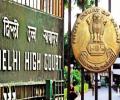
The Supreme Court collegium has initiated an initial inquiry against Delhi High Court judge Justice Yashwant Varma following the alleged discovery of a large stash of cash at his official residence during a fire incident. The collegium has also reportedly recommended Justice Varma's transfer to his parent high court, the Allahabad High Court. The inquiry will involve seeking a report from the Chief Justice of the Delhi High Court on the incident. The controversy surrounding the alleged discovery of cash was first reported by The Times of India. Justice Varma's proposed transfer is subject to the Centre's approval. The amount of cash found is not yet known. Justice Varma, currently heading a division bench dealing with sales tax, GST, company appeals and other appeals, did not hold court on Friday. Delhi High Court Chief Justice D K Upadhyaya expressed shock over the incident. The collegium reportedly received information about the cash discovery from government officials. Some collegium members have called for stricter action against Justice Varma, including seeking his resignation or launching an in-house inquiry. The Supreme Court has an in-house inquiry mechanism to deal with allegations against judges, which involves forming a committee to investigate and, based on the report, take further action. A judge of a constitutional court can only be removed through impeachment by Parliament.

About a dozen states cutting across party lines on Wednesday pitched for extending the mechanism to compensate states for revenue lost from the implementation of GST beyond June 30, but no decision was taken. Briefing reporters about deliberations at the two-day meeting of the GST Council in Chandigarh, Union Finance Minister Nirmala Sitharaman said finance and other ministers of 16 states spoke on the compensation issue. Of the 16 states, 3-4 spoke of evolving their own revenue stream to break from the compensation mechanism, she said.

Other decisions piled up include rationalisation of GST rate slabs, correction of inverted duty on certain items and inclusion of petroleum products.

Total number of GSTR-3B returns filed up to January 30, 2022 is 1.05 crore that includes 36 lakh quarterly returns, the finance ministry said. January is the fourth straight month when Goods and Services Tax collection has crossed Rs 1.30 lakh crore.

The Director General of Goods and Services Tax Intelligence (DGGI) has slapped its heftiest tax notice of Rs 21,000 crore on Bengaluru-based Gameskraft Technology (GTPL) for allegedly evading GST on the betting amount. Gameskraft has dubbed the notice a "departure from the well-established law of the land". The company is accused of promoting online betting through card, casual and fantasy games like Rummy Culture, Gamezy and Rummy Time.

The Indian insurance industry is set to focus on customer-centric technological adoption and expansion into rural areas to drive growth in 2025.
GST collections rose 28 per cent to Rs 1.49 lakh crore on an annual basis in July on the back of economic recovery and measures taken to curb tax evasion, the government said on Monday. In July, 2021, Goods and Services Tax (GST) collections stood at Rs 116,393 crore. The collections in July this year is the second highest since the introduction of GST in July 2017, the ministry said in a statement.

Bringing petrol, diesel and other petroleum products under the single nation-wide GST regime will reduce taxes on these products and increase the revenue of both the Centre and states, Union Minister Nitin Gadkari said on Wednesday. Finance Minister Nirmala Sitharaman will definitely try to bring petrol and diesel under GST if she gets the support of the state governments, said Gadkari while addressing the Times Now Summit virtually. "In the GST Council, finance ministers of states are also members.

A 5 per cent GST rate kicked in on Monday on pre-packed and labelled food items such as cereals, pulses and flour weighing less than 25 kg.

The Supreme Court on Thursday ruled that the Goods and Service Tax (GST) Council's recommendations are not binding on Union and State but have a persuasive value as the country has a cooperative federal structure.

Deciding the goods and services tax rate on fryums papad could be a messy affair with the Appellate Authority for Advance Rulings (AAAR) of Gujarat now ruling that the ready-to-eat product would draw 18 per cent rate. In that connection, it slightly modified the ruling of the state-based Authority for Advance Rulings (AAR). The AAR had also ordered that these products would draw 18 per cent GST but under a different classification.

Hero MotoCorp anticipates a big rebound in two-wheeler (2W) sales in rural India over the next four to eight quarters, driven by favourable factors such as a decent monsoon, rising crop prices, improved employment conditions, and increasing consumer confidence, its chief executive officer (CEO) Niranjan Gupta said on Wednesday. Amid tepid rural sales, he stated that there is a "strong case" for GST (goods and services tax) on entry-level two-wheelers, which are under 125 CC, to be moved down from 28 per cent to 18 per cent as they are used by "masses".
The GST Council might on Friday consider taxing petrol, diesel and other petroleum products under the single national GST regime, a move that may require huge compromises by both central and state governments on the revenues they collect from taxing these products. The Council, which comprises central and state finance ministers, in its meeting scheduled in Lucknow on Friday, is also likely to consider extending the time for duty relief on COVID-19 essentials, according to sources in the know of the development. GST is being thought to be a solution for the problem of near-record high petrol and diesel rates in the country, as it would end the cascading effect of tax on tax (state VAT being levied not just on the cost of production but also on the excise duty charged by the Centre on such output).

Finance ministers of states demanded an increase in allocation under 50-year interest-free loan scheme, while fiscally stressed states like Punjab and Kerala pitched for a special package and borrowing flexibility, sources said on Friday. In a pre-budget meeting with Union Finance Minister Nirmala Sitharaman, states have also urged for higher borrowing limits to support fiscal activities, besides additional funds for Jal Jeevan Mission.

As the Indian stock markets tumble under the panic set off by US President Donald Trump's tariff tantrums, three market experts weigh in on the reasons behind this fall, how much pain is left and how should investors adapt their strategies to invest in markets.
The bank made a Rs 67 crore net profit, up 21% from the previous year. Its deposits grew 8%, the loan book 10%. Net bad loans dropped from 7.53% to 6.07%. So why was the banker, who headed the bank, not promoted?
