Any judgement on whether the March numbers reflect sustainable growth in GST collection should ideally await the numbers that will be out in May, points out A K Bhattacharya.

As per the ED, a website was engaged in unauthorised online betting in various sports including tennis, cricket, soccer, basketball, badminton and boxing, and live-streamed Indian Premier League matches without any permission.
India's opposition parties have sharply criticized the Union Budget, calling it inadequate to address the country's economic woes and accusing the BJP-led government of using it to woo voters in Bihar and Delhi ahead of upcoming elections. Leaders from the Congress, TMC, DMK, SP, and CPI(M) voiced their disapproval, highlighting concerns over inflation, unemployment, and the lack of substantial measures to support the agricultural sector and the poor. They also criticized the tax cuts for the middle class as insufficient and coming too late after years of high taxes and rising prices.
By democratising access to finance, empowering women and marginalised groups, and adapting to India's diverse regional landscapes, PMMY has helped fortify the country's grassroots growth engines, says Chief Economic Advisor to the Government of India, V Anantha Nageswaran.
If other states follow suit, it is going to become difficult for the GST Council to decide on the next stage of reforms.

Sri Annapoorna Hotel on Saturday appealed to the people to put to rest unnecessary assumptions and political misunderstanding after a video of its owner apologising to Union Finance Minister Nirmala Sitharaman over his remarks on Goods and Services Tax (GST) went viral on September 13.

Although the June collections were higher than that in July, however, it is important to note that during the previous month, a large number of taxpayers also paid taxes pertaining to February, March and April 2020 on account of the relief provided due to COVID-19.


The GoM is likely to submit an interim report to the Council on pruning the list of items that at present do not attract the levy.
Bharatiya Janata Party on Thursday issued a three-line whip to all of its Lok Sabha MPs asking them to be present in the House for the passing of the Union Budget 2025-26.
President Trump with his MAWA has unwittingly provided us this opportunity. Will PM Modi grasp this and leave a legacy of an ushered in scientific and technological revolution in India, asks Colonel Anil A Athale (retd).

From 30 Sensex shares, Bajaj Finserv jumped nearly 8 per cent while Bajaj Finance soared over 6 per cent. Maruti, Titan, Mahindra, Mahindra & Mahindra, Infosys, HCL Tech, Zomato, UltraTech Cement and Kotak Mahindra Bank were the other major gainers. Sun Pharma emerged as the only laggard.

A heated debate erupted in the Rajya Sabha over the ongoing strike by ASHA workers in Kerala, with Congress and CPI(M) MPs trading accusations over responsibility for addressing their demands for a higher honorarium and post-retirement benefits. Congress MP Jebi Mather alleged that both the Kerala government and the Union government had ignored the workers' pleas, while CPI(M) MP John Brittas countered by claiming Kerala provides the highest honorarium to ASHA workers. The debate also saw demands for an AIIMS in Kerala and a hike in MBBS seats, as well as concerns over maternal health, elderly care, and mental health in India.
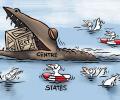
Domestic traders body CAIT on Thursday said that much against the declared spirit of GST as good and simple tax, it has become a "colonial taxation system" not compatible with the ground realities of business in India. Various amendments and introduction of rules under GST in the recent past have made the tax systems system much more complicated and put much compliance burden on the traders, it said in a statement. The Confederation of All India Traders (CAIT) added that it is not alone the centre but largely the state governments are more responsible for distorting the GST taxation system and bringing disparities and anomalies in it which has made it a more complex system and a "big headache" for the traders.
Finance Minister Nirmala Sitharaman on Thursday said taxpayer base has almost doubled to 1.28 crore in four years of rollout of the historic tax reform and the enhanced GST mop up in the recent months should now be the "new normal". In a written message to tax officers on the fourth anniversary of GST rollout, she said implementing any reform of this scale in a large and diverse country like India can be highly challenging, but GST has brought about ease in taxpayer compliance and reduced common man's tax burden.

Goods from sectors, including agriculture, precious stones, chemicals, pharma, medical devices, electricals, and machinery may get impacted if the US will go ahead with imposing reciprocal tariffs on Indian products, according to experts. They said that these sectors could face additional customs duties from the Trump administration because of the high tariff differential or gap, which is the difference between the import duties imposed by the US and India on a product.

The gross GST revenue collected in the month of December 2021 is Rs 1,29,780 crore of which CGST is Rs 22,578 crore, SGST is Rs 28,658 crore, IGST is Rs 69,155 crore (including Rs 37,527 crore collected on import of goods) and cess is Rs 9,389 crore (including Rs 614 crore collected on import of goods), informed the ministry of finance on Saturday. The government has settled Rs 25,568 crore to CGST and Rs 21,102 crore to SGST from IGST as regular settlement. The total revenue of the Centre and the states in the month of December 2021 after settlements is Rs 48,146 crore for CGST and Rs 49,760 crore for the SGST.
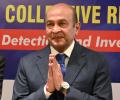
The Supreme Court addressed concerns about misinformation spreading related to an incident involving Delhi High Court judge Justice Yashwant Varma. The court clarified that the proposal to transfer Justice Varma to Allahabad High Court was independent of an internal investigation into the discovery of a large sum of cash at his residence following a fire. The Delhi High Court Chief Justice is conducting the investigation and will submit a report to the Chief Justice of India today.

Come January and the government is empowered to send its recovery officials to your premises to collect GST without notice, if your tax liability shown in the requisite form is less than what invoices, mentioned in the outward supply form, should draw. The relevant provision in the Finance Act, 2021, will come into effect from January 1, 2022, according to a gazette notification issued on Tuesday. Under the GST system, there are two kinds of returns that a company is required to file monthly if its turnover is over Rs 5 crore annually. These are form GSTR-1 and GSTR-3B.

The Gujarat High Court dismissed a plea filed by journalist Mahesh Langa seeking the quashing of an FIR registered against him for allegedly stealing "highly sensitive and confidential documents" belonging to the Gujarat Maritime Board (GMB). The court found that prima facie, Langa's involvement in the crime was evident from the evidence collected during the investigation. The court further stated that the investigation is at a nascent stage and it would be inappropriate to exercise its inherent powers in favor of the petitioner at this stage.

The AAP chief stressed the need for an increase in healthcare spending, suggesting a rise to 10 percent of the GDP, along with the removal of taxes on health insurance premiums.

Ask rediffGURU and PF expert Milind Vadjikar your insurance, stocks, mutual fund and personal finance-related questions.

The time is ideal for a 'Dream Budget' akin to the 1991 reforms that sparked high growth and unlocked significant gains in productivity, points out Rajeswari Sengupta.

Actor Vijay, founder of the Tamizhaga Vettri Kazhagam (TVK) party, has declared that his party will challenge the ruling DMK in the 2026 Tamil Nadu Assembly elections. In a general council meeting, Vijay criticized the DMK's dynasty politics, their handling of law and order, and women's safety. He also targeted the BJP-led central government over issues like the Waqf Bill, delimitation, and the three-language policy. Vijay promised his party's support to working classes, government employees, and vowed to oppose projects harmful to natural resources and agriculture. He assured 100% safety for women and strict law and order if TVK forms the government. The party passed resolutions opposing the Waqf Bill, delimitation, and the three-language policy, and also voiced support for the two-language policy, finding a permanent solution for fishermen's issues, and opposing the Parandur airport project.

P K Mishra, a retired IAS officer of the Gujarat cadre, is currently serving as the principal secretary to the prime minister.

Pulse oximeters, hand sanitisers, temperature check equipment and ambulances too will attract lower 5 per cent tax.
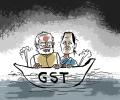
CAG recommended fixing a definite time frame for rolling out simplified GST return forms.

Goods and Services Tax (GST) collections at Rs 95,480 crore in September touched the highest level so far this fiscal, the finance ministry said on Thursday.

Charitable trusts are liable to pay 18 per cent GST on grants and non-philanthropic donations received by them, the Maharashtra AAR has ruled. Jayshankar Gramin Va Adivasi Vikas Sanstha Sangamner, a Charitable trust registered under Maharashtra Public Charitable Trust Act 1950, had approached the Maharashtra bench of the Authority for Advance Ruling (AAR), seeking clarity on whether it is liable to pay GST on the amounts received in the form of donations/grants from various entities, including the central and state governments. The trust is also registered under the I-T Act as a charitable trust.
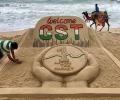
The finance ministry has set up two committees of state finance ministers which would rework rate slabs, review GST exempt items and identify potential evasion sources. Four years after the roll out of the national Goods and Services Tax (GST), which replaced the complex indirect tax structure, the centre and states have started work on moving towards a "simpler rate structure in GST" by reviewing the current rate slabs, including special rates and merger of rate slabs. The Group of Ministers (GoM) on rate rationalisation would also review items under inverted duty structure to help minimise refund payout, and review the supply of goods and services exempt under GST with an objective to expand the tax base and eliminate breaking of input tax credit (ITC) chain.

As auto major Mahindra & Mahindra (M&M) became the number two player in the retail passenger vehicle segment for the first time in February, powered by its new launches, the company is setting its sights on technology upgrades.
GST collections in February grew 18 per cent to over Rs 1.33 lakh crore in February even as the Omicron wave dented the month-on-month collection momentum. This is for the fifth time in the current fiscal that the Goods and Services Tax (GST) collection has crossed Rs 1.30 lakh crore mark. Also, this is the first time, cess collection has crossed the Rs 10,000 crore mark, signifying recovery in certain key sectors, especially automobile sales, the finance ministry said on Tuesday.

High frequency indicators, like vehicles sales, air traffic, steel consumption and GST E-way bills, point towards a sequential pickup in momentum of economic activity during the second half of the fiscal 2024-25 and sustain moving forward, RBI Bulletin said on Wednesday. However, a strong dollar, driven by US economic resilience and trade policy pivots, could exacerbate capital outflows from emerging economies, push risk premiums higher, and intensify external vulnerabilities, said an article on 'State of the Economy' published in RBI's February bulletin.

'Perhaps GST was too complex a system for the Indian economy at its present stage of development,' argues T N Ninan.

Finance ministry sources have countered CAG audit finding of central government wrongly retaining Rs 47,272 crore of GST compensation cess meant for states, saying temporary retention cannot be termed as diversion.
GST collections touched a record of Rs 1.40 lakh crore in January on rapid economic recovery, Finance Minister Nirmala Sitharaman said on Tuesday. In her 2022-23 Budget speech, the minister said there has been a remarkable progress made in the Goods and Services Tax (GST) regime, but still a few challenges remain. "Gross GST collection in January at record Rs 1,40,986 crores; this has been possible due to rapid economic recovery," she said while presenting the Budget in the Lok Sabha. January is the seventh straight month when the GST collection has crossed the Rs 1 lakh crore mark.
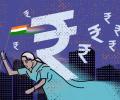
Ask tax gurus Mihir Tanna, Samkit Maniar, Vivek Lala, Anil Rego, T S Khurana and Mahesh Padmanabhan your Budget-related tax questions

While liquidity in the banking system has turned surplus in the last few weeks, it could go back to deficit again, mainly due to corporate advance tax outflows. The net liquidity surplus of the banking system rose to touch Rs 1 trillion on Tuesday on the back of government spending, according to the data released by the Reserve Bank of India.
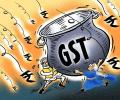
With Goods and Services Tax (GST) officers under pressure to exceed the Rs 1-trillion collection mark per month, industry has faced a barrage of recovery notices and summons issued over the last one month across sectors, according to company executives. Industry bodies have claimed harassment by field officers, blocking of input tax credit, cancellation of GST registration, threats of arrest and steep penalties, impacting their working capital and operations. Company executives pointed at an atmosphere of apprehension and fear due to such notices and summons.
With most states on board to raise revenue so that they do not have to depend on Centre for compensation, the GST Council at its meeting next month is likely to consider a proposal to do away with the 5 per cent slab by moving some goods of mass consumption to 3 per cent and the remaining to 8 per cent categories, sources said. Currently, GST is a four-tier structure of 5, 12, 18 and 28 per cent. Besides, gold and gold jewellery attract 3 per cent tax. In addition, there is an exempt list of items like unbranded and unpacked food items which do not attract the levy.
