
Chaudhary also said that 66 per cent of government-sponsored health insurance schemes in the country are being run by the central government. "When the COVID-19 pandemic started, a decision was made for sale of all medicines at the GST rate between 5 and 12 per cent and the GST rate for COVID-19 related medicines and instruments has been reduced to five per cent," he said during the Question Hour.

Finance Minister Nirmala Sitharaman will present her 8th straight Budget and all eyes will be on the much-expected tax relief for the middle class. Sitharaman had in her first Budget in 2019 replaced the leather briefcase -- which had been in use for decades for carrying Budget documents -- with a traditional 'bahi-khata' wrapped in red cloth.
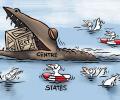
Union Finance Minister Nirmala Sitharaman on Monday said GST compensation to some states is delayed due to non-availability of AG's authenticated certificate, and that Kerala has not sent even a single such certificate since 2017-18. Replying to a supplementary question, she also said that Rs 86,912 crore has been released for the Goods and Services Tax (GST) compensation payable to all states up to May 31, 2022. She said as per law, GST Council decides to whom the GST compensation is to be released, not by the central government.

The domestic stock market this week would monitor the geopolitical developments after India and Pakistan reached an understanding to stop military actions, analysts said. Moreover, macroeconomic data announcements, Q4 earnings, trading activity of foreign investors and global market trends are also likely to influence sentiments, traders said.

In 2025 alone, at least 50 suicides linked to online gambling losses have been reported across India. According to FIRs, the victims were addicted to betting, largely driven by cricket, rummy and poker.

Jailed journalist Mahesh Langa, already facing multiple charges, has been booked in a fresh case for allegedly extorting Rs 40 lakh from a real estate agent by threatening to malign his image and implicate him in a false case. This is the fifth FIR registered against him since his arrest in October 2023 for an alleged Goods and Services Tax (GST) scam. The latest case was registered based on a complaint by Janak Thakor, a real estate agent, who alleged that Langa threatened to write negative articles about him and trap him in a false case unless he paid the money. Langa has been in jail since his arrest in October and is facing charges in four previous cases registered by Ahmedabad, Gandhinagar, and Rajkot police.

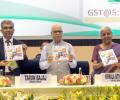
The government intends to continue with the top GST slab of 28 per cent for luxury and sin goods, but is open to discuss narrowing down the three slabs of 5, 12 and 18 per cent into two, Revenue Secretary Tarun Bajaj said on Monday. Addressing the industry leaders, Bajaj said the rate rationalisation exercise of the GST Council is a result of introspection of GST, five years after its rollout, and the policymakers do not have a "fetish" to raise the tax rates to the revenue-neutral level of 15.5 per cent. On the industry demand for bringing petroleum products under GST net, he said since fuel constitutes a larger part of their revenues, both the Centre and states have some apprehension.

GST authorities have detected GST fraud of Rs 55,575 crore over the last two years and arrested over 700 persons for causing loss to the exchequer, an official said on Thursday. Over 22,300 fake GST identification numbers (GSTIN) were detected by the officers of the Directorate General of GST Intelligence (DGGI). The government on November 9, 2020, launched a nationwide special drive against unscrupulous entities for availing and passing on Input Tax Credit (ITC) fraudulently by issuing fake/bogus invoices, thereby evading Goods and Services Tax (GST).

Automobile dealers' body FADA on Thursday sought a cut in GST on two-wheelers from 28 per cent to 18 per cent, saying the segment being essential for millions should not be categorised as luxury item. The industry body said it has appealed to the finance minister, chair of the GST Council, all GST Council members, the ministry of heavy industries, which supervises the automobile sector, and the ministry of road transport & highways. This timely and decisive intervention would help in making two-wheelers more affordable, reviving demand and reinvigorating an industry that has seen a significant slump in sales over the past few years, the Federation of Automobile Dealers Associations (FADA) said in a statement.
GST officers can now launch prosecution against offenders in cases where the amount of evasion or misuse of input tax credit is more than Rs 5 crore, the finance ministry has said. However, this monetary threshold will not be applicable in the case of habitual evaders or in cases where arrests have been made at the time of investigation. "One of the important considerations for deciding whether prosecution should be launched is the availability of adequate evidence," the GST investigation wing under the finance ministry said, while issuing instructions for launching prosecution.
GST revenues rose by 11 per cent to about Rs 1.46 lakh crore in November over the year-ago period, the Finance Ministry said on Thursday. This is the ninth straight month when collections from Goods and Services Tax (GST) has remained above Rs 1.40 lakh crore. The gross GST revenue collected in the month of November 2022 is Rs 1,45,867 crore of which Central GST is Rs 25,681 crore, State GST is Rs 32,651 crore, Integrated GST is Rs 77,103 crore (including Rs 38,635 crore collected on import of goods) and cess is Rs 10,433 crore (including Rs 817 crore collected on import of goods).

From the 30-share pack, Bajaj Finserv, Mahindra & Mahindra, Eternal, Power Grid, ITC, Tata Motors, Asian Paints and Hindustan Unilever were among the gainers. Among the laggards, Kotak Mahindra Bank tanked 4.57 per cent

The government should bring natural gas under the Goods and Services Tax (GST) regime to realise Prime Minister Narendra Modi's vision for a gas-based economy and raising the share of the environment-friendly fuel in India's energy basket, an industry body that represents the likes of Reliance Industries as well as state-owned firms, has said. Natural gas is currently outside the ambit of GST, and existing legacy taxes -- central excise duty, state VAT, central sales tax -- continue to be applicable on the fuel. In its pre-Budget memorandum to the finance ministry, Federation of Indian Petroleum Industry (FIPI), which boasts of members from across the oil and gas spectrum, also demanded rationalisation of GST on transportation of natural gas through pipeline as well as on re-gasification of imported LNG to help bring down cost of the environment friendly fuel.

The CII Business Summit 2025's inaugural session witnessed a rousing standing ovation and a felicitation ceremony for the defence top brass sending a strong message about India's rising military industrial complex and hghlghting that security is a top-of-the-mind issue for India Inc.
'We revolutionised the system in a manner so that the chances of leakage will be much lower than it was in the beginning.'
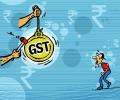
Over 100,000 small and medium-sized businesses are non-compliant with e-invoicing norms under the goods and services tax (GST) regime, a mandatory requirement for businesses with an annual turnover of over Rs 5 crore. E-invoicing provides real-time access to invoices that are prepared by the supplier on the purchase of goods, allowing faster accessibility to input tax credit, thereby limiting the manipulation of fake credit as it has to be generated before the transaction. "The default has been reported mainly in businesses with a turnover between Rs 5 crore and Rs 20 crore," a senior official informed
The GST Council in its next meeting may look at raising the lowest tax slab to 8 per cent, from 5 per cent, and prune the exemption list in the Goods and Services Tax regime as it looks to increase revenues and do away with states' dependence on Centre for compensation, sources said on Sunday. A panel of state finance ministers is likely to submit its report by this month end to the Council suggesting various steps to raise revenue, including hiking the lowest slab and rationalising the slab. Currently, GST is a four-tier structure attracting a tax rate of 5, 12, 18 and 28 per cent.

Supplying food to schools under mid-day meal scheme, pre-schools and anganwadis is exempt from GST, the Central Board of Indirect Taxes and Customs (CBIC) has said. Issuing a set of clarification on certain decisions taken by the GST Council in its 43rd meeting on May 28, the CBIC said it had received representations regarding applicability of GST on the issues as to whether serving of food in schools under mid-day meals scheme would be exempt if such supplies are funded by government grants and/or corporate donations. Under the goods and services tax (GST), any catering service, including mid-day meals, provided to an educational institution is exempt from the levy.

Online skill-based gaming industry has made a case for retaining the service under 18 per cent GST slab instead of putting it into the highest 28 per cent tax rate category, saying the move will badly hit the $2.2-billion sector. The increase in taxation would not only have catastrophic impact on the industry but also encourage offshore operators who would circumvent Indian tax jurisdiction by hosting games in some other country, Games24x7 Co-CEO Trivikraman Thampy said. "It would be a triple whammy -- the industry loses out, the government loses out on tax revenue and players loses out as they would be exposed to unscrupulous operators," he said.

'...hesitate to support the risk-taking it requires.'
The government's indirect tax collection is expected to increase by 8.3 pc in the financial year 2025-26 (FY26), according to a report by ICICI Bank. The report also noted that this growth is higher than the 7.1 per cent increase seen in FY25 and is mainly driven by rise in GST revenue from strong urban consumption. It said "The increase is driven by higher goods and services tax collections which in-turn is explained by boost to urban consumption".
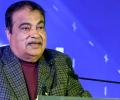
Union minister Nitin Gadkari on Monday asked the industry not to perennially demand a reduction in taxes as the government needs funds to implement welfare schemes for the poor. Addressing an event, the road transport and highways minister said the logistics cost in India will come down to 9 per cent within two years.
GST collections in September rose 26 per cent to over Rs 1.47 lakh crore, the finance ministry said on Saturday. Goods and Services Tax (GST) mop-up has been over Rs 1.40 lakh crore for seven months in a row.

'Increasingly, they treat gold as a financial asset in their portfolio rather than just as jewellery.'

Full exemption for all health insurance premiums and reinsurance or a reduction in the GST rate from 18% to 5% on health insurance services is likely.

Farmer representatives and agricultural stakeholders urged the government to provide cheaper long-term credit, implement lower taxes, and double the PM-KISAN income support during a comprehensive pre-budget consultation with Finance Minister Nirmala Sitharaman on Saturday. The two-hour meeting saw a detailed discussion of proposals, aimed at addressing multiple challenges in the agricultural sector, with key demands focusing on financial relief, market reforms, and strategic investments.

Opposition MPs in India's Rajya Sabha raised concerns about US President Donald Trump's tariff threats, demanding the government clarify its response and engage in discussions with opposition parties. Leaders like P Chidambaram and Sagarika Ghose warned of potential economic repercussions, including depressed exports, lower FDI, and a significant tariff burden. The debate also touched on other issues such as the government's economic policies, demonetization, and the impact of GST on common citizens.
In signs of acceleration in economic activity, India's tax collections on goods sold and services rendered returned to over Rs 1 lakh crore in July after the second wave of Covid-related restrictions caused a blip in the previous month. Goods and Services Tax (GST) mop-up grew 33 per cent year-on-year in July to over Rs 1.16 lakh crore, indicating that the economy is recovering at a fast pace. In July 2020, the collection was Rs 87,422 crore. This is the second highest collection so far this fiscal after a record Rs 1.41 lakh crore mop-up in April.

Sources said that Langa and an unidentified employee of the Gujarat Maritime Board (GMB) have been booked on the charges of theft and under relevant sections of the Prevention of Corruption Act.
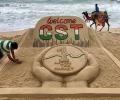
GST revenues rose 16.6 per cent to about Rs 1.52 lakh crore in October -- making it the second highest collection ever. Goods and Services Tax (GST) collection had touched a record high of nearly Rs 1.68 lakh crore in April. In October last year, the revenues stood at over Rs 1.30 lakh crore.

The GST Council has set up a Group of Ministers, chaired by Haryana Deputy Chief Minister Dushyant Chautala, to suggest required changes in the law for setting up the GST Appellate Tribunal (GSTAT). The GST Council, chaired by Finance Minister Nirmala Sitharaman and comprising state ministers, had last week decided to constitute a Group of Ministers (GoM) to address various concerns raised by states in relation to constitution of the GSTAT. As per the Terms of Reference (ToR) of the GoM, the panel would recommend required amendments in the GST law to ensure that the legal provisions maintain the right federal balance and are in line with the overall objective of uniform taxation within the country.

The Appellate Authority for Advance Rulings (AAAR) of Gujarat has held that papad fryums would not attract any goods and services tax (GST) as they are similar to traditional round papads in all respects. In this connection, the appellate authority modified the ruling of the authority for advance rulings (AAR), which had ruled that Fryums would attract 18 per cent GST. The AAAR held that Fryums is a brand and not a generic name of the product, Harpreet Singh, partner, indirect taxes at KPMG in India said while explaining the order.

Tenants should primarily buy contents insurance. 'This covers personal belongings like electronics, furniture, clothes, and appliances against risks such as fire, theft, floods, and other natural calamities.

The Centre has recovered around Rs 95.86 crore from at least 11 crypto exchanges for evading goods and services tax (GST), according to data released by Parliament on Monday. The amount includes interest and penalty. The GST investigation department has detected a total tax evasion of Rs 81.54 crore by crypto exchanges that include WazirX, Coin DCX, CoinSwitch Kuber, Buy Ucoin, UnoCoin and Flitpay, among other exchanges. In a written reply to Lok Sabha, minister of state (MoS) for finance Pankaj Chaudhary said 11 cases of GST evasion by cryptocurrency exchanges have been detected by central GST formations.

Dominic Xavier offers his take in the recent changes in GST.

'The time has come to have a relook at the Constitution as every document has a shelf life.'
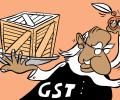
The decision to impose a 28 per cent tax on the full face value of bets placed on online games will be implemented from October 1 even though there was demand for a review from states like Delhi and Goa, finance minister Nirmala Sitharaman said on Wednesday. The GST Council -- the highest decision making body of the new indirect tax regime that comprises Union finance minister and representatives of all states -- discussed the language of amendments that will be needed to enabling taxing online gaming, she said after the panel meeting.

Annapoorna chain of restaurants owner Srinivasan is seen purportedly highlighting concerns over varying GST rates. In the second video, Srinivasan was seen purportedly apologising in person to the Finance Minister.

'Peninsular Indians could ask 'Why should we contribute half of India's tax revenues if we account for only a quarter of the seats in the Lok Sabha?'.' 'The rest of the country seems likely to counter that 'democracy means one vote per person irrespective of where that person resides in India'.' 'With no easy answers to this thorny debate, the south's economic ascendancy could end up creating a Hobson's choice.' A revealing excerpt from Nandita Rajhansa and Saurabh Mukherjea's book, Behold the Leviathan: The Unusual Rise of Modern India.

Three men in Aligarh, Uttar Pradesh, received income tax notices demanding crores of rupees despite earning meager salaries, highlighting the growing issue of identity theft in India. The victims, who earn between Rs 8,500 and Rs 15,000 per month, were shocked to receive notices for Rs 33.88 crore, Rs 3.87 crore, and Rs 7.79 crore respectively. The authorities believe that businesses have been conducting large-scale transactions using forged Aadhaar and PAN cards in the names of these individuals.
