
With the finance ministry refusing to hike rates of Special Deposit Schemes and allow it to park funds in high interest bearing postal deposits, the Employees Provident Fund Organisation is toying with the idea of trading in government securities as

'Comparing the rates of interest with PSU banks, the three- and five-year time deposit rates of the post office are more favourable.'

Bond markets, global as well as domestic, are likely headed towards hard times over the next three to six months, as higher vegetable prices, rising fuel costs, and improved wages may keep inflation hot, believe analysts, who expect the yields to hit 7.5 per cent in the near-term from the current 7.234 per cent. In this backdrop, they suggest investors can put in money in funds/instruments with residual maturity of 4 to 6 years, while longer-term investors can allocate cautiously to the longer end in the range beyond 7 years.
US-Iraq war fears may affect the sentiments in gilts market despite India's strong fundamentals and smooth sailing of the government's market borrowing now at Rs 1,34,036 crore (Rs 1,340.36 billion), PNB Gilts warned

The government has budgeted for total expenditure of Rs 34.83 lakh crore or 6.8 per cent of GDP. While the net tax revenue rose from Rs 5,75,697 crore in October 2020 to Rs 10,53,135 crore till October 2021, a growth of 82.93 per cent annualized, total expenditure rose only by 9.95 per cent, led by infra spending to Rs 18,26,725 crore from Rs 16,61,454 crore during the same period, the RBI said in the financial stability report.

The spreads between state development loans and equivalent-maturity government papers have started widening, and market participants don't expect them to contract anytime soon. The rise in spreads is a direct measure of market displeasure than a rise in yields.

Prime Minister Narendra Modi will on Friday launch two schemes of the Reserve Bank of India (RBI) that may go a long way in changing how the household sector invests, and complains if anything goes wrong with their savings. These schemes - retail direct and an integrated ombudsman - will be launched by the Prime Minister virtually, in the presence of Finance Minister Nirmala Sitharaman. With the introduction of retail direct, a common man can directly take a position in government securities (G-Sec), considered to be the safest asset class a sovereign can offer.

If you are buying a bond to cater to your regular income needs, check the interest distribution schedule.
Be wary of co-operative banks which have historically been most vulnerable.

However, despite Covid, Indian markets registered their best financial year performance in a decade, with the Sensex and Nifty50 rallying 68 per cent and 71 per cent, respectively, in FY21.

The government on Wednesday said it will borrow Rs 7.24 lakh crore in the first half of 2021-22 fiscal to meet resources to perk up the economy hit by the coronavirus pandemic. According to the Budget 2021-22, the government's gross borrowing was estimated at Rs 12.05 lakh crore in the financial year beginning April 1. "In the Budget, we had announced that there would be a gross borrowing of Rs 12.05 lakh crore and net borrowing of Rs 9.37 lakh crore. "In the first half of 2021-22, we would be borrowing Rs 7.24 lakh crore, which is 60.06 per cent of the gross issuances," economic affairs secretary Tarun Bajaj said. He said the government would issue 2-year, 5-year, 10-year, 14-year, 30-year, and 40-year securities.

Instead of only focusing on the tenure for which the best interest rate is available, investors should also focus on their own investment horizon.

'Banks will continue to increase FD rates to attract more deposits and meet the increasing demand for credit.'

The investment limit in long-term infrastructure bonds, however, has been kept unchanged at $25 billion.

While rising interest rates and tighter liquidity are giving negative signals for the financial sector, increasing economic activity could mean higher business volumes for lenders. Liquidity in the banking system has moved from Rs 8 trillion surplus into a deficit of Rs 33,000 crore over the 2022 calendar year. By the end of November, bank credit had grown 17.5 per cent YoY (year-on-year).
The government has proposed to buyback 24 illiquid Government of India securities (g-secs) of Rs 80,000 crore (Rs 800 billion) face value from banks and public financial institutions.

The Reserve Bank of India (RBI) will stay away from changing key rates - including the reverse repo rate - this fiscal in the backdrop of Omicron. However, it will continue to shape the rate movements through liquidity market operations. Soumya Kanti Ghosh, group chief economic advisor, State Bank of India, said whether Omicron surge or not, there is not going to be any hike this year. However, the central bank may continue to shape rates through market operations.

Bond yields have risen since the Reserve Bank of India raised interest rates for a second consecutive month on October 29.

The thinking at the Centre is that since the RBI has ramped up purchases of government bonds, the interest earned on them will be transferred to the exchequer as dividend.

Prices of food items like cereals, pulses, and edible oils rose or remained steady in May, a Reserve Bank of India (RBI) report said, indicating there could be another higher inflation print. However, it observed that the Monetary Policy Committee's (MPC's) surprise move to increase interest rates bodes well for its credibility. The RBI's monthly State of the Economy report, released on Tuesday, citing high frequency food price data from the Ministry of Consumer Affairs for the period May 1-12, said the increase in the prices of cereals was primarily because of the surge in wheat prices.

Spread between earnings yield and bold yield lowest since 2013; dividend yield and bond yield lowest since 2008.
The proposed move would help in cutting down compliance costs and reducing the friction between rules enacted by capital markets watchdog Sebi, depositories and government, experts said.

Could it have been more reformist? Of course, but this is an election year Budget, observes Akash Prakash.
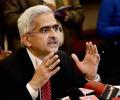
The uncertainty created by the jump in COVID-19 infections and localised lockdowns prompted RBI Governor Shaktikanta Das and other members of the rating setting panel MPC to unanimously vote for status quo in interest rates and an accommodative policy stance to support growth, as per minutes of the meeting released on Thursday. "The need of the hour is to effectively secure the economic recovery underway so that it becomes broad-based and durable," the Governor said during the three-day meeting of the Monetary Policy Committee (MPC) which ended on April 7. The renewed jump in COVID-19 infections in several parts of the country and the associated localised and regional lockdowns add uncertainty to the growth outlook, he observed, as per the minutes of the meeting released by the central bank.

A 13-member group, headed by RBI Executive Director R Gandhi, has made various recommendations on G-Sec market, retail participation and interest rate derivatives market.
With the government facing a record-high deficit in its finances, the recent increase in market borrowings has resulted in an oversupply of g-secs, and a fall in prices. Yield, which is the ratio of interest paid and price, moves in the opposite direction of price movement.

The Centre and states are likely to budget for higher market borrowings to the tune of Rs 2.3 lakh crore next fiscal even though the Union budget may peg a lower-than-expected fiscal deficit for the Centre at 5.8 per cent of GDP, says a report. Icra Ratings anticipates higher redemptions will lead to gross market borrowings of the Centre to rise to Rs 14.8 lakh crore and of the states to jump by Rs 1.6 lakh crore to Rs 9.6 lakh crore, taking the combined borrowings (of the Centre and the states) to Rs 24.4 lakh crore in FY2024, up by 2.3 lakh crore from FY23 combined. In FY23, the Centre's gross borrowings are budgeted at Rs 14.1 lakh crore and of the states at Rs 8 lakh crore, or a combined borrowing of Rs 22.1 lakh crore, according to the agency.

The country's gross domestic product (GDP) is likely to grow at 5.8 per cent in the third quarter of fiscal 2022, according to an SBI's research report- Ecowrap. The country's economy expanded by 8.4 per cent in the second quarter of 2021-22, to cross pre-pandemic levels. However, the GDP growth in July-September period was slower than the 20.1 per cent expansion in the previous quarter.

Currently, FPIs can invest up to $30 billion in Government securities, of which $5 billion is reserved for long-term investors.
The finance ministry is expected to announce the abolition of tax deducted at source (TDS) on corporate bonds in Budget 2008-09, official sources told Business Standard.

Nestle India was the top laggard in the Sensex pack, shedding around 2 per cent, followed by SBI, HDFC Bank, Axis Bank, ICICI Bank, Reliance Industries, HUL and Dr Reddy's. NSE Nifty slipped 20.10 points to 15,670.25.

'You can put 25 per cent right now; put another 25 per cent when Nifty corrects another 500 points.' 'At 13,500 put another 25 per cent and at 13,000 one can get fully deployed.'

The forthcoming budget needs to delay fiscal consolidation, instead should focus more on supporting the pandemic battered-economy and boost consumption demand by offering income tax soaps and cutting fuel taxes, says a report. In a pre-budget report, India Ratings said it expects the new budget to consolidate and strengthen the plan set out in the last budget, rather than trying out new things by continue with the revenue and capital expenditure pattern of FY'22 to provide stability and consolidation to the past/ongoing efforts, and to focus on boosting demand by generating employment opportunities in areas/sectors that have been impacted more by the pandemic. The report therefore expects the finance minister to delay fiscal consolidation and make it to be a gradual and calibrated process, thus ensuring the necessary fiscal support that the economy needs is available till the recovery acquires its own momentum.

'We will be looking to prune our portfolio to make GIC Re a healthier entity.'

The focus shall also be on consolidation of public debt and reducing rollover risk through active switch/buyback operations.

Equities went into a tailspin on Wednesday after the Reserve Bank surprised the market with a mid-cycle rate hike in a bid to tame soaring inflation.

The RBI's financial stability report has on Wednesday highlighted the disconnect between the real economy and equity market yet again. The central bank observed that Indian equities were trading at rich valuations, with several metrics such as price to earnings multiples, price to book ratio, market cap to GDP and the cyclically adjusted P/E ratio, or Shiller P/E, at above historical averages. For instance, as on December 13, the one-year forward P/E ratio for India was 35.1 per cent, above its 10-year average, and one of the highest in the world.

Armed with necessary macro and micro growth drivers, India is on its way to becoming the fastest growing major economy in the world, a finance ministry report said. Rapid vaccination and teeming festivities will push India's ongoing recovery resulting in narrowing of demand-supply mismatches and greater employment opportunities, as per the monthly Economic Review prepared by the ministry.

The unexpected interest rate hike by the RBI on Wednesday will have the banking system on average making a 10-15 bps gains on the yields, with private banks making larger gains as 57 per cent of their loans are linked to external benchmark rate and 40 per cent to the marginal cost of lending rates, as per a report. Stating that lenders and borrowers will face volatile times with the Reserve Bank raising the repo rate by 40 bps to 4.40 per cent and the cash reserve ratio (CRR) by 50 bps on May 4 in an off-cycle policy move, India Ratings said the market rates had already been moving higher before the move. The 364-day T-bills have moved up 120 bps and 10-year G-sec by 140 bps since May 2020, when the repo rate was cut to a record 4 per cent, which led to an expectation of a faster and sharper rise in interest rates in the system but the central bank stayed the course to support the fragile economy battered by the pandemic.

'Then select those that are well-aligned with your risk-return profile and investment time horizon.'
