
The brokerage believes the economic growth cycle is not fully priced in. It has revised upwards the earnings per share (EPS) estimate for Sensex.

RBI Governor Shaktikanta Das on Tuesday launched a new service, which will enable over 40 crore feature phone users to undertake digital payments in a secure way. The service christened UPI (unified payments interface) '123PAY' is a three-step method to initiate and execute services for users which will work on simple phones which do not have an internet connection. Das said, as of now, the multifaceted features of UPI are mostly available only on smartphones, which excludes people from the lower rung of the society from an economic perspective, especially in the rural areas, from accessing the popular service, even though the smartphone prices are going down.

The Indian IT industry will stage a "strong recovery" in 2021-22 with a revenue growth of up to 11 per cent, ratings agency Crisil said on Wednesday. The recovery will be led by increasing outsourcing and accelerating digital transformation services mainly in sectors such as banking, financial services and insurance (BFSI), healthcare, retail and manufacturing, it said. As per Nasscom, the IT services industry grew 2.7 per cent to $99 billion in 2020-21.

As air travel gathered steam in financial year 2021-22 (FY22) after being restricted the previous year, fewer passengers were affected by flight cancellations. Directorate General of Civil Aviation (DGCA) figures show that there were 40 per cent fewer flyers in FY22 than in FY20, but 60 per cent fewer passengers were impacted by cancellations, and 80 per cent fewer passengers were denied boarding. FY20 was the last financial year when India's booming aviation industry carried out full-scale operations before being completely grounded for a couple of months due to the Covid-19 pandemic.

Some of India's largest companies have seen a slowdown in the growth of temporary, contract and casual jobs, as compared to the increase in their total workforce. The absolute number of such jobs is up 30 per cent between financial year 2017-18 and 2021-22 (FY18-22), shows an analysis of data collated from the annual reports of S&P BSE 100 companies. Forty-eight firms were considered for the final analysis based on the availability of uniform data across the last five years. In comparison, the total workforce numbers are up 36 per cent in the same period.

Retail investors seem to have dipped into their mutual fund savings to meet pre-festival spending. According to data released by the Association of Mutual Funds in India (Amfi), investors pulled out Rs 6,578 crore from their systematic investment plan (SIP) accounts in September, the highest in the last 11 months. The redemptions were on the higher side during the previous festive season as well.

While analysts remains overweight on financials, property, discretionary, industrials and materials, they maintain a neutral stance on pharma, telecom and energy; and underweight on staples, utilities, and IT services.

Officials were surprised at how quickly smugglers appraised the Covid situation to recruit jobless migrant workers to ship gold.

Highlights of Economic Survey 2020-21, tabled in Parliament by Finance Minister Nirmala Sitharaman on Friday.

The government has limited room to reduce expenditure without further weakening growth, it noted.

Vodafone Idea will gradually lose market share given its weak balance sheet and limited financial flexibility, says Fitch.

Despite a slowing economy, the Budget does not envisage any major stimulus through the budgeted fiscal deficit figures, said Goldman Sachs.

While presenting her 2021-22 Union Budget, Finance Minister Nirmala Sitharaman had set a fiscal deficit target of 6.8 per cent of nominal gross domestic product (GDP) against the 2020-21 Revised Estimate of 9.5 per cent. The fiscal correction in the upcoming 2022-23 Union Budget is unlikely to be that steep. Even as discussions among top Budget-makers are ongoing, the fiscal deficit target for 2022-23 may likely be in the range of 6.5-6.8 per cent.

The incremental stress is mainly from sectors including power, infrastructure, constructions, hospitality, iron and steel, telecom, and realty.

Auto-debit payment bounces have gone up for the second consecutive month in May, emphasising the stress building up due to a halt in economic activities as authorities lock down various parts of the country to stop the spread of the virus in the second wave. According to the National Automated Clearing House (NACH) data, in May, of the 85.7 million transactions initiated, 35.91 per cent, or 30.8 million transactions, failed.

The SME segment has been grappling with lack of liquidity and lacklustre institutional participation.

However, experts caution that investors should not expect the big returns they got from the sector between March and September 2020.

Unified Payments Interface (UPI) clocked over 6 billion transactions in July: the highest ever by India's flagship digital payments platform since its inception in 2016. UPI reported 6.28 billion transactions amounting to Rs 10.62 trillion, according to data released by the National Payments Corporation of India (NPCI), which operates the platform. Month-on-month, the volume of transactions was up 7.16 per cent and value increased 4.76 per cent.

The Centre earned nearly Rs 8.02 lakh crore from taxes on petrol and diesel during the last three fiscal years, of which more than Rs 3.71 lakh crore was collected in FY21 alone, Finance Minister Nirmala Sitharaman informed Parliament on Tuesday. The minister was responding to queries on the hike in excise duty on petrol and diesel during last three years and the details of the revenue earned through various taxes on these fuels. The excise duty on petrol rose from Rs 19.48 per litre as on October 5, 2018 to Rs 27.90 a litre as on November 4, 2021.

Without accounting for refunds, however, the collection contracted 5.4 per cent, indicating muted economic activity as the Covid-19 pandemic and subsequent curbs paralysed most sectors.

The gains came on expectations that the company will post strong growth given its presence in application to peer services and the fast-growing communication platform as a service segment.

While lenders create a hype around the services offered on digital platforms, customers think otherwise, given that frustration due to the quality of service has only increased, over the years.

It won't be easy for the banking sector to better its performance every quarter, predicts Tamal Bandyopadhyay.

Global investors have cited the ongoing war and high valuations of Indian equity markets as a reason to skip the IPO.

The current operating environment remains highly volatile and persistent inflation will likely impact demand across categories, Tata Consumer Products Ltd chairman N Chandrasekaran said on Monday. To navigate through these "short-term bumps" in this uncertain environment, the company will focus on strong execution, maintaining agility and nimbleness," he said while addressing shareholders at the annual general meeting (AGM). "Geo-Political tensions, supply chain challenges, and demand-supply mismatches in crude and several other commodities are driving persistent inflation, which will likely impact demand across categories.

Passenger vehicle exports from India increased 43 per cent in FY22, with Maruti Suzuki India leading the segment with dispatches of over 2.3 lakh units, as per the latest data by industry body SIAM. The total passenger vehicle (PV) exports stood at 5,77,875 units in 2021-22 fiscal, as compared to 4,04,397 units in 2020-21. Passenger car shipments saw 42 per cent growth at 3,74,986 units, while utility vehicle exports rose 46 per cent at 2,01,036 units during the last fiscal, the data by the Society of Indian Automobile Manufacturers (SIAM) showed.

Let's wait for the monetary policy on February 8 -- to see how it complements the fiscal commitments, points out Tamal Bandyopadhyay.

More than a year of Covid-19 has pushed most businesses into gloom but Reliance Industries Ltd (RIL) managed to reduce its gross debt 25 per cent, enabling it to turn towards its next phase of capital expenditure that has come in the form of a Rs 75,000-crore plan for green energy and power storage. The company managed to stay afloat during the pandemic because of its large presence in the consumer-centric businesses of retail and telecommunication (see chart: "A new Reliance"). These two businesses constituted 45 per cent of its EBITDA during FY21 from 36 per cent in FY20.

Real estate experts say rentals have corrected by 5-10 per cent across formats, including office, retail and housing, with a pick-up expected over the next few quarters as the economy recovers.

Systematic investment plans (SIPs) of mutual funds (MFs) have seen a spike in demand with new registrations touching a five-year high already this year. Around 19.5 million new SIPs have been registered till December end, as against 14.1 million in the whole of financial year 2020-21 (FY21). Market participants say increasing investor awareness and positive experiences have spurred this increase.

US media reports that Meta Platforms, the parent company of Facebook, Instagram, and WhatsApp, could be the latest technology giant to downsize its workforce have triggered trepidation among its 300-400 employees in India, according to people familiar with the matter. "We have not heard much about the impact (of downsizing) on India. "It's a wait-and-watch situation. Certainly, there is uncertainty," said a source.
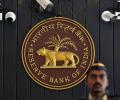
The Reserve Bank of India (RBI) is precariously balancing two opposing objectives - maintaining easy financial condition in the domestic market, while ensuring external stability - and economists have started taking note. They say India is going through the classic trilemma of the 'Impossible Trinity'. The RBI cannot have an independent monetary policy (setting domestic interest rates) in an environment of an open capital account and flexible exchange rates. What is even more complicated for the central bank now is that financial market stability overlays all the other three objectives.

The combined market capitalisation of the top 873 family-owned companies was down 26.3 per cent year-on-year (YoY) to Rs 61.8 trillion at the end of trading on Tuesday. It had grown 6 per cent in FY19 and nearly 20 per cent in FY18.

According to its DRHP filed in 2010, the company's net worth was just Rs 140 crore. Its total income for the financial year 2009-10 stood at Rs 119 crore and it had a net profit of Rs 16 crore. In sharp contrast, at the end of March 2021, Paytm's networth was Rs 6,535 crore and total income stood at Rs 3,187 crore.

EY said out of the nearly Rs 21 lakh crore package, Rs 8.01 lakh crore is on account of liquidity enhancing measures taken by the RBI since February.

The information technology services sector will see a sharp fall in revenue growth to 12-13 per cent in FY23 from 19 per cent in FY22, ratings agency Crisil said on Thursday. However, the current depreciation in the rupee, strong demand for new age technologies like artificial intelligence, cloud computing and Internet of Things will help the over $220-billion sector maintain a double digit growth, it said in a report. The moderation from 19 per cent to 12-13 per cent will be the highest in the last eight years, it said and attributed the decline to expected tightening of IT expenditure by corporates amid the inflationary headwinds in the United States and European Union (EU), which together contribute almost 85 per cent to the sector's revenue.

Rising commodity costs, coupled with other marketing-related expenses, could weigh on profitability in the coming quarters.

The rupee breached the 80-mark against the dollar on Tuesday. The steady depreciation in the value of the rupee against the US dollar is likely to prove expensive for corporate India. The listed companies' revenue expenses in foreign currency or imports exceed their export revenues or revenue earnings in forex. In their latest financial year, BSE500 companies, excluding banks and non-banking finance companies and insurance (BFSI), reported combined forex expenses of Rs 12.31 trillion against forex earnings of around Rs 10 trillion.

A closer look at the data reveals that a lot of the items are not part of this calculation. The notable ones include buffalo meat, marine exports, raw cotton, and plantation crops such as tea, coffee, rubber, etc.

The government has budgeted for total expenditure of Rs 34.83 lakh crore or 6.8 per cent of GDP. While the net tax revenue rose from Rs 5,75,697 crore in October 2020 to Rs 10,53,135 crore till October 2021, a growth of 82.93 per cent annualized, total expenditure rose only by 9.95 per cent, led by infra spending to Rs 18,26,725 crore from Rs 16,61,454 crore during the same period, the RBI said in the financial stability report.
