
A sudden surge in wealth because of stock market gains after the pandemic could be one of the factors behind the relatively lower share of philanthropy in total wealth.

Government has missed the overall revised tax collection target for both direct and indirect taxes by Rs 2,288 crore.

In 2013-14, the group spent Rs 2.5 per cent of its revenue or Rs 16,000 crore.

The World Bank on Thursday forecast a 6.7 per cent growth rate for India by next fiscal as exports and private investment are projected to strengthen and provide a boost to growth.

The government is set to earn an equity dividend of nearly Rs 13,800 crore from the listed public-sector banks (PSBs), all 12 of them, for FY23, up 50 per cent from Rs 9,210 crore in FY22. This will be the highest ever dividend for the government from PSBs. The 12 PSBs in our sample are paying an equity dividend of nearly Rs 21,000 crore for FY23, up 53 per cent from Rs 13,710 crore for FY22.
Says the automobile sector would grow double digit in Asia's third largest economy after financial year 2017-18.

The banking sector emerged as an outlier when the rest of India Inc witnessed a slowdown in earnings in FY23. The combined net profit of listed public and private sector banks was up 39.4 per cent year-on-year (YoY) last financial year and their share in India's gross value added (GVA) or gross domestic product (GDP) at factor cost rose to a record high of nearly 1 per cent up, from 0.8 per cent a year ago. Listed banks' combined net profit grew to Rs 2.36 trillion in FY23, from Rs 1.69 trillion a year ago. In comparison, India GVA at current prices was up 15.2 per cent YoY at Rs 247 trillion in FY23; it was around Rs 214 trillion a year ago.

Corporate India is more dependent than before on exporters of IT services such as Tata Consultancy Services (TCS), Infosys, and Wipro for earning foreign exchange. Such companies account for nearly 43 per cent of the forex revenues of listed firms, up from 22 per cent a decade ago. The listed IT services companies earned nearly Rs 4.2 trillion through exports in FY22, up 15 per cent from the Rs 3.65 trillion a year earlier. In comparison, the forex revenues or exports of the rest of the BSE500 companies were down 11.9 per cent to Rs 5.6 trillion last financial year.

Feature phones will be sold through the trade channel. Recently, Maxx had launched its AX356 GenxDroid7 for Rs 3,696.

Near-term prospects hinge on the progress of the second wave of Covid-19. A lockdown will dent prospects as 60 per cent of revenues come from the dine-in segment.

In the last five years, imports from HK have more than tripled -- from $5.6 billion in FY15 to $17.1 billion in FY20. In the same period, exports declined by 20 per cent -- from $13.6 billion in FY15 to $10.8 billion (annualised) in FY20.

The question is: Will the company have a strong balance sheet to support this massive investment plan?

The economy segment of India's car market is unlikely to revive soon term as inflation and prices prompt buyers to defer purchases. The share of entry-level cars in the passenger vehicle market dropped to the lowest in seven years at the end of the Financial Year 2021-22 (FY22). A recovery in the segment will be largely driven by the overall economic growth, improvement in income levels, and easing of semiconductor shortage, say carmakers and analysts.

Sunil Bhaskaran, AirAsia India's chief executive officer (CEO) and managing director (MD), is the front-runner to head the low-cost carrier that will take birth after the merger of Air India Express and AirAsia India, sources said. In a show of confidence, the airline's board extended Bhaskaran's tenure by three years -- until March 2025 -- in a meeting held earlier this year, according to the documents reviewed by Business Standard. Moreover, AirAsia India's board of directors has increased Bhaskaran's salary twice in 2022 -- first in January by 5 per cent and then in June by 7 per cent, the documents showed.

For Tata Consultancy Services (TCS) - India's largest and the world's second-largest IT services provider - the attrition rate touched an all-time high of 17.4 per cent in Q4FY22. The management, following the announcement of the Q4 results, has warned that the attrition situation could become even worse before any improvement. According to analysts, the short term, the attrition rate at TCS could even touch 20 per cent.

Foreign portfolio investors (FPIs) have pumped in a whopping $33.8 billion into domestic equities and debt till February 15 this fiscal year -- the highest since FY15 when it was nearly $46 billion --taking their net outstanding investments to a record $592.5 billion, as per a report. Of the total FPI assets of $592.5 billion, $537.4 billion were in equities and $51.38 billion in debt, according to the data collated by Care Ratings. The maximum holding is in financial services sector at $191.3 billion, followed by software ($76.1 billion), oil & gas ($50 billion), automobiles & auto components ($26.9 billion, pharmaceuticals & biotechnology ($22.8 billion), sovereign ($21.7 billion--debt), household & personal products ($20.2 billion), capital goods ($19.8 billion), food, beverages & tobacco ($15.7 billion) and insurance ($13.4 billion).

The reduction in value of Chandra's assets comes close on the heels of the group's debt burgeoning to over Rs 12,000 crore, much of which he had raised by pledging his shares to banks and mutual funds in his flagship company ZEEL after many of the groups infrastructure bets did not take off.

Investors are pushing back more often against companies' resolutions on what is paid out to top executives. In the first four months of financial year 2022-23 (FY23), there have already been five such rejections, according to shareholder voting data from tracker Adrian, a platform maintained by the proxy advisory firm Institutional Investor Advisory Services India (IiAS). Two of these have been at multiplex chain PVR and direct-to-home company Dish TV India.

Its production declined for the third consecutive year in financial year 2020-21 (FY21) to an 11-year low, while sales volume contracted for the second year to the lowest since FY15. The company manufactured around 1.08 million vehicles last fiscal, a decline from 1.17 million the previous year, and a steeper fall from its all-time high tally of 1.62 million reported in FY18.

Only Hindustan Unilever and Nestl bucked the trend.
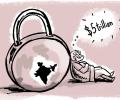
India will need $8 trillion (around Rs 588 lakh crore) of gross capital formation or new greenfield assets to become a $5 trillion (around Rs 368 lakh crore) economy by FY2027, a report said. The report by Deloitte said despite the COVID-19 disruption, FDI inflow into the country provides necessary optimism and display underlying strengths of the Indian economy. In FY2020-21, FDI inflows (including equity, re-invested earnings, and capital) amounted to a record $81.72 billion, 10 per cent higher than the previous financial year, it said.

despite an Election Commission notification, disallowing tax benefits on cash donations to political parties, the cash contribution increased from 0.14% in FY15 to 1.42% in FY16.

Puri earned a salary of Rs 7.39 crore in FY15, up 21.74% from last year
.jpg)
The agency has kept its FY15 growth forecast unchanged at 5.6 per cent.

Software product revenues seen at only $6.1 bn in FY15

The Economic Survey released before next year's Budget could become a single volume, reverting to the practice followed till FY14. "There is so much to write about the Indian economy's performance in the past year. "Most of the exciting themes will be covered in what used to be considered Part II," said a senior government official who is part of the preparations for the Survey.

Jet Airways' loss widened for FY15 on higher cost.

India Inc's debt-to-equity ratio has fallen, from 0.92 in FY15 to 0.88 in FY16.

In FY16, Infosys had 48 employees in India who were paid more than Rs 1 crore in annual compensation, as compared to 111 in FY15.

YES Bank said that it has not paid any bonus to Kapoor for FY17 and FY18. He drew a salary of Rs 6.48 crore for the ten months he served as MD & CEO, before his tenure ended in January.

Road construction witnessed a near 60 per cent year-on-year jump in the first two months of financial year 2021-22 (FY22), despite restrictions being imposed in the wake of the second wave of Covid-19. Around 1,470 km of roads were constructed during the first two months of the current fiscal, as against 847 km in the corresponding period last year, according to official figures. However, these are provisional numbers as the state public works departments of Maharashtra and Goa are yet to provide data.
Infosys' commentary suggests its growth pangs are not yet over.

The average variable pay across sectors is projected at 17.4%.

With all major US export-oriented drug manufacturing plants in the country up for inspection in 2022, some estimates peg that at least 20-30 per cent of the new product launches lined up for the US will be subject to on-site inspection by the US Food and Drug Administration (USFDA). The last two years saw limited physical inspections due to travel restrictions during the pandemic. "Pre-Covid, the frequency and number of inspections of manufacturing plants in India by USFDA had increased significantly," analysts from ICICI Securities Research noted. "With growing ANDA filings, especially for complex products. "We expect this trend to return with the environment normalising," analysts from ICICI Securities Research noted.

Even so, the PM's cash in hand is among the lowest when compared with his Cabinet colleagues

According to the global business information, knowledge and insight provider, India is likely to achieve an average growth rate of around 7.5 per cent during FY15-FY20.

The biggest spend (Rs 4,406 crore) was for Schedule VII (II), which involves "promoting education, including special education and employment enhancing vocation skills, especially among children, women, elderly and the differently abled and livelihood enhancement projects". The FY19 spend was 17.2 per cent higher than Rs 1,0128.3 crore spent during the previous year.

Capital needs are likely to increase substantially each year.

The report is based on data collated from 5 large angel groups.

Aadhaar is falling behind on technology, missing out on confidentiality and has gaps in its data archiving policy and preserving confidentiality in delivery of the cards to people, says a report by the Comptroller and Auditor General of India (CAG). The performance report, 'Functioning Of Unique Identification Authority Of India', tabled in Parliament on the last day of the budget session notes, assigning a unique identity to all resident Indians was supposed to be the key feature of Aadhaar. But "There were instances of issue of Aadhaar with the same biometric data to different residents indicating flaws in the de-duplication process and issue of Aadhaar on faulty biometrics and documents". It says close to half a million such records had to be cancelled by the Unique Identification Authority of India up to 2016.
