
Equity benchmarks Sensex and Nifty ended marginally lower on Tuesday as investors booked profits at higher levels amid a mixed trend in global markets.

Specific pack sizes boost growth in certain categories.

Consumer-focused companies have been left with few options but to increase the prices of their products as input costs mount because of various factors, including supply chain disruptions. This has been affecting monthly household budgets. Prices of scores of items -- from spices to soaps to rice -- have increased in the past year.

The old Bimaru area comprises 36 per cent of India's population, with 40 per cent of India's youth.

HCL Tech was the top gainer in the Sensex pack, rising over 4 per cent, followed by HDFC Bank, Infosys, NTPC, Nestle India, TCS and HUL. NSE Nifty surged 337.80 points to 14,845.10.

At the 45th Annual General Meeting of Reliance Industries (RIL) in August, chairman and managing director (CMD) Mukesh Ambani described the company as an "unputdownable book" with never-ending chapters of success. "Reliance grew from strength to strength because we internalised the founder's mindset of purpose, philosophy and passion," he said. Wednesday marked the 90th birth anniversary of RIL founder Dhirubhai Ambani.

You finally end up with an army of midgets led by midgets, notes Sandeep Goyal.

Tata Steel was the top loser in the Sensex pack, plunging over 8 per cent, followed by SBI, Dr Reddy's, Kotak Bank, Sun Pharma, Bajaj Auto and L&T. NSE Nifty declined 118.35 points or 0.71 per cent to 16,450.50.

ICICI Bank was the top gainer in the Sensex pack, rising over 3 per cent, followed by ITC, SBI, HCL Tech, Axis Bank, Bajaj Finserv and Tech Mahindra. NSE Nifty advanced 32 points to 15,856.05.

Tech Mahindra was the top gainer in the Sensex pack, jumping over 5 per cent, followed by Bajaj Finance, Bharti Airtel, Bajaj Finserv, L&T, Tata Steel and Infosys. NSE Nifty surged 191.95 points to 15,824.05.
The FMCG market in Pakistan is estimated to double in two to three years. The fact that the population in Pakistan was the world's sixth-largest offered immense scope to Indian FMCG companies.

Violation of the ban will invite punitive action, including a fine or a jail term or both, detailed under Section 15 of the Environment Protection Act (EPA) and under bylaws of respective municipal corporations, they said. For effective enforcement of the ban, national and state-level control rooms have been set up and special enforcement teams formed to check illegal manufacture, import, stocking, distribution, sale and use of banned SUP items, officials in the ministry said.
ITC's first foreign venture in the hotel space - a premium and luxury mixed-use development - has been "adversely impacted" by Sri Lanka's economic crisis, the firm said. The $300-million project under WelcomHotels Lanka (Private) Limited (WLPL), a wholly-owned subsidiary of ITC, comprises a luxury hotel and a super-premium residential apartment complex on 5.86 acres of prime sea-facing land in Colombo. In its latest annual report for financial year 2021-22 (FY22), ITC mentioned that the project's construction was running on schedule till the third quarter (Q3) of FY19, but was adversely impacted due to disruptions in the aftermath of the terror incidents in 2019 and thereafter by recurrent waves of the Covid-19 pandemic.

The facility, which will manufacture nicotine and nicotine salts, will conform to stringent US and EU pharmacopoeia standards that define purity levels at 99.2 per cent for nicotine meant for pharmaceutical products. ITC will leverage the institutional capabilities of its century-old leaf tobacco business for this. ITC's cigarettes business saw disruptions across the value chain with the onset of the Covid-19 pandemic. The company mentioned in its annual report that with easing of restrictions and improvement in mobility from September 2020 onwards, the business recovered progressively over the remainder of the year to reach nearly pre-Covid levels towards the close of the year.

Ultratech Cement was the top gainer in the Sensex pack, surging nearly 3 per cent, followed by M&M, Maruti, Tata Steel, TCS, L&T, SBI and HUL. NSE Nifty advanced 52.35 points to 18,308.10.

ITC was the top laggard in the Sensex pack, tanking over 6 per cent, followed by HUL, Titan, Tata Steel, UltraTech Cement and PowerGrid. On the other hand, Tech Mahindra, L&T, Infosys, Bajaj Finserv, Kotak Bank and HDFC Bank were among the gainers.
With retailers downsizing operations, many senior executives from fast-moving consumer goods and telecom who had jumped on the retail bandwagon a couple of years ago are making a quiet comeback.

Tata Steel was the top gainer in the Sensex pack, rallying nearly 7 per cent, followed by Bajaj Finserv, SBI, HCL Tech, Sun Pharma, Bajaj Finance and Reliance Industries. NSE Nifty advanced 69.05 points to 15,778.45.
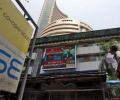
TCS was the top gainer in the Sensex pack, rising over 1 per cent, followed by Infosys, Reliance Industries, HUL, Nestle India and ITC. NSE Nifty ended 10.05 points higher at its new closing record of 16,634.65.
A survey by five brokerage houses -- SBICap Securities, Angel Broking, ICICI Securities, Motilal Oswal and HSBC Securities -- reveals that after a volatile calendar year which saw input costs rise to record levels in the first half and then fall dramatically in the second half, FMCG companies will now see the benefit, as it usually takes a quarter for falling costs to show in the results.

'The classic thing we need as a country is the virtuous cycle where you have robust demand which leads to more capital spending which in turn leads to more job creation and more money in the hands of people.'
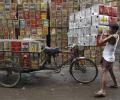
The cooking oil national industry body -- Solvent Extractors' Association (SEA) of India has suggested immediate initiation of government to government (G2G) dialogue with Indonesia on the proposed palm oil export ban from April 28 by them as it would have an adverse repercussions in India. Indonesia, which is the world's largest producer of palm oil and meets nearly 50 per cent of the total palm oil requirement in India annually, had announced to ban exports till further notice apparently to contain edible oil prices in their domestic market. "We have suggested our government initiate dialogue with Indonesian counterparts at the highest diplomatic level on the cooking oil export ban.

The 30-share Sensex ended up 214 points at 27,890 and the 50-share Nifty closed up 52 points at 8,430.

SBI was the top loser in the Sensex pack, shedding over 1 per cent, followed by HDFC duo, Kotak Bank, PowerGrid and ICICI Bank.

Baba Ramdev's Patanjali Ayurved is considering bidding for the title sponsorship of the upcoming Indian Premier League, according to a company official.
Invest in a company with strong track record and competent management usually irrespective of the sector.

Hiring activity witnessed a 6 per cent year-on-year growth in March this year, supported by a rebound in economic activities and led by sectors such as banking and telecom, according to a report. However, there was a marginal dip of 2.4 per cent in hiring activity as compared to February, owing to the appraisal season, according to the Monster Employment Index (MEI). "Two years into the pandemic, it is heartening to see that the Indian economy has overcome setbacks and challenges with hiring momentum exceeding pre-COVID levels by 6 per cent this year compared to 2020," Monster.com, a Quess company, CEO Sekhar Garisa noted.

'What we have to think about is, how to improve the efficiency of public sector banks.' 'You have to make decision-making more prudent, and free from government intervention.'

Reliance Industries was the top gainer in the Sensex pack, rising over 1 per cent, followed by ICICI Bank, SBI, HDFC, M&M, Axis Bank, Bajaj Finance, Titan and Infosys. NSE Nifty advanced 42.20 points at 15,722.20.

Nestle India, the Indian subsidiary of the Swiss multinational FMCG giant Nestle, had to face on social media the wrath of consumers, who accused the company of hurting religious sentiments by using the sacred images on Kitkat wrappers.

Equity indices failed to hold on to their gains in see-saw trade on Tuesday, ending in the red for the third straight session despite a tentative recovery in global equities. The rupee too bounced back from historic lows, but the overall sentiment remained risk-averse amid concerns over economic recovery in a high interest rate scenario. The 30-share BSE Sensex had a choppy start but gained momentum in mid-session trade. However, it succumbed to selling pressure towards the fag end to close 105.82 points or 0.19 per cent lower at 54,364.85. On similar lines, the broader NSE Nifty declined 61.80 points or 0.38 per cent to finish at 16,240.05.

'Enterprises have become more demanding in terms of their productivity expectation from their employees.'

Presently, around 23 per cent of Nestle India's workforce are women, its chairman and managing director Suresh Narayanan said on Monday. "We moved a fair degree on this. When I came to Nestle India in 2015, at that time we were at about 15-16 per cent.

Bajaj Finserv was the top loser in the Sensex pack, shedding over 2 per cent, followed by Infosys, Tech Mahindra, UltraTech Cement and IndusInd Bank. On the other hand, Dr Reddy's, Bajaj Auto, Sun Pharma, Asian Paints and NTPC were among the gainers. NSE Nifty lost 41.50 points to end at 15,680.
Marico's chief executive officer (Consumer Products Business) Saugata Gupta, too, affirmed that his company was being cautious in dealings with such retailers. FMCG companies work on tight credit cycles. On the other hand, modern trade retailers such as Aditya Birla Group's More, RPG's Spencer, Mukesh Ambani group's Reliance Fresh, Subhiksha and Vishal have been expanding aggressively over the last couple of years.
Equity benchmarks mustered gains for the first time this week on Thursday as investors piled into the recently-battered metal, bank and IT stocks amid expiry of monthly derivative contracts. Snapping its three-session losing streak, the 30-share BSE Sensex rallied 503.27 points or 0.94 per cent to settle at 54,252.53. On similar lines, the broader NSE Nifty gained 144.35 points or 0.90 per cent to end at 16,170.15.
