
Investors' wealth jumped Rs 2,93,054.25 crore on Thursday as markets returned to winning ways after falling for three straight sessions. The 30-share BSE benchmark Sensex zoomed 638.70 points or 1.22 per cent to close at 52,837.21. During the day, it gained 668.75 points to 52,867.26. Tracking the bullish trend, the market capitalisation of BSE-listed companies jumped Rs 2,93,054.25 crore to reach Rs 2,33,94,917.25 crore.

Sectors that will drive profit growth include refineries, private banks, capital goods, cement, fast moving consumer goods, metals and oil & gas. Sectors with disappointing growth are public sector banks, construction, media, pharmaceuticals, steel, textiles, telecom and tyres.

The ban on certain single-use plastic (SUP) items kicks in from Friday, with state governments initiating an enforcement campaign to identify and close down units engaging in production, distribution, stocking and sale of such items, officials said. Though several manufacturers have said they are not prepared to implement the ban due to a lack of alternatives, Union Environment Minister Bhupender Yadav had on Tuesday said the government had given enough time to the industry and the general public to prepare for the ban on SUP items and it hopes for everyone's cooperation in implementing it from July 1. Violation of the ban will invite punitive action, including a fine or a jail term or both, detailed under Section 15 of the Environment Protection Act (EPA) and under bylaws of respective municipal corporations, officials in the Union environment ministry said.

IndusInd Bank was the top loser in the Sensex pack, shedding over 3 per cent, followed by Tata Steel, NTPC, Bharti Airtel, HCL Tech, ICICI Bank, M&M and HDFC Bank. NSE Nifty fell 120.30 points to 15,632.10.

ONGC was the top loser in the Sensex pack, shedding around 4 per cent, followed by NTPC, PowerGrid, M&M, Nestle India, SBI and HCL Tech. On the other hand, HUL, Bajaj Auto, Bharti Airtel, Bajaj Finserv were among the gainers.


Of the 23 companies, eight have raised funds after Shark Tank India.

A majority of the Indian consumers are bullish about their financial situation in the next one year, but have raised concerns over rising cost of goods and services, which is affecting their purchasing decisions, according to an EY report. Moreover, uncertainty around managing rising living costs is driving over 80 per cent in India to save more money, said the findings of the ninth edition of the EY Future Consumer Index for India. The Index for India reaffirms the "positive outlook" of the Indian consumers as 77 per cent expect positive changes in the financial situation, in the next one year.
The rise in raw material costs has caused a 10 per cent increase in the retail prices of fast-moving consumer goods as companies are passing on the rise in costs.
The Indian consumer goods industry holds huge potential for growth as affordability is increasing and size of the low income segment is shrinking, according to R K Shukla of National Council for Applied Economic Research.

Tata Motors on Monday launched the country's first CNG truck in the medium and heavy commercial (M&HCV) vehicle segment in the 28- and 19-tonne nodes. Most truck makers, including Tata Motors, currently offer CNG only in the small and light commercial vehicle segments. The company also launched a fleet of seven trucks in the intermediary and light commercial vehicle (I&LCV) segment, meant for varied applications.

As the country slowly paces back to normalcy with the declining rate in COVID-19 cases, rapid vaccine drive, and growing economic and employment rate, a survey has revealed that 73 per cent of employees are in favour of the hybrid model of work across industries. Over 73 per cent of the employees interviewed respondents said they are in favour of this new emerging hybrid model across industries, according to a survey by HR solutions provider Genius Consultants. As most organisations across various industries were forced to shift staff operation remotely owing to the pandemic restrictions, most employees opined that this provision should continue even after the situation normalise, it added.

To achieve the target, the company will go in for inorganic growth and this will be partly funded by the proposed Rs 400 crore (Rs 4 billion) rights issue. It has started scouting for acquisitions in hair colour business in the developing markets.

'We are certainly open to inorganic opportunities to grow.'

IndusInd Bank was the top loser in the Sensex pack, shedding around 2 per cent, followed by Titan, Tata Steel, M&M, Bajaj Finance and SBI. On the other hand, Bharti Airtel, HCL Tech, Tech Mahindra and Kotak Bank were among the gainers. NSE Nifty inched 8.95 points lower to 16,249.85 in early trade.

Ajit Mishra, vice president, Research, Religare Broking, answers your stock market queries.
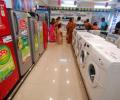
The festival season has already begun in the west and south of India with Ganesh Chaturthi and Onam, respectively, and consumer companies are witnessing a pick-up in sales compared to pre-Covid levels. Retailers, fast-moving consumer goods (FMCG) and consumer durables companies expect their sales to grow in double digits this festival season compared to pre-pandemic times, as there are no curbs on movement now. Adani Wilmar expects sales volume to be higher by 15-20 per cent as rural India has largely witnessed good monsoon rains, and employment has picked up in urban areas.

Leading FMCG firm HUL on Thursday said it has switched to green fuel alternatives such as biomass and biodiesel and has eliminated the usage of coal across its operations. The company has collaborated with biomass suppliers and local farmers to ensure sustainable supply of green fuel and has made the necessary changes for the renewable transition in its coal-fired boilers, said an HUL statement. Besides, the shift from coal to renewable energy sources has also resulted in savings for the company, it added.

Gautam Adani on Tuesday said his ports-to-energy conglomerate never slowed or stopped investing in the country as the group's success is based on its alignment with the India growth story. Speaking at the annual shareholder meeting of the group companies, he said the previously announced $70 billion investment in new energy business will help turn India from being a net importer of oil and gas to an exporter of clean energy. "Never have we walked away from investing in India, never have we slowed our investments," he said. "We believe our scale, our diversified business, and our track record of performance positions us very strongly to continue to perform well in a variety of market conditions."
After toilet soaps, which saw a slew of new launches in 2006, shampoos are the next category that fast moving consumer goods companies are betting big on.
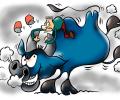
Reliance Industries was the top gainer in the Sensex pack, soaring over 4 per cent, followed by Titan, Tata Steel, Bajaj Auto, Maruti and Dr Reddy's. Nifty advanced 89.45 points to its all-time closing peak of 17,323.60.

Higher prices are burdening household budgets and threatening the margins of leading manufacturers.

ONGC was the top loser in the Sensex pack, shedding around 3 per cent, followed by Sun Pharma, PowerGrid, Axis Bank, HDFC Bank, Bharti Airtel and Kotak Bank. NSE Nifty declined 124.10 points to 14,906.05.

Changes have been made in several indices including Nifty 500, Nifty 200, Nifty 100, Nifty Midcap 150, Nifty Smallcap 250 and host of sectoral indices including FMCG, IT, media, pharma, commodities and services sector.

The new packaging norms, which will kick in on November 1, will push up the product prices.

The consumer buying patterns and preferences have changed significantly with categories like health and pharma, FMCG and agriculture seeing a surge and exponential growth along with the rising number of first-time online shoppers.

"Taking forward the brand's journey towards a more inclusive vision of beauty, the company will stop using the word 'Fair' in the brand name 'Fair & Lovely'. The new name is awaiting regulatory approvals and we expect to change the name in the next few months," Hindustan Unilever Ltd (HUL) said in a statement. As part of the rebranding, the company will also be announcing the new name for the 'Fair & Lovely' Foundation, set up in 2003 to offer scholarships to women to help them pursue their education.

The rain gods, it appears, will play a role in the decision of fast moving consumer goods companies to either raise or maintain prices of their products in the second quarter of the financial year.

'The minimum holding period for equities should be three years.' 'Try goal-based investing.' 'Link your equity portfolios to specific goals such as retirement, purchase of a house or car...'

Titan was the top gainer in the Sensex pack, soaring nearly 7 per cent, followed by ONGC, L&T, Kotak Bank, Axis Bank, Bajaj Finance and HDFC Bank. NSE Nifty soared 114.15 points to end at its lifetime peak of 15,690.35.
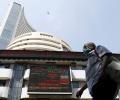
ITC was the top loser in the Sensex pack, shedding nearly 3 per cent, followed by Tech Mahindra, Axis Bank, Asian Paints, TCS, HCL Tech, HDFC and Kotak Bank.
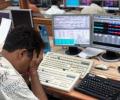
The HDFC duo was the top laggard in the Sensex pack, shedding nearly 4 per cent, followed by PowerGrid, Tech Mahindra, ICICI Bank, ONGC, Kotak Bank, Asian Paints, Infosys and Reliance Industries. NSE Nifty slumped 154.40 points to 14,690.70.
FMCG players -- Dabur, HLL, PSU BPCL, Korean car maker Hyundai, liqour barron Vijay Malaya's Mcdowell and TVS motors -- are among the major companies found to violate Advertising Standards Council of India code.

While FMCG companies were not barred from carrying out their operations during the 21-day lockdown, since most manufacture staples and essential products, capacity utilisation remained poor, owing to the restricted movement of raw materials, finished goods, and labour.

Debt-ridden Future Group is now focusing on saving and rebuilding firms such as -- Future Lifestyle Fashions, Future Supply Chain Solutions, Future Consumer and Future Enterprises, after the Rs 24,713-crore deal with Reliance Retail was rejected by secured creditors, according to industry sources. However, Future Group's flagship firm Future Retail Ltd (FRL), which has nearly Rs 18,000 crore debt, is bound to face the corporate insolvency resolution process before the National Company Law Tribunal (NCLT). Other companies like Future Enterprises Ltd (FEL), Future Lifestyle Fashions Ltd (FLFL), Future Supply Chain Solutions Ltd (FSCSL), Future Consumer Ltd (FCL) can sustain on their own and can be rebuilt by restructuring their liabilities with the help of current lenders and investors, said an industry source close to the Future Group.
The NSE Nifty ended flat at 5,123. Weakness was witnessed in specific sectors like power and FMCG. The BSE power and FMCG indices dropped 0.5% each. However, the realty index managed to hold on to gains and was up 25 at 3,959. Auto and bankex were the other gainers.
Market benchmark Sensex tumbled over 323 points after an intense last-hour sell-off on Wednesday, triggered by losses mainly in index heavyweights Infosys, Reliance and HDFC.

India's top listed companies reported their best-ever quarterly net profit of Rs 2.39 trillion in the September quarter of FY22, up 46.4 per cent year-on-year. The earnings were driven by a big surge in the profitability of banks, non-banking financial companies & insurance (BFSI), oil & gas, and metal & mining firms. The combined net profit of these three cyclical sectors were up 87 per cent YoY to a record high of Rs 1.53 trillion, up from Rs 82,000 crore a year ago and Rs 1.08 trillion in Q1FY22.

Billionaire Mukesh Ambani on Monday laid bare the succession plan at India's most valuable company, identifying twins children Akash and Isha for telecom and retail leadership, and youngest son Anant for new energy unit. He, however, insisted he isn't retiring yet and will "continue to provide hands-on leadership as before". At the annual shareholders' meeting of Reliance Industries Ltd, he said the robust architecture that he has announced will ensure the firm remains "a unit, well-integrated and secure institution even as it develops existing businesses and adds new growth engines."
