
Indian drug regulatory and law enforcement agencies have stepped up their efforts against the illegal manufacture and distribution of spurious drugs. This intensified action follows the seizure of a "misbranded" batch of Abhayrab rabies vaccine in Delhi, prompting nationwide vigilance and arrests.

India's apex drug regulator cautioned against antibiotic self-medication and their use for conditions where antibiotic treatment is not clinically indicated, particularly viral infections, the common cold and fever.

CDSCO has warned consumers against using two unauthorised Pakistani whitening creams after finding excessive heavy metals and regulatory violations.

The vaccine has been cleared for use in individuals aged 4 to 60 years and can be administered irrespective of whether the taker has had dengue before, eliminating the need for pre-vaccination screening.

Inspections conducted across 49 entities including pharmacies, wholesalers, and clinics to detect violations and misleading marketing practices.

The Central Drugs Standard Control Organisation (CDSCO) has initiated a nationwide campaign to test, inspect, and audit cough syrup manufacturers following concerns about contaminated products and child deaths. The initiative aims to ensure adherence to safety standards and regulatory compliance.
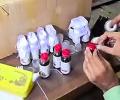
The WHO will take a call on issuing a 'Global Medical Products Alert' on the cough syrup, Coldrif, after receiving an official confirmation from authorities here. The agency issues such alerts for substandard and contaminated medicines.

India's drug regulator CDSCO has recalled three cough syrups and halted their production after the WHO raised concerns about potential contamination and links to child deaths. The WHO is investigating reports of pediatric illnesses and deaths in India potentially linked to contaminated syrups.
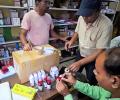
The Central Drugs Standard Control Organisation (CDSCO) will conduct testing, inspection and auditing of cough syrup manufacturers.
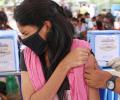
The DCGI's approval came following recommendation by the Subject Expert Committee of the Central Drugs Standard Control Organisation.

There were no safety concerns arising from the study data and Covovax is safe and immunogenic in the adult population, Prakash Kumar Singh, Director, Government and Regulatory Affairs at the Serum Institute of India (SII), is learnt to have said in the application sent to the DCGI.

"We will never approve anything if there is even the slightest safety concern. Vaccines are 110 per cent safe. Some side effects like mild fever, pain and allergy are common for every vaccine. "It (rumours of impotency) is complete nonsense," V G Somani, Drug Controller General of India said.

In the letter, Somani said the samples of four made-in-India cough syrups linked to the deaths of 66 children in Gambia which were tested in government laboratory here were found to be complying with specifications and not to have been contaminated with DEG or EG according to the test reports.

Confirming the Drugs Controller General Of India (DCGI) approval, Serum Institute of India CEO Adar Poonawalla on Tuesday tweeted: '@SerumInstIndia's brand Covovax has completed bridging studies in India and has been granted Emergency Use Authorisation by DCGI for adults and for children above the age of 12. Younger age groups will follow shortly.'

Drug regulator DCGI has asked drug controllers of all states and Union Territories to direct manufacturers under their jurisdiction to monitor the presence of a potentially carcinogenic chemical -- N-Nitrosodimethylamine -- in antacid Ranitidine.

'Once DCGI will give us the permission to restart the trials in India, we will resume the trials,' Serum Institute of India (SII) said in a statement.

The DCGI also directed Serum Institute of India to increase the safety monitoring of the subjects already vaccinated as part of the trial, and submit the plan and report.
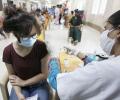
The DCGI's nod came after the subject expert committee on COVID-19 of the CSDCO last week recommended granting emergency use authorisation to Covovax for the age group of 7 to 11 years.
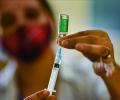
"It has been decided that for approval of COVID-19 vaccines in India for restricted use in emergency situation which are already approved for restricted use by US Food Drug Administration, European Medicines Agency, UK Medicines and Healthcare products Regulatory Agency, Pharmaceuticals and Medical Devices Agency Japan or which are listed in WHO Emergency Use Listing and which are well established vaccines from the stand point that millions of individuals have already been vaccinated with the said vaccines, the requirement of conducting post approval bridging clinical trials and of testing every batch of vaccine by CDL, Kasauli can be exempted, if the vaccine batch/lot has been certified and released by National Control Laboratory of country of origin," it said.
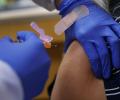
The global trials were halted after a study participant suffered a 'potentially unexplained illness, reports Sohini Das.
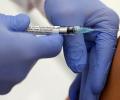
The DCGI arrived at the conclusion on Wednesday based on the recommendations of an independent expert committee which has also opined that compensation should not be paid to the volunteer, they said.
Maya Chemtech India Pvt Ltd supplied propylene glycol used in Marion Biotech's cough syrups that were found to be "not of standard quality", according to the regulator.
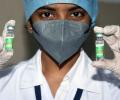
The DCGI said it has no objection in respect of 'Extension of Shelf Life of Covishield Vaccine' in multi-dose glass vial (10 dose-5ml) from six months to nine months.
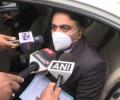
'Safety is my first priority.' 'I need to ensure that any drug or vaccine that our citizens get is first safe.'

This test uses an indigenously developed, cutting-edge CRISPR technology for detection of the genomic sequence of SARS-CoV-2 virus, CSIR said in a statement.

According to sources, around 10 crore doses of the Sputnik V vaccine is likely to be imported for emergency use in the country in the next six to seven months.
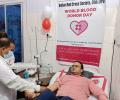
Hospitals and blood banks can now only charge processing fees for blood as the apex drug regulator has decided to do away with all other fees to check the practice of overcharging.

The Serum Institute of India, Bharat Biotech and Pfizer have applied to the DCGI seeking emergency use authorisation for their COVID-19 vaccine candidates and are awaiting approval.

A critical drug developed on a DRDO technology for radiological and nuclear emergencies has received approval from the Drugs Controller General of India (DCGI), the defence ministry said on Tuesday.

An expert panel of the Central Drugs Standard Control Organisation on July 29 had recommended granting permission for conducting the study.
As the Drugs Controller General of India (DCGI) is set to crack down on companies to ensure compliance with printing QR codes on top-selling brands to curb counterfeiting, top pharma companies say they welcome the regulator's mandate and that they are on track. They also view it as a positive step to ensure patient safety. Sheetal Arora, CEO of Mankind Pharmaceuticals, which has already adopted QR codes in 20 of their products, stated: "We strongly advocate for mandatory implementation of barcodes and QR codes on medicines as this initiative will not only protect patients but also strengthen the integrity of our healthcare system by reducing circulation of counterfeit drugs."

The show-cause notice dated February 8 by DCGI V G Somani cited a Delhi high court order dated December 12, 2018, which prohibits online sales of medicines without a licence.

Most of the pharma units are failing in documentation, and validation processes, and many don't have full-fledged quality control laboratories.
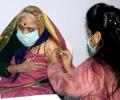
An expert panel of India's central drug authority on Wednesday recommended granting regular market approval to COVID vaccines Covishield and Covaxin for use in adult population subject to certain conditions, official sources said.

While the opposition party asked the government to stop boasting about India being a pharmacy to the world and take strictest action, the ruling party accused it of deriding India in its "hate" for Prime Minister Narendra Modi.

Samples of the cough syrup have been taken from the manufacturing premises in Noida and sent to the Regional Drugs Testing Laboratory (RDTL) in Chandigarh for testing, Mandaviya said.

The approval by the Drugs Controller General of India comes following recommendations by the Subject Expert Committee on COVID-19 of the Central Drugs Standard Control Organisation.
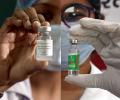
Under the conditions, the firms shall submit data of ongoing clinical trials and the vaccines to be supplied for programmatic setting.Adverse event following immunisation will continue to be monitored.
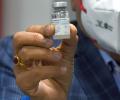
The Subject Expert Committee on COVID-19 of the CDSCO on October 12 after deliberating Bharat Biotech's EUA application had recommended granting emergency use approval to Covaxin for use in the 12-18 years age group with certain conditions.

With regulatory uncertainties clouding the future of online pharmacies, deals in the space are showing signs of slowdown, as also fresh investment from private-equity (PE) firms and venture capitalists (VCs). The data from Venture Intelligence shows so far in 2023 (as of June 13) there has been one deal with PE-VC funding. In 2022 there were four, a sharp fall from the 12, totalling $1,520 million, the sector had attracted in 2021.
