
The Central Information Commission has said the blanket denial of information sought on Foreign Contribution (Regulation) Act renewal applications by the Union ministry of home affairs "appears to be misplaced and without any basis", while observing that the CPIO prima facie "obstructed" the complainant's right to information.

The Petroleum Planning and Analysis Cell (PPAC) has denied an RTI request for data on oil imports from Russia, citing its 'commercial and confidential' nature and exemptions under the RTI Act. The Central Information Commission supported this decision, referencing strategic and economic interests.
The Central Information Commission has ordered the disclosure of an investigation into a retired IRS officer's alleged acquisition of assets under different identities and subsequent name change to claim ownership, deeming the case a potentially significant revelation.
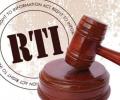
The Delhi high court said on Friday the purpose of Right to Information (RTI) Act is to bring in transparency, and if any information has been sought, it should be made public unless exempted from disclosure under the law.
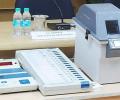
Former Indian Administrative Service (IAS) officer M G Devasahayam, who was one of the signatories to the representation on the credibility of electronic voting machines (EVMs), voter-verifiable paper audit trail (VVPAT) and the vote-counting process, had filed an application with the poll panel under the Right to Information (RTI) Act, seeking details of the action taken on it.

Durve argued that the word 'secret' is nowhere in the exemption clause under which information could be denied to an applicant.

The RTI exemptions cited by the CPIO to deny information relate to intellectual property rights, trade secrets and information in the nature of commercial confidence, fiduciary relationship, threat to life and safety of persons who give information to law enforcement agencies in confidence, impediment to investigation, prosecution or apprehension and privacy of an individual.

The Union Health Ministry has said in response to a Right to Information application that it does not know where records related to agenda circulated in meetings of the National Expert Group on Vaccine Administration for COVID-19 are held.

Justice Yashwant Varma took on record and accepted the statement made by CIC counsel that all endeavour shall be made to decide the appeal expeditiously and in any case within 8 weeks.

Information Commissioner, in a terse order, pointed out that the website of the application mentions that the content on it is "owned, updated and maintained" by MyGov and MeitY

'The Central Public Information Officer is not required to furnish information which requires drawing of inteference and/or making of assumption, or to interpret information, or to solve the problem raised by the applicant, or to furnish replies to hypothetical questions. 'The Information sought does not come under the definition of information as defined in Section 2(f) of RTI Act, 2005. The CPIO has no specific information to provide (sic),' it said.

The disclosure of files provided by India's second army chief General Sir Roy Bucher to Nehru Memorial Museum and Library about Jammu and Kashmir related to the period of 1947-49, which may throw light on Accession, is in 'national interest,' the central information commission has observed in an order.

The CPIO had rejected the three RTI queries on the ground that the Rs 10 Postal Order meant for fees for providing the information, was blank in one and in the other two cases, they were made out in favour of the CPIO.

The matter came up before Justice Subramonium Prasad who listed it for hearing on October 16.

The Delhi high court on Wednesday dismissed an appeal challenging a single judge's order quashing a plea seeking the agenda of the Supreme Court collegium's meeting on December 12, 2018, when certain decisions were purportedly taken on the elevation of judges to the apex court.
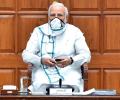
The high court was hearing a plea by Samyak Gangwal challenging a June 2 order of the Central Public Information Officer (CPIO), PMO, refusing to provide documents sought by him on the ground that PM CARES Fund is not a public authority under the RTI Act.

The ministry has said the information is classified as 'top secret' and it cannot be disclosed.

The commission has also sought records related to the termination of the deal to be presented before it in an in camera proceedings for its perusal before deciding whether they can be disclosed under the RTI Act or they attract its exemption clauses.

The Central Information Commission has issued a show-cause notice to Prime Minister's Office for not replying to an RTI query filed nearly one-and-a-half years ago.
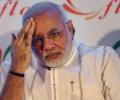
The issue of 1978 DU degree records cropped up after Aam Aadmi Party raised questions about the degree of the PM.

Justice Yashwant Varma issued notice on the challenge to the CIC order by the Income Tax Authority and sought the stand of the RTI applicant Girish Mittal, saying that "the matter requires consideration."
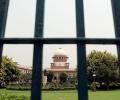
The Delhi high court on Wednesday dismissed a challenge to the Central Information Commission's order dismissing an RTI appeal seeking the agenda of the Supreme Court collegium's meeting on December 12, 2018, when certain decisions were purportedly taken on elevation of judges to the apex court.
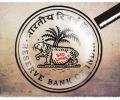
The CIC's directive came while deciding on a plea by Lucknow-based activist Nutan Thakur, who had based her RTI application on some media reports that RBI deputy governor Viral Acharya in a lecture in 2017 had said accounts of some loan defaulters have been sent to banks for resolution.
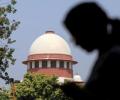
A five-judge Constitution bench headed by Chief Justice Ranjan Gogoi upheld the 2010 Delhi high court verdict and dismissed three appeals filed by Secretary General of the Supreme Court and the Central Public Information officer of the apex court.

The proposed rules, aimed at replacing RTI rules of 2012, have been placed by the department of personnel and training on its website for comments from public.

Opposing the Centre's stand that the PM CARES Fund was not a government fund, a lawyer told the Delhi High Court Wednesday that there was no factor to show that the fund was private in nature.

The order is is contrary to the Central Information Commission's directive bringing six national parties under the transparency law.

Information Commissioner Sridhar Acharyulu said it was surprising to know that on these national aspects, the Central Public Information Officers of all high offices simply passed it on to the others "without application of mind".
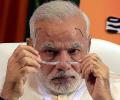
The Central Information Commission has directed the PMO to answer the question within 15 days.

Setting a new bench mark in transparency in politics, the Central Information Commission has held that political parties are answerable under the Right to Information Act.
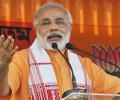
Delhi University had claimed that unless the roll number of a student is not provided, it would be difficult to search the records.

The Association for Democratic Reforms has complained against six major political parties for not appointing Public Information Officers.

The Parliament and the Supreme Court buildings are facing serious fire safety issues with the apex court premises not getting safety certificate from the fire authorities for last 10 years.

Political parties should not be brought under the ambit of the Right to Information Act by terming them 'public authorities', as this would not only hamper their smooth working but help political rivals to file pleas with malicious intention to seek information, the government told the Supreme Court on Monday.

The Central Information Commission has directed the sports body and the Ministry of Youth Affairs and Sports to explain.
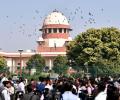
The bench said it was necessary that question of 'judicial independence is accounted for in the balancing exercise' with RTI.
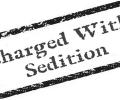
With tags of 'patriots' and 'anti-nationals' being at the centre of debate, the Central Information Commission has asked the home ministry to make public the list of people who are facing sedition charges for indulging in alleged anti-national activities.

The commission suggested that a comprehensive plan should be devised to handle the issue of missing files which has become a "stumbling block" in implementing the RTI act.

The Central Bank has stonewalled almost every RTI query pertaining to demonetisation citing one or the other reason.
They've also asked to explain how the disclosure of the documents would impact the country's economic interests.
