
Andhra Pradesh Health Minister Satya Kumar Yadav announced the detection of the Omicron RF.5 variant in four COVID-19 samples from Kadapa district, confirmed by genome sequencing in Pune. While the variant is being monitored by WHO and health officials, there is currently no indication it is more dangerous than other Omicron strains, and public vigilance is advised over panic.

Scientists stress there is currently no evidence of human infections, or community spread linked to the virus.

A new study suggests a blood test called 'VeloCD' can predict the trajectory of an illness and how well a patient might respond to treatment by measuring key markers in the blood.

The research would lead to a better understanding of metabolic reprogramming and aid the development of better therapeutics to deal with the viral pandemics, an institute spokesperson said on Wednesday.

Covid is growing milder with time but an occasional surge in cases is expected because the virus that causes it is now endemic and constantly evolving, say scientists while assuring that there is no cause for concern.

As of May 2025, the World Health Organization (WHO) classifies LF.7 and NB.1.8 subvariants as Variants Under Monitoring, not as Variants of Concern or Variants of Interest. But these are the variants that are reportedly driving the rise in Covid cases in China and parts of Asia.

China on Wednesday accused the United States for originating COVID-19, claiming America was trying to 'shift the blame' after US President Donald Trump said that the disease was leaked from a Wuhan lab, New York Post reported.

A Chinese team of virologists has discovered a new bat coronavirus that can infect human cells, raising concerns about potential animal-to-human transmission. The virus, a new lineage of the HKU5 coronavirus, uses the same human receptor as the virus that causes COVID-19. The study, led by Shi Zhengli, a prominent virologist at the Wuhan Institute of Virology, was published in the journal Cell. The discovery comes amid ongoing scrutiny of the Wuhan lab, which was previously accused of being the source of the COVID-19 pandemic. The Chinese government has denied any involvement in the virus's origin and insists that the Wuhan lab never engaged in gain-of-function studies on coronaviruses.
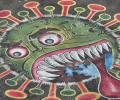
Human Metapneumovirus (HMPV) is a respiratory virus that causes illnesses ranging from mild respiratory discomfort to severe complications. It spreads through respiratory droplets, similar to other respiratory viruses such as RSV and influenza. This article provides an overview of HMPV including its symptoms, transmission, prevention, diagnosis, treatment, and how it differs from COVID-19.

India currently does not have any XBB 1.5 variant-based vaccines available.
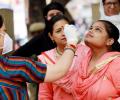
As many as 290 cases of KP.2 and 34 cases of KP.1, both sub-lineages of COVID-19 that are responsible for surge in cases in Singapore, have been found in India, according to official data.
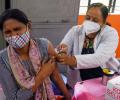
The research published in 'Nature Nanotechnolog' on Monday is based on a new approach to vaccine development called "proactive vaccinology", where scientists build a vaccine before the disease-causing pathogen even emerges, which has shown promising results in mice.

WHO has urged people at risk to keep up with their vaccinations with boosters.
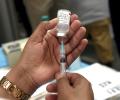
The ICMR-National Institute of Virology has been regularly undertaking studies to understand the protective efficacy of COVID-19 vaccines against emerging variants.

'But it is only now being detected more via a test that costs about Rs 15,000 to Rs 20,000.' 'The HMPV virus typically causes mild respiratory symptoms in most people, but can be more severe in young children, the elderly, and those with compromised immunity.'

Ten states and Union Territories have so far detected the presence of the JN.1 sub-variant of the virus.
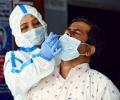
India on Wednesday reported 21 cases of the JN.1 Covid variant, a development that is neither surprising nor particularly worrying, scientists said while allaying fears but also advising adherence to existing precautionary measures.
In the wake of the surge in respiratory diseases and new JN.1 sub-variant of COVID-19, the World Health Organisation (WHO) said that the virus is evolving and changing and urged the member states to continue with strong surveillance and sequence sharing.
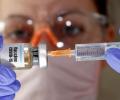
Until now, it has been unclear what effects hypervaccination such as this would have on the immune system. Some scientists were of the opinion that immune cells would become less effective after becoming used to the antigens.
In a letter to states and Union Territories, Union health secretary Sudhansh Pant underlined that "due to consistent and collaborative actions between the Centre and state governments, we have been able to sustain the (COVID-19) trajectory at sustainable low rates".

'It is admitted that the AZ vaccine can, in very rare cases, cause TTS.'

Considering the limited available evidence, the additional public health risk posed by JN.1 is currently evaluated as low at the global level, Singh said.
The study showed that SARS-CoV-2 primarily infected and damaged airway and lung tissue.

India has covered enough population with vaccine and infection, but protein vaccines should remain available on payment basis for elderly and those with comorbidities.
The World Health Organisation (WHO) has classified the EG.5 strain of the SARS-CoV-2 virus circulating in different parts of the world, including India, as a 'variant of interest' but said it did not seem to pose more of a threat to public health than other strains.
Serious AESI, which included stroke and Guillain-Barre syndrome, were reported in one per cent of individuals, the study, which looked at long-term safety of the BBV152 vaccine in adolescents and adults, claimed.

Twenty-two cases of COVID-19 sub-variant JN.1 have been detected in the country till Thursday, with 21 cases being reported from Goa and another from Kerala, official sources said.
Signalling pathways are complicated chain reactions which control many important human biological processes and in which certain proteins act as messenger molecules that promote or block the signals of other proteins.

As of now, Gennova Biopharmaceuticals has launched a vaccine, Gemcovac-OM, which is based on the Omicron variant.
Despite these rare occurrences, the pharmaceutical company maintains that extensive clinical trial data and real-world evidence consistently support the vaccine's safety and efficacy.
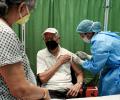
George said this was detected months ago in Indian passengers who were screened at Singapore Airport.
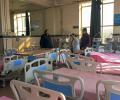
Several states have been reporting an uptick in the number of COVID cases over the last few weeks and nine states and Union territories have so far detected the presence of the JN.1 sub-variant of the virus.

COVID-19 sub-variant JN.1 has spread to 15 states and Union territories with a total of 923 cases of the infection reported so far, according to the Indian SARS-CoV-2 Genomics Consortium (INSACOG).
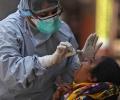
A drug developed by the Defence Research and Development Organisation (DRDO) may reverse the heart damage caused by a protein in the SARS-CoV-2 virus, a study conducted in fruit flies and mice has found.

The researchers from the University of California, San Francisco found pieces of SARS-CoV-2, referred to as COVID antigens, lingering in the blood up to 14 months after infection and for over two years in tissue samples from people who had COVID-19.
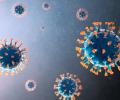
A case of COVID-19 sub-variant JN. 1 has been detected in Kerala as part of an ongoing routine surveillance activity of the Indian SARS-CoV-2 Genomics Consortium (INSACOG), a senior official from the Indian Council of Medical research (ICMR) said on Saturday.

The Drugs Controller General of India has approved the manufacture of this Sars-CoV-2 spike protein recombinant nano-particle vaccine for 'examination, test, and analysis', reports Sohini Das.

Of the seven cases, three were found in Gujarat and one each in Karnataka, Telangana, Chhattisgarh and Rajasthan, Indian SARS-CoV-2 Genomics Consortium (INSACOG) said.
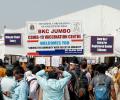
Of the fresh cases, nine were caused by JN.1, increasing the number of infections tied to the new sub-variant in the state to 10, it said.

Nine cases have been detected from Maharashtra, eight from Karnataka, six from Kerala, four from Tamil Nadu and two from Telangana, they added.
