
After Modi became the prime minister, the Indo-US relationship has seen an upward trajectory, he said.

General Qamar Bajwa, his colleagues say, is a firm opponent of extremism and terrorism. He may prove even more forceful in the fight against terrorism than his predecessor, who is credited with launching Operation Zarb-i-Azb, which helped lower the frequency of terrorist attacks.
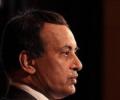
It has been over two years since Husain Haqqani was forced to resign from the coveted post of Pakistan's envoy to the United States.
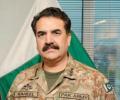
Ending weeks of speculation, Prime Minister Nawaz Sharif on Wednesday appointed Lt Gen Raheel Sharif as Pakistan's new army chief and Lt Gen Rashid Mehmood as the chairman joint chiefs of staff committee.
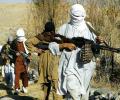
Pakistan National Security Advisor Sartaj Aziz brings to New Delhi a newfound Pakistani confidence, stemming from its leverage in Afghanistan, says Ajai Shukla
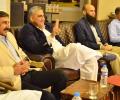
'Over the last year, Bajwa has created the environment to support bold moves on India. The ball is in India's court,' a senior Pakistan military officer tells Ajai Shukla.
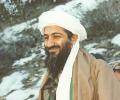
Investigative journalist Seymour Hersh claims that ISI got hold of bin Laden in 2006 after paying bribes to some of the tribal leaders

'I do not believe that they have become terrorists and have gone to Syria to fight.' 'I feel they have only become very orthodox Muslims.'

The United States drone attack that killed Pakistani Taliban chief Hakimullah Mehsud has done "serious damage" to the Islamabad's efforts for a dialogue with militants, Prime Minister Nawaz Sharif said on Tuesday.

With Pakistan's powerful army chief Gen Ashfaq Parvez Kayani's term coming to an end in November, names of top generals who are likely to succeed him are being discussed in the political circles and in the corridors of power.

Experts trace the reasons for the 26/11 attacks to the Pakistan's military interest in three key areas: Kashmir, Afghanistan and nuclear armaments.
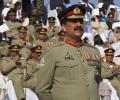
'Already, there is talk of a possible extension for Raheel Sharif in the context of his perceived sterling, but incomplete work in the war against terror, as also the cleansing of crime and extortion networks in Karachi,' says Rana Banerji.

Ignoring the boycott call by separatist groups and braving cold weather, nearly 70 per cent polling was on Tuesday, in most of the 15 constituencies going to polls in first of the five-phased polls in Jammu and Kashmir.
New Delhi's decision not to call for a flag meeting underlines its conviction that the military cost will soon become too high for Pakistan.
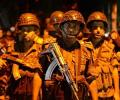
All the hostages killed during the 12-hour siege by Islamic State terrorists were foreigners, with most being Italian or Japanese.
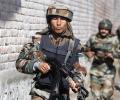
'After General Raheel Sharif took on the Tehrik-e-Taliban Pakistan, some sections of the military establishment may have felt unease as to whether the crackdown could be extended against friendlier 'non-State' actors like the Lashkar-e-Tayiba.'

Pakistan's hawkish Army chief Gen Ashfaq Parvez Kayani, who did little to change the force's India-centric stance, will leave the world's sixth-largest army grappling with a host of security challenges when he steps down on Friday.

'A close look at the time-lines tells you that exactly as the back-channel negotiations were in their most crucial stage, "somebody" was planning the 26/11 attacks in Mumbai,' says Shekhar Gupta questioning Khurshid Mahmud Kasuri's account of a peace deal with India.

'General Bajwa is believed to consider the internal threats to Pakistan's security as far more serious than the bogey of the Indian threat.' 'This doesn't mean that he is soft on India, only that he is more rational and sensible than his predecessor who had a bit of a chip on his shoulder about India,' points out Pakistan expert Sushant Sareen.
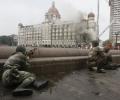
Through its early days to the 1980s, Pakistan sought to expand its sphere of Islamic influence through Afghanistan to Central Asia and got Pakistani citizens recruited in the Afghan government institutions in the 1990s when the Taliban were power. Now, it is looking eastward through India to Bangladesh and Myanmar to establish an imaginary caliphate.

The US needs to do three things to help the newly elected Nawaz Sharif government in Pakistan, says Stanley A Weiss

Pundits in Pakistan and also some western diplomats are predicting that the next army chief will be forced, partly by institutional pressure and partly by circumstances, to indulge in some tough talking with the civilian leadership. How the civil-military equation settles in this sort of a situation is something that will determine the future of Pakistani politics, and also Pakistan's relations with rest of the world, says Sushant Sareen.
