
With NEET Round 3 allotments concluded, medical aspirants are now evaluating their options, including participation in stray rounds, understanding penalties for not joining allotted seats, and exploring private or deemed university admissions.

The comparisons show where last year's cutoffs are still a usable guide and where you need to reset your expectations before Round 2.

If your All India Rank (AIR) is in the three digits, you could get a seat at one of the prestigious AIIMS colleges and pay tuition fees of just under Rs 10,000 for the entire course. At the other end of the spectrum, if your AIR is in the lakhs, you could end up shelling out a crore at a private or deemed institution.

A good NEET score improves your chances of admission. But the counselling process ultimately determines which college and course you will join.

The Centre on Tuesday told the Supreme Court that it has constituted a high-powered committee headed by the director general of health services (DGHS) to formulate a mechanism for conducting a comprehensive audit of the existing system of admission through the NEET-PG examination.

As the Medical Counselling Committee (MCC) web site opens for NEET-UG registration, aspiring medical students are urged to avoid simple, yet costly, mistakes during the online counselling process, with experts advising thorough preparation and careful choice filling.

High fees do not automatically translate into better teaching or stronger clinical exposure, points out Nayagam PP, career counsellor and founder of EduJob360.

Be aware of a set of costs that never appears on a college's fee page. They sit as clauses near the end of the state counselling body's prospectus and, in many states, not even there, warns Ashok Hegde, founder, neet2seat.

Many students who do well in the NEET exams miss out on a medical seat because they didn't get their documentation in order. You don't want to be that student, says Ashok Hegde.

The Supreme Court will examine whether the reduction in NEET-PG qualifying marks affects the standard of postgraduate medical education, following petitions challenging the cut-off reduction for the current academic year.
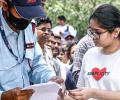
In its notice dated June 2, NBEMS said the exam, conducted for admission to MS, MD and PG diploma courses, has been postponed to arrange for additional test centres and infrastructure.
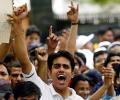
The government on Thursday announced a 27 per cent quota for OBCs and 10 per cent reservation for the economically weaker sections in the all-India quota scheme for undergraduate and postgraduate medical and dental courses from the current academic year, 2021-22.
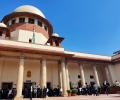
Dealing with the validity of OBC quota, the bench said, "Merit cannot be reduced to narrow definitions of performance in an open competitive examination which only provides formal equality of opportunity. Competitive examinations assess basic current competency to allocate educational resources but are not reflective of excellence, capabilities and potential of an individual which are also shaped by lived experiences, subsequent training and individual character."

Quoting Greek philosopher Socrates, Justice Bopanna emphasised that there are four qualities that are expected of a judge -- to hear courteously, to consider soberly, to answer wisely and to decide impartially.
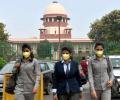
The Supreme Court Friday set aside a Madras High Court direction that the Centre must seek the top court's approval before implementing 10 per cent reservation for the economically weaker sections in all-India quota seats of medical colleges.

This roadmap will benefit nearly 13 lakh students who have registered for the medical entrance exam this year.
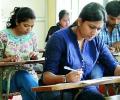
Now candidates can appear for NEET any number of times.
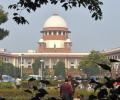
A bench comprising Chief Justice N V Ramana and Justices Surya Kant and Hima Kohli also issued notice on the plea filed by the Centre seeking transfer of the case from the high court to the apex court which had earlier referred to the similar case for adjudication to a five-judge Constitution bench.
Medical seats for under-graduates and post-graduates remaining vacant in the NEET era, together with the Centre 'freezing' the number of medical colleges and seats in (Dravidian) Tamil Nadu and the launch of the PM's 'Vishwakarma Scheme' for the nation's craftsmen, are all seen as a bid to further reverse the state's progressive socio-economic agenda of and its achievements of the past hundred-plus years, argues N Sathiya Moorthy.
The Central Board of Secondary Education (CBSE) will announce the results online.
