
'Soft power is the power really to win friends and influence people with the strength of your ideas.' 'India's greatest soft power is being India itself. A nation of varied beliefs, states, creeds, castes, languages and yet embodying that spirit of unity in diversity.'

An array of Olympians and stars of sports niche and new arrive in the South Korean city of Incheon for the 17th Asian Games this month, bringing together some 10,000 athletes for a 16-day multi-sport spectacular second only in scale to the Summer Olympics.

Two months after launch, low-cost warrior AirAsia is expanding to uncharted routes in India.

Entrepreneurship hasn't been a cakewalk for him, says Sinha.

Meet Srihari Sathe. Producer. Director. Professor.

'Jin Jiang had invested in Louvre Hotels.' 'Louvre, a couple of months ago, took a majority in Sarovar hotels.' 'So they are coming in now.' 'Look at the Chinese -- two quarters ago they took 25 percent in Hilton.' And then HNA also took majority in Carlson (Radisson).'

India has made a remarkable journey from a top-down system of economic decision-making to one that unleashed our entrepreneurial spirits but the next big jump lies in enhancing the quality of our tale.

'There has definitely been a breakthrough in the nuclear logjam. It is good to see nuclear energy back on the rails,' says Dr Anil Kakodkar, former chairman, Atomic Energy Commission.

An excerpt from Conde Nast India's Make In India magazine.

'Our approach to India is no different from the approach that we have made in India over the years, recognising its non-aligned status. That's their decision; we're not trying to change that. We have common interests, and we have actually built on those common interests... We think there's more potential to build on those common interests.' 'Security, stability, freedom of sea lanes, economic development, energy, all those are certainly in the interest of India and the region, as they are to the United States.' The transcript of US Secretary of Defence Chuck Hagel's interaction with reporters travelling with him hours before he landed in New Delhi on Friday on a three-day visit to India.
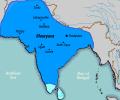
'There is a remarkable link between the eating of beef (or at the very least, tolerating the eating of beef) and India being a superpower.' 'In India, whenever an empire was strong, religion took a back seat.' 'Alternatively, whenever religion asserted itself, the main empire of India crumbled...'

We're behaving like frogs in warm water. We swim around untroubled, cooled by our faith in Indian liberal democracy. We are blind to the bubbles popping around us, the bubbles warning of fundamental changes, says Mihir S Sharma.

The developments in Af-Pak region, particularly the fall out of Pak political paralysis, would make President Xi Jinping's task a little more complicated, says Colonel R Hariharan.
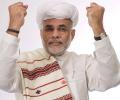
Two former senior United States diplomats, with more than 60 years experience in South Asia between them, have exhorted Washington to establish communication with Bharatiya Janata Party's prime ministerial candidate Narendra Modi sooner than later.

In perhaps the first major conference on the United States-India strategic partnership in the aftermath of the Khobragade controversy that plunged the bilateral relationship in a downward spiral and is now in the process of being resurrected, the undeniable consensus among the panelists and participants was that much ballyhooed strategic convergence between Washington and New Delhi has dissipated.

'India was in no position to wage another war in 1965, having suffered a morale-shattering defeat in 1962. The three services were in the middle of a modernisation and expansion phase and therefore not fully trained or battle-ready.'
'Greenpeace has been brutal in targeting both India and the Manmohan Singh government. The push to go after Indian coal is driven by its long-term agenda. What is surprising is that China has not been meted out the same treatment, despite the fact that the rise of China as an economic power has been built around generating power from coal. 'Being richer and more affluent, yet far less democratic, there is less room for an NGO such as Greenpeace to drive home a complicated global agenda, so there is more of a tendency to go along with anything the Chinese offer despite China being the biggest by far with regard to coal use. But for India, it reserves tougher prescriptions, notably for its middle class, says Srinivas Bharadwaj.

India'sstartups have a good beginning but will they survive competition is a big questions which needs immediate attention.

'Modi wants to be pragmatic -- acknowledge the problem of Pakistan and that full reconciliation is essentially a non-starter, but at the same time grab the low-hanging fruits (such as trade) to put things on a more even keel, to engender enough stability in the relationship to allow him to focus on other priorities.'

'When it comes to India-Pakistan relations, seminal moments of progress invariably bring out saboteurs of peace -- whether we're talking about fresh provocations along the LoC, or even a terror attack in India.'

'We have a common way of looking at the world, a common way of thinking, and a common set of values that predispose us to be partners. And our interests overlap greatly,' Dr Ashton B Carter, America's next defence secretary, told Aziz Haniffa/Rediff.com in an exclusive interview.
 © 2026 Rediff.com - Advertise with us - Disclaimer - Privacy Policy - Sitemap - Feedback - About us - Terms of use - Grievances