
On the revenue front, the finance ministry was expecting higher proceeds from non-tax revenue.

He will presumably choose to remain true to the framework he has put in place.

Adopting a wait- and-watch approach ahead of US Fed meeting

Analysis of the 7th Pay Commission's recommendations.

It is only 'zero-cost' money from FPIs that is keeping the market afloat

Lack of new investments may undermine higher consumption

GST rate cut for real-estate, income transfer scheme, farm loan waivers execution and recapitalisation of PSU banks have the potential to boost India's growth in a few months, says Neelkanth Mishra.

Broader markers outperformed their larger peers.

BKS and BMS leaders have told the BJP leadership that it is staring at a build-up of anti-government propaganda in the run-up to polls in five states.

The Budget has to provide for capex on roads, railways, defence and other infrastructure sectors.

We should work in unison to boost growth: FM

Post the correction over the past one year, we are seeing opportunities across sectors.

In July, IRS officers in Mumbai held an incendiary meeting where they criticised the alleged interference in 'operational matters' by the department of revenue.

'The domestic scenario is much better than earlier, demonstrated in the March quarter earnings.'

Being mandatory, these recommendations will have to be immediately built into the Budget for 2015-16.

'The market position from here on is expected to go up'.

Participants are keenly awaiting the rollovers to the next series ahead of the expiry of June F&O.

Three key babus will make room for a new set of officers to carry the baton of Budget programmes.

Dealer despatches will probably be a good signal of economic turnaround or further deterioration, says Devangshu Datta.

The repo or short term lending rate remains unchanged at 6.75 per cent and the reverse repo rate at 7.75 per cent.
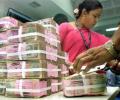
Capex for next year expected to be up 25% to Rs 3 lakh crore

Economists have cautioned that any deferment of the government's fiscal goals would prove counter-productive and raise the interest payment burden.
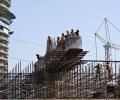
Lack of political consensus on economic reforms a key concern.

Yogi Adityanath on Monday completed 100 days in office as Uttar Pradesh chief minister but it was a low-key anniversary with no big event to showcase the achievements of the government.

Managing Brexit, inflation and banking reforms, along with the political environment, will be tough.

Inflation is down, growth is headed for recovery. RIL and subsidiary Jio are on an upswing. However, stressed loans and impending job losses are the dark clouds, says Devangshu Datta.

Assessing the shape of the Indian economy just a couple of days ahead of the Union Budget for 2016-17, Saugata Bhatacharya, senior vice president and chief economist, Axis Bank, speaks about his budget wishlist and suggests measures that can help finance minister Arun Jaitley achieve the targeted fiscal deficit of 3.5 per cent of India's gross domestic product.

PFRDA will invite bids to appoint pension fund managers.

Any correction in Indian equities is an opportunity for investors to put in money for the long term

The Survey shows fiscal consolidation despite slowdown in growth.
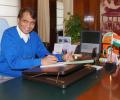
Railway Minister Suresh Prabhu faces a stiff dilemma on whether to raise fares and freight rates in his second Rail Budget.

The S&P BSE Sensex shed 286 points to close at 24,539 and the Nifty50 lost 100 points to end at 7,456.

Relying on the private sector to undertake infrastructure investment may not be a realistic proposition.

'I want to leave behind the bank stronger and better than when I took over.'

The bigger worry is that its effects could linger well into the next financial year.

More than 24 years later, case of wilful absence has finally been proven against the bureaucrat.
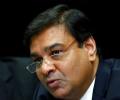
Lower inflation, FCNR(B) outflows likely to influence central bank decision

The markets gained nearly 7 per cent in the 4 trading sessions of March.

Contract workers are paid much less than regular workers. This year's Economic Survey estimates wages are on an average 20 times higher in the formal sector than in the informal sector. Arindam Majumder reports.
The higher salaries and pension outgo will be equivalent to about one per cent of the GDP.
 © 2026 Rediff.com - Investor Information - Advertise with us - Disclaimer - Privacy Policy - Sitemap - Feedback - About us - Terms of use - Grievances