
United States President Barack Obama must focus on Pakistan, which is home to more terrorist groups than any other country, for success in the war against terrorism. "This year, President Obama must focus like a laser on Pakistan. He has already promised to travel to the country in 2011," said former CIA official Bruce Riedel. "And he will need to signal our determination to (subtly) help broker a rapprochement between India and Pakistan, with the aid of key players," he said

Trump can afford to say that COVID-19 is a 'China virus', but we can't expect Modi to say that aloud while his actions may speak louder, says Rup Narayan Das.

McChrystal, 55, has been given a teaching position at Yale University, which will commence this year.
Richard Fontaine had an exclusive chat with rediff.com readers on Monday evening where he discussed the presidential visit and the way forward between the two countries, and their respective stands on a range of significant issues -- from the US foreign policy to rise in visa fees.
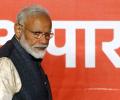
The article is in stark contrast to the TIME cover story done on Modi earlier this month titled 'India's Divider in Chief', written by Aatish Taseer, son of Indian journalist Tavleen Singh and late Pakistani politician and businessman Salmaan Taseer.
Charging that Islamabad has not taken any concrete action against the group, Daniel Markey, Senior Fellow for India, Pakistan and South Asia, Council on Foreign Relations (CFR), said US President Barack Obama should focus on LeT and other extremist organisation which are of enormous concern.

India's soft power diplomacy came into play during this cataclysm affecting the world as the pandemic defies barriers and borders, notes Rup Narayan Das.

The euro 750-bn package shows the will to protect the EU, but yoking structurally surplus nations to deficit ones makes the euro's survival risky - more capital flows to the US and emerging markets will hurt them.
The United States is persuading Islamabad that it faces a greater threat from terrorist groups which it had earlier nurtured than from India, a well known American expert on South Asia has said.
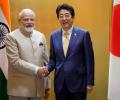
With the signing of the pact, the Quad grouping of India, Japan, Australia and the US is set to gain more heft now, notes Dr Rajaram Panda.

Labour law changes for three years may not be enough as it takes a couple of years for factories to build and operations at a proper scale start only in the third or fourth year.
His 35 years of professional experience encompass conceptual design, payload trades, detailed component design, and hardware test for commercial and military satellites. He holds 32 United States patents.
The deepening of strategic relationship between India and the US has unnerved China, an eminent American scholar said, arguing that Beijing's four-decade-old policy of dealing with New Delhi on their own terms has gone haywire.
China's new confidence 'borders on arrogance' which is starting to create problems for world affairs, Kenneth G Lieberthal, director, John L Thornton China Center and Senior Fellow at the Brookings Institution said in New Delhi.
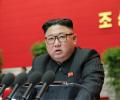
Kim did not rule out diplomacy with the Biden administration despite that Pyongyang called Biden a 'rabid dog' after Biden labelled Kim a 'thug'.
'We should encourage all of our partners in the counter-terror world to break up these cells and use any intelligence gained to undermine and weaken this threat. This is a good counterterrorism policy, a good policy for keeping India assured that we take their concerns seriously in the war on terror, and a good way to put pressure on Islamabad to finally take on Lashkar at home,' Bruce Riedel observed.
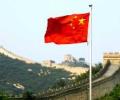
Beijing's increasing influence in immediate neighbourhood of India has made it a bit nervous, but bilateral trade between the two Asian giants would be the stabilising force in Indo-China relationship, a noted American expert on China has said.
Curtis, who was the lead panellist at a conference at The Brookings Institution titled, The US-India Nuclear Agreement: Expectations and Consequences,' said, "During the Bush Administration, US officials broke the habit of viewing India solely through the India-Pakistan lens. Washington developed a greater appreciation for the Indian democratic miracle and viewed our shared democratic principles as the bedrock for a broader strategic partnership."
'It is all Pakistan. They have not thought of bringing India into the biggest foreign policy crisis the US has had, which is Afghanistan and eventually Pakistan,' says South Asia expert Stephen P Cohen.
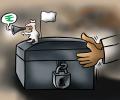
For some of the business majors, the fund outgo for the 2019 elections has risen as much as 15 to 20 times, compared to the amount given to political parties five years ago.

'The virus of trust deficit seems to be taking a toll of the friendship built over the years by succeeding leaderships of the two countries,' notes Rup Narayan Das.
The US Secretary of State Hillary Clinton should be prepared to make 'compromises on global issues' on which the United States and India have disagreed in the past, during her maiden visit to India this week, a foreign policy expert said on Thursday.
During her visit to India this week, United States' Secretary of State Hillary Clinton should be prepared to make 'compromises on global issues', on which the US and India have disagreed in the past, a foreign policy expert said. Evan A Feigenbaum, senior fellow for East, Central and South Asia, said these include the international trade regime and possibly some arms control treaties. "The challenge will be to manage these disagreements toward compromise," he said.
Finance Minister Pranab Mukherjee might have to fall back on divestment and other non-tax revenue sources while presenting the Budget for 2009-10 on July 6, economists believe.
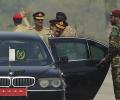
Bruce Riedel, a former CIA analyst who was one of the key architects of US President Barack Obama's Af-Pak policy during his first term, has called for an offensive strategy against terrorist networks and this includes hitting out at terrorist groups inside Pakistan.
Bruce Riedel, now a senior fellow at the Brookings Institution who is being talked about as likely to be tapped for a senior position in an Obama Administration that deals with South Asia, said while the LeT's continuing relationship with the Pakistani intelligence services, the ISI, is much debated and the Pakistani authorities deny any such relationship, "The fact is that the organisation has been tolerated in Pakistan despite the 2002 ban."

Revive growth by taxing fuels less and lowering interest for productive loans.
Some South Asian experts in Washington, DC argue that such an envoy should concentrate only on Afghanistan and Pakistan; another section holds that India should be included and that a discussion on Kashmir is inevitable; and a third section of opinion contends that the whole idea is misguided.
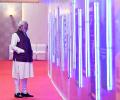
Despite all of the PM's many strengths, it is increasingly clear that he does not necessarily have a coherent and clear worldview on matters of macro policy.
Strategic affairs specialist Ashley Tellis believes the November 26 terror attacks on Mumbai has given birth to the "misguided notion" that a resolution of the Kashmir dispute is imperative to rein in terrorism in South Asia, and that this should be the priority of the proposed special envoy to the region.
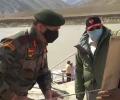
'We should not minimise the seriousness of Chinese encroachments because their perception is different.' 'Nor should we fall into the trap of accepting so-called 'buffer zones' in areas of overlapping claims. We cannot have buffer zones in our own territory,' asserts Ambassador Shyam Saran, a former foreign secretary.

Had India agreed to join the trade pact, Indian markets would have been flooded with cheap Chinese products.
Cohen, testifying before the Senate Homeland Security and Government Affairs' Subcommittee on International Security on the safety and security of Pakistan's nuclear arsenal and the US-Pakistan strategic relationship, predicted that "Pakistan may decide, as a matter of state policy, to extend a nuclear umbrella -- or engage in nuclear sharing --with one of more Middle East states, especially if Iran acquires a nuclear device."
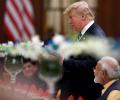
Modi may take satisfaction from his display of considerable political skill in managing a mercurial, temperamental and unpredictable US president and nudging him into uncharacteristic restraint and even carefully orchestrated remarks. This personal chemistry will come in handy if Trump returns as president in the November elections, says former foreign secretary Shyam Saran.
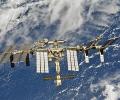
Once ISRO masters the technology to send humans into space, the next step will be experimenting with technologies allowing humans to live in space.
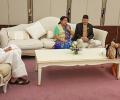
'Instead of writing NAM's obituary, India should reinvent it,' suggests Dr Rup Narayan Das.

'Outside investors don't want to get tangled up in a religious war.'
South Asia expert Daniel Markey believes India will not go to war with Pakistan. His reading of comments made by the external affairs minister leads him to believe that India does not consider a short-term military solution.
Daniel Markey, a senior fellow at the Council for Relations, is a long-standing expert on India, Pakistan, and South Asia, specialising in security and governance, international conflict, theories of international relations, and the US foreign policy in the region.
"There is a tendency in America to romanticise Indian democracy. These analyses ignore growing insurgencies, corruption at the state level and increasing political and religious violence," says Dr Larry Diamond, professor of political science and sociology at Standford University and a senior fellow at the Hoover Institution
 © 2026 Rediff.com - Investor Information - Advertise with us - Disclaimer - Privacy Policy - Sitemap - Feedback - About us - Terms of use - Grievances