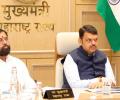
The previous Congress-NCP government had issued an ordinance to grant a 16 per cent quota to Marathas and five per cent to Muslims.

'Life in India is better only for those who have reservations.'
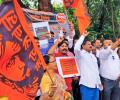
The Bombay high court on Friday constituted a three-judge special bench to hear the pleas challenging the constitutional validity of the law providing Maratha reservation following a Supreme Court directive.
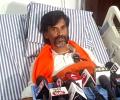
Maratha activist Manoj Jarange on Tuesday launched a fresh indefinite fast, his sixth in a span of over a year, to press for the demand for reservation to his community under the OBC category.

The Maratha community is not backward and hence it does not require reservation in government jobs and education, a petitioner argued before the Bombay high court on Wednesday.

Jarange is a strident critic of the senior BJP leader and has routinely accused him of being the main obstacle in the Maratha community's quest for reservations.
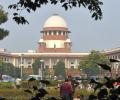
The Centre has moved the Supreme Court seeking review of the May 5 majority verdict which held that 102nd Constitution amendment took away the power of state governments to declare Socially and Educationally Backward Classes (SEBC) for grant of quota in jobs and admissions.
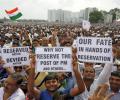
The 102nd Constitution Amendment Act of 2018 inserted articles 338B, which deals with the structure, duties and powers of the National Commission for Backward Classes, and 342A that deals with the powers of the president to notify a particular caste as an SEBC and the power of Parliament to change the list. Article 366 (26C) defines SEBCs.

The survey will encompass various indicators of backwardness such as occupation, educational qualification along with the type of educational institutions attended by members of the households to gauge the social and educational conditions of the backwardness in Odisha, the official said.

A bench comprising Justices L Nageswara Rao and B R Gavai said it has perused the judgments submitted and was of the view that the issue does not need consideration by a larger bench.
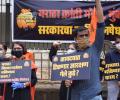
At present, a 10 per cent EWS quota is in force for those sections of the society which are not covered by any kind of reservations. The central law on the EWS quota was enacted more than two years ago to allow reservation for the poor in jobs and education among the general category.

The Supreme Court on Wednesday posed a slew of queries to the Centre on the grant of 10 per cent quota in admissions and government jobs to the EWS category, saying the "slice of cake" of 50 per cent open general seats available to OBCs above the creamy layer now stands reduced to 40 per cent.
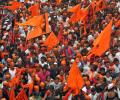
The judgment came on a batch of pleas challenging the Bombay high court verdict which had upheld the grant of reservation to Marathas in admissions and government jobs in the state.
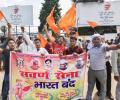
The Supreme Court on Tuesday reserved its verdict on a batch of pleas challenging the validity of the 103rd Constitution amendment providing 10 per cent reservation to economically weaker sections (EWS) persons in admissions and government jobs.
Economically Weaker Sections (EWS) have been given 10 per cent quota in admissions and jobs out of 50 per cent general category seats for the first time without eroding the "totally independent" reservation for SCs, STs and OBCs, the Centre told the Supreme Court on Tuesday.

A constitutional amendment bill to restore the powers of the states to make their own OBC lists was passed by Parliament on Wednesday, with the opposition and treasury benches joining hands in the Rajya Sabha to approve the legislation.
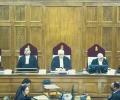
Important quotes from the Supreme Court judgment upholding the validity of the 103rd Constitution amendment providing 10 per cent reservation to people belonging to the economically weaker sections (EWS) in admissions and government jobs.

The Lok Sabha on Tuesday passed the Constitution amendment bill to restore the power of states to make their own OBC lists after a thaw in the logjam as Opposition parties backed the legislation but demanded the removal of the 50 per cent cap on reservation, with many of them also calling for a caste-based census.

Tamil Nadu's ruling Dravida Munnetra Kazhagam on Monday sought a review of the November 7 verdict of the Supreme Court which upheld 10 per cent reservation for the economically weaker sections (EWS) in educational institutions and government jobs that excluded the poor among the SC/ST/OBC categories, contending that it "legitimises discrimination".

Once the Bill is passed in the assembly and notified, the Marathas will be entitled to reservation in the government jobs and in admission in government institutions.
For how many generations would reservations in jobs and education continue, the Supreme Court sought to know during the Maratha quota case hearing on Friday and raised concerns over 'resultant inequality' in case the overall 50 per cent limit was to be removed.
The top court, which refused to pass any interim stay order on the quota, said chances of physical court seem remote due to the persisting COVID-19 pandemic. A bench of Justices L N Rao, Hemant Gupta and S Ravindra Bhatt asked the parties said that all parties should sit together and decide on modalities of hearing like who will take how much time and no one shall repeat the arguments.
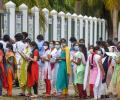
The decision to grant 10 per cent EWS quota in admissions will not impact the availability of seats for the general and reserved categories as 2,13,766 additional seats will be added to those already existing in higher educational institutions, the Centre Tuesday told the Supreme Court while defending the 103rd constitution amendment.
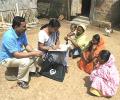
Members cutting across party lines demanded that an all-party delegation call on the prime minister to seek caste-wise census to determine the population of other backward classes.

The Parliament on Tuesday unanimously passed the bill to restore the power of states and union territories to prepare and maintain their own list of socially and educationally backward classes (SEBCs).

In what analysts are terming as a political masterstroke, the ruling Biju Janata Dal President Naveen Patnaik Friday decided that his party will field candidates from Other Backward Castes (OBC) for 27 per cent of seats in the forthcoming three-tier panchayat elections in Odisha.
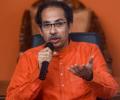
In a statement after the apex court verdict, Thackeray said, "With folded hands, we request the prime minister and the president to take an immediate decision on Maratha quota."
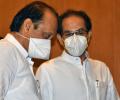
A delegation of the Maharashtra government led by Chief Minister Uddhav Thackeray and Deputy Chief Minister Ajit Pawar will meet Prime Minister Narendra Modi on Tuesday to discuss issues like Maratha and OBC reservation, and Cyclone Tauktae relief measures, informed State Home Minister Dilip Walse Patil.
PWD Minister Ashok Chavan later told reporters that the application was filed on Monday morning and added the counsels representing the government will try to see that the hearing on the application takes place soon.
The court further held that the state's legislative competence is not affected by the amendment to Article 342(a) of the Constitution of India.

'As soon as the BJP feels they are going to lose power, they will publish the caste census data of 2011 and conduct the caste census of 2021.'
The apex court said that status of those who have already taken benefits of the 2018 law shall not be disturbed.

"Articles 15(4) and 16(4) (dealing with provision for socially and educationally backward classes, and reservation) do not put any limit on the percentage of quota and there is no constitutional hurdle in increasing the same," Sharad Pawar said.
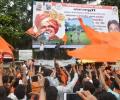
The government said it would complete the process of quota for Marathas, which had remained incomplete after the high court stayed it in 2014.

Marathas have been declared as socially and educationally backward class of citizens and have inadequate representation in services under the state. They are entitled to reservation benefits and advantages enshrined in the Articles 15(4) and 16(4) of the Constitution, the recommendations mentioned.
 © 2026 Rediff.com - Investor Information - Advertise with us - Disclaimer - Privacy Policy - Sitemap - Feedback - About us - Terms of use - Grievances