"The world might face a food crisis if the war continued till the end of April, as it could have a dramatic impact on planting in Europe and North America," said Matt Simpson, CEO of Brazil Potash.
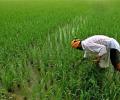
India is already a heavyweight in global farm trade in pockets such as rice exports, but experts are urging a pivot from a subsidy- and procurement-driven mindset to a productivity and nutrition strategy that still shields farmers from volatility.

'The size of the investments is important, but equally crucial is the number of jobs that these proposals create.'

The US Trade Representative noted that India's average applied tariff rate stood at 17% per cent, the highest of any major world economy.

It is in more than a decade that the IMD has predicted 'above-normal' rains in the country.

The Gross Value Added (GVA) in agriculture and allied activities is projected to clock its best growth in FY23 during the October-to-December quarter, at 3.7 per cent, on the back of a strong kharif harvest, according to the second advance estimates of national income. In the third quarter of FY22, GVA in the sector was 2.3 per cent at constant prices. At current prices, the growth in the third quarter of this financial year is projected at 8.6 per cent, which is almost at the same level in the corresponding quarter of FY22.

Top government officials in New Delhi have started discussions with stakeholders ranging from shipping and container companies to export promotion councils to understand the impact of the Iran-Israel tensions and plan ahead. Inter-ministerial talks are also being lined up amid the crisis situation in West Asia, sources confirmed. While the crude flows are not directly under any threat, elevated oil prices remain a concern, according to officials.

Deteriorating ties between India and Canada could have a bearing on flows into the domestic capital markets. At present, Canada is the seventh largest country for foreign portfolio investor (FPI) flows into India. According to the National Securities Depository Ltd (NSDL), the assets under custody (AUC) of FPIs domiciled in Canada stood at nearly Rs 1.8 trillion ($21 billion) at the end of August. Almost 85 per cent of these investments are in listed equity, while the remaining in debt and hybrid instruments.

Unprecedented rains and floods in the northern region in the past few days have not only caused extensive damage to lives and property but have also impacted business and commercial establishments. Vegetable prices have gone through the roof in the national capital and many other parts of the country since rains started pouring earlier this month. Traders say vegetable prices would come down only after roads open and skies clear, even as water in the fields will take time to recede.

Different economists have arrived at varying figures to assess the state's agricultural growth.
The curtains have come down on the organisation that, for 64 years, was responsible for the country's planned development.
The India Meteorological Department in its first forecast for 2014 had said southwest monsoon will be below normal at 95 per cent of the long-period average.
Planning Commission Deputy Chairman Montek Singh Ahluwalia says investors are aware the government is addressing various problems in the economy.

Corporations and business associations must strengthen their direct communications and consultations with citizens - and earn the trust of society.

While the experience of summers has been uncomfortable, the actual readings on thermometers may cause wonder about the exaggerated discomfort. This is what meteorologists call 'real feel temperature' or 'real feel heat'. Sanjeeb Mukherjee explains.
Whenever people think of India, they will think of Ficci as a place they could go to facilitate investment, says Rajiv Kumar.

Surface temperatures have increased rapidly during the past century, leading to an increase in the frequency and intensity of tropical storms in the Arabian Sea, reports Sanjeeb Mukherjee.

In the coming few weeks, agriculture markets in North and Central India will be full of wheat, mustard, and chana - the three main rabi crops grown in these parts. Not only will the price trajectory of these determine the course of food inflation in the months to come, but it could also have a wider impact on the rural economy in the main growing states for these crops. Wheat and chana are largely grown in Madhya Pradesh (MP).

The last few years have been uncharacteristically good for the Indian sugar sector for a variety of reasons. While on the one hand, the weather supported good crop production; on the other hand, the programme to blend ethanol with petrol took off in a big way. The long-pending problem of burgeoning sugarcane arrears almost came down to nil and exports boomed to record highs.

Skymet says the IMD ignored the required criterion of two days of necessary rainfall to declare a proper onset of monsoon, reports Sanjeeb Mukherjee.

The India meteorological department has stated that day temperatures are likely to be above normal by 0.5 degree Celsius, reports Sanjeeb Mukherjee.
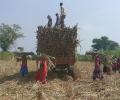
Nitin Tyagi is a young farmer in Budhagaon village of Baghpat district of Uttar Pradesh. A few years ago, Tyagi left his fairly lucrative job in the medical industry and shifted base to his ancestral village to look after his land and property. He opened a small shop selling farm inputs in the village and also started taking a greater interest in agricultural matters which had so far been looked after by his father and uncles. Tyagi and his brothers primarily grow sugarcane, potato and wheat on nearly 10 acres of land with sugarcane taking up most of his time and effort. Being one of the most important and lucrative cash crops of the region, sugarcane is directly linked to the fate of millions of farmers in west UP and with it, the electoral fortunes of political parties seeking their votes in the coming assembly polls.

The intensity of rainfall is likely to increase with the likelihood of very heavy falls at a few places and extremely heavy falls at isolated places on May 15, reports Sanjeeb Mukherjee.
However, experts say that unless clear guidelines are there, it remains to be seen how many people fall within the ambit and who remains excluded.

Centre's move to form a 29-member panel on making the minimum support price (MSP) mechanism effective and keeping three positions vacant in it for SKM representatives has triggered strong disapproval from it.


The cover provided under the Centre's Pradhan Mantri Suraksha Bima Yojana, which is a vital safety net for them, ended almost a year back on May 31, 2020. Ever since, there hasn't been much progress on the higher insurance coverage of Rs 5 lakh promised under the newly launched Pradhan Mantri Matsya Sampada Yojana, reports Sanjeeb Mukherjee.

IMD has said the temperature in April-June across most parts in India is expected to be 0.5-1 degrees Celsius warmer than normal. However, doctors and scientists say they haven't found any direct correlation between the speed of COVID-19 spread and warm weather.

'Our competitiveness with China is very important.' 'If the exchange rate depreciates, it is good for us because it helps in our competitiveness.'

With rainfall and monsoons becoming highly unpredictable partly due to climate change and partly due to usual changes in weather patterns, it is such innovations by IMD which will help in planning better, reports Sanjeeb Mukherjee.
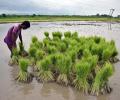
Among the key demands of agitating farmers has been a legal guarantee on minimum support price (MSP). The protest reached a crescendo when thousands of farmers from Punjab and elsewhere marched towards Delhi late last year and decided to block the main entry points once they were denied entry. The Centre, on its part, held 11 rounds of discussions with the protesters and even offered to amend some of the provisions without much success. With now one of their chief demands met, farmers have now moved on to force the government to concede on MSP.

Entry of a higher number of technocrats, an appraisal system for civil servants and the benefits of changing the financial year may feature in the PM's fourth speech.

In the 2020-21 Budget, the prime minister and the finance minister are keen to stamp their narrative, after various rollbacks following the previous Budget, said top government sources. Besides the scheduled meetings, the sources said, the Prime Minister's Office is expected to hold several meetings with top secretaries and officials on various ongoing schemes, their performance and also how some of them could be tweaked for better results.
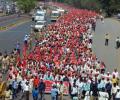
In the coming four months from August, agitating farmers will hold 400 meetings across the country to highlight farmers' issues and protest against government claims, reports Sanjeeb Mukherjee.

'Where is the spirit of Team India?' asks Chandrababu Naidu.
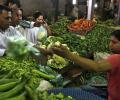
'If you see the composition of items which are causing this spike in prices, most of them have little to do with the kharif harvest, except for pulses and vegetables to some extent.' 'I don't know on what basis the government is claiming that food prices will moderate in the weeks to come.'

To tide over the difficulties due to incessant shutdowns, several farmers in Maharashtra have turned into aggregators and started selling their produce without the help of mandis or agents. They have started contracting with bulk consumers like hypermarkets and co-operative housing societies to sell their produce directly.


The new governments will have to spend much more than Rs 220 billion in Rajasthan, more than Rs 160 billion in MP, and nearly Rs 30 billion in Chhattisgarh.

The latest official numbers on the price of agricultural produce gives an idea of what's fueling the farmers' protest in Delhi.
