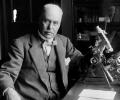
'This proved that whatever was growing in the mosquito's gut was a parasite -- it was almost certainly the malarial parasite.'
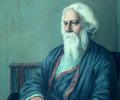
Who have been India's Laureates, winners from India or of Indian-origin?

I suggest we build a Vigyan Mandir (Temple of Science) with the ambience of a place of worship, so that it becomes a destination for pilgrims. We should embed on its walls bronze plaques describing each scientist mentioned here along with about a dozen of our ancient mathematicians, recommends Professor Kalyan Singhal, historian of science and technology.

Researchers at the University of Arizona in the US have created the first genetically modified mosquito, a strain incapable of passing on the parasite that causes malaria, Plasmodium.
'The fruition of Nobel's hope lies in the response of a caring government that can rise above politics and propaganda, not in the frenetic raptures of a public that worships fame for fame's sake,' says Sunanda K Datta-Ray.

'Infectious disease is a given of humankind. There will always be another around the corner.'

'We cannot be naughty and expect the government to do good!' 'We have to behave ourselves and then we can expect the government to support us.' 'If we are able to protect ourselves well, then we should not be having deaths.' 'Unfortunately, people have gotten into this super scary event participation (mode) -- birthday parties, large gatherings.' 'Among the people who have attended those, 80 to 90 per cent of them have come down with COVID-19.'
Nearly two million people die from mosquito-borne diseases every year. What are we doing about it?

Science in India has developed a great deal since C V Raman, particularly after the country gained Independence but we are yet to win a Nobel prize in physics, chemistry or medicine. Is it a reflection on the quality of Indian science? Or it has to do with the politics of Nobel prizes, as is often believed, asks Dinesh C Sharma.
 © 2026 Rediff.com - Advertise with us - Disclaimer - Privacy Policy - Sitemap - Feedback - About us - Terms of use - Grievances