
In a major counter-terror operation spanning three states, the Delhi Police has dismantled a Lashkar-e-Taiba (LeT) module comprising eight operatives, including seven Bangladeshi nationals who had illegally entered India and procured forged identity documents, an official said on Sunday.
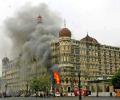
Lawyer Ujjwal Nikam says that while justice has been delivered to some victims of the 26/11 Mumbai terror attacks, their conspirators are still hiding in Pakistan. He criticizes Pakistan's handling of the trials of those arrested and calls for action against masterminds like Hafiz Saeed and Zakiur Rehman Lakhvi.
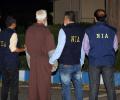
He was sent to judicial custody on May 9 and lodged in Tihar jail after his custodial interrogation by the NIA.
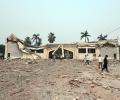
A total of nine terror sites in Pakistan, including five in Pojk, linked to Lashkar-e-Taiba (Let) and Jaish-e-Mohammed (Jem), were targeted with meticulous planning to avoid civilian casualties.
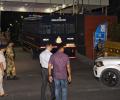
Tahawwur Hussain Rana, the key mastermind of the 2008 Mumbai terror attacks, is being interrogated for eight to ten hours daily by the National Investigation Agency (NIA) to unravel a larger conspiracy behind the strikes. Rana, who was extradited from the US, is being grilled by NIA investigators to probe a larger conspiracy behind the attacks, in which 166 people were killed and over 238 injured. He is being allowed to meet his lawyer and is being provided with basic necessities. The investigators hope to find some important leads on his travels in parts of northern and southern India days before the carnage in Mumbai on November 26, 2008.
'The fight against terrorism will continue. We have set a new normal and the new normal is that we will follow an offensive strategy. Wherever terrorists are, we have to kill those terrorists and we have to destroy their infrastructure. So it is still not over but as we speak the ceasefire is still intact'

Lashkar-e-Tayiba operations commander Zaki-ur-Rehman Lakhvi, one the seven Pakistani nationals accused of planning and abetting the 2008 Mumbai terror attacks, was granted bail on Thursday by the anti-terrorism court in the country.
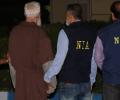
The National Investigation Agency (NIA) has begun questioning Tahawwur Hussain Rana, the mastermind behind the 2008 Mumbai terror attacks, to uncover the larger conspiracy behind the deadly strikes. Rana, who was extradited from the US, is being held at the NIA headquarters in New Delhi. The interrogation is focused on his possible connection with the Lashkar-e-Taiba (LeT) and his suspected links with the Pakistani spy agency Inter-Services Intelligence (ISI).
Tahawwur Hussain Rana, a Canadian national accused of involvement in the 2008 Mumbai terror attacks, has been extradited to India from the United States. Rana's interrogation is expected to shed light on the role of Pakistani state actors in the attacks, which claimed 166 lives. Indian authorities are particularly interested in his travels across India in the days leading up to the attacks, including visits to Hapur, Agra, Delhi, Kochi, Ahmedabad, and Mumbai. Rana's extradition follows a lengthy legal battle, with the US Supreme Court ultimately denying his application to challenge it. Rana is known to be associated with Pakistani-American terrorist David Coleman Headley, one of the main conspirators of the 26/11 attacks. The investigation into the Mumbai attacks has implicated senior members of terror outfits Lashkar-e-Taiba (LeT) and Harkat-ul Jihadi Islami (HuJI), as well as officials from Pakistan's Inter-Services Intelligence (ISI).
Tahawwur Rana, accused of involvement in the 2008 Mumbai terror attacks, is expected to be extradited to India from the United States soon. The US Supreme Court denied his last-ditch effort to stop his extradition, moving him closer to being handed over to Indian authorities. Rana's extradition is expected to help probe agencies expose the role of Pakistani state actors behind the attacks and shed new light on the investigation. He is associated with Pakistani-American terrorist David Coleman Headley, one of the main conspirators of the 26/11 attacks.
Tahawwur Hussain Rana, a key accused in the 26/11 Mumbai terror attacks, was brought to India on Thursday after being "successfully extradited " from the US, the National Investigation Agency (NIA) said. The 64-year-old Canadian citizen of Pakistani origin landed in Delhi in a special plane on Thursday evening, ending days of speculation of when and how he will be extradited, officials said. The NIA said in a statement that it had secured the successful extradition after years of sustained and concerted efforts to bring to justice the key conspirator behind the 2008 mayhem that claimed 166 lives. Rana is accused of conspiring with David Coleman Headley alias Daood Gilani, and operatives of designated terrorist organisations Lashkar-e-Taiba (LeT) and Harkat-ul-Jihadi Islami (HUJI) along with other Pakistan-based co-conspirators, to carry out the the three-day terror siege of India's financial capital.

Tahawwur Hussain Rana, a Pakistan-born Canadian national and close associate of David Coleman Headley, is set to be extradited to India from the US. Rana was involved in the planning and execution of the 2008 Mumbai terror attacks, which killed 166 people, including six Americans. He assisted Headley in obtaining a visa for India, established a front company in Mumbai, and helped in reconnaissance of targets in Mumbai and New Delhi. Rana was convicted in the US for providing material support to Lashkar-e-Taiba (LeT) and sentenced to 14 years in prison. His extradition to India will allow authorities to question him about his involvement in the Mumbai attacks and potentially uncover new information about the role of Pakistani state actors.
'He is the key to unravel the 26/11 conspiracy.'

About 150 terrorist entities and individuals, either based or with links to Pakistan have been blacklisted by the United Nations, with the latest addition being of Abdul Rehman Makki, the Lashkar-e-Taiba deputy chief designated by the Security Council's Al Qaeda sanctions committee.

The Lashkar-e-Tayiba may be try to free 26/11 prime accused Zaki-ur Rehman Lakhvi from prison after Pakistan confirmed his role in the Mumbai attacks to India last week.

Lakhvi, who was on bail since 2015 in the Mumbai attack case, was arrested by the Counter-Terrorism Department.

Pakistan was put in the inglorious list in 2018 for its failure to check risk of money laundering, leading to corruption and terror financing.
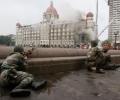
Key plotters of the 26/11 have once again escaped arrest upon the advice of Pakistan's intelligence agency, Inter-Service Intelligence officers.
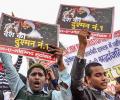
They are the first to be declared terrorists under the new anti-law, a home ministry official said.
Pakistani-American terrorist David Coleman Headley on Tuesday continued his deposition for the second consecutive day before a court in Mumbai.

In a notification, the Union home ministry said that Hafiz Talha Saeed, 46, has been actively involved in recruitment, fund collection, and planning and executing attacks by the Lashkar-e-Tayiba in India and Indian interests in Afghanistan.

A top Lashkar-e-Tayiba terrorist, believed to be nephew of the 2008 Mumbai attack mastermind Zakiur Rehman Lakhvi, was on Thursday gunned down by security forces in an encounter in north Kashmir's Bandipora district.
The list in 2018 contained about 7,600 names. It has been reduced to under 3,800 in the past 18 months, according to Castellum.AI, a New York-based regulatory technology company. About 1,800 of the names have been removed since the beginning of March, according to data collected by Castellum.

Significantly, for the first time, the FATF put Myanmar in the "high risk jurisdictions subject to a call for action", often referred to as the watchdog's black list.
An army soldier was also injured in the encounter.

India on Wednesday said it is "disappointed" at the ceasefire violation on the border by the Pakistan army that killed a woman in the Jammu region.
India has conveyed to Pakistan its "strong concern" on the grant of bail to key 26/11 Mumbai attack handler Zaki-ur-Rehman Lakhvi, saying the release will make a mockery of Pakistan's commitment to fight terror groups without hesitation and without making distinctions.
From an expert bomb maker to a small time shopkeeper selling perfumes near Muridkee in Pakistan, Abdul Karim Tunda has claimed that top Lashkar-e-Tayiba commander and Mumbai attack mastermind Zaki-ur-Rehman Lakhvi calls the shots in the terror outfit.
A Pakistani court conducting the trial of seven suspects charged with involvement in the 2008 Mumbai attacks on Saturday adjourned proceedings till September 25 after summoning five prosecution witnesses to testify at the next hearing.
Alleged Laskkar-e-Tayiba operative Sayed Zabiuddin Ansari, alias Abu Jundal, wanted to take part in the 2008 Mumbai terror attack by landing in the city along with others, according to his confession.

India on Friday launched a no-holds-barred attack on Pakistan Foreign Minister Bilawal Bhutto-Zardari for his 'uncivilised' outburst against Prime Minister Narendra Modi and said the comments were a 'new low' even for that country.
India has asked Pakistan to handover voice samples of the handlers of the Mumbai attackers, speed up the trial against 26/11 terror accused, including LeT Commander Zakiur Rehman Lakhvi, and to stop cross-border terrorism.

The trial of Lashkar-e-Tayiba commander Zakiur Rehman Lakhvi and six other Pakistani suspects charged with involvement in the 2008 Mumbai attacks was Tuesday adjourned till September 29 as the judge was unavailable to conduct the hearing.
China has blocked India's move in the UN demanding action against Pakistan over the release of Mumbai attack mastermind and LeT commander Zaki-ur-Rehman Lakhvi in violation of a resolution of the world body as it contended that India provided insufficient information.
The Pakistan government has formally informed India that evidence provided by New Delhi in the 2008 Mumbai terror attacks case is not admissible in a Pakistani court as defence lawyers were not allowed to cross-examine Indian officials, a media report said on Wednesday.
The government has given its sanction to charge sheet nine people including Pakistani-American terrorist David Headley, Lashkar-e-Tayiba founder Hafiz Saeed and two Inter Services Intelligence officers for plotting terror attacks in India including the 26/11 strikes.

A Pakistani anti-terrorism court on Saturday had to put off the cross-examination of a key witness in the Mumbai attacks case as the lawyer of the main accused, Lashkar-e-Tayiba commander Zakiur Rehman Lakhvi, did not attend the hearing.
Lashkar founder Mohammad Sayeed and 26/11 attacks accused Zaki-ur Rehman Lakhvi must be neutralised one by one if Pakistan does not act against them, says Brigadier Gurmeet Kanwal (retd).

India is unlikely to permit a Pakistani judicial commission to visit the country again to cross examine the Mumbai terror attack witnesses unless a National Investigation Agency team is allowed to go to that country first and determines the necessity of such an exercise.

The trial of seven suspects, including Lashkar-e-Tayiba's operational commander Zakiur Rehman Lakhvi, involved in 2008 Mumbai attack case has been adjourned till November 3 as the judge of the Pakistani court hearing the case has been admitted to hospital, a prosecutor said on Saturday.
 © 2026 Rediff.com - Investor Information - Advertise with us - Disclaimer - Privacy Policy - Sitemap - Feedback - About us - Terms of use - Grievances