
In his first monetary policy review since taking office on September 4, RBI Governor Raghuram Rajan increased the repo rate by 25 basis points to 7.50 per cent.


The central bank might raise repo and reverse repo rates by 25 basis points each, they said. Still, RBI action would be conditional on its ensuring sufficient liquidity in the banking system.

The Reserve Bank on Friday upped the cash reserve ratio from 5 per cent to 5.75 per cent, a move expected to flush-out Rs 36,000-crore (Rs 360-billion) from the system.
While the RBI is reportedly thinking of capping loans to real estate, many believe any such move is a bad idea.

A lot depends upon the composition of the monetary policy committee.

The year 2022 saw the Reserve Bank of India (RBI) start acting on the policy repo rate after a gap of two years. The six-member monetary policy committee of the RBI reduced interest rate sharply - by 115 bps - when Covid-19 struck in 2020. In March 2020, days after the nationwide lockdown was announced, MPC in an unscheduled meeting reduced the repo rate by 75 bps, followed by another 40 bps in May. Status quo was maintained for the next two years since the May repo rate hike.

Use this window to lock into bank FDs; unless govt cuts small savings rates, banks may not cut deposit rates

'Both IIP and CPI inflation numbers are showing a huge disconnect from the leading indicators.'

India Inc is borrowing from global firms as interest rates sky rocket in India.

Analysts expect modest recovery in Indian economy.

Economists caution that the underlying cause could be an alarming drop in demand -- something that's not good for economic growth.

A Reuters poll had forecast retail inflation would slow to 8.35 percent from an annual 8.79 percent in January.

Factory output in June likely rose 5.4 per cent from a year earlier, faster than the 4.7 per cent growth in May, according to a poll of 27 economists.

RBI will review the monetary policy again on September 29.

While the latter is being viewed as a greater concern, the former may gain prominence in the next few weeks.

The Reserve Bank of India kept its policy interest rate unchanged at a five-year low of 6.50 percent on Tuesday.

The main reason was that CPI inflation would likely remain below 4 per cent till July.

According to Soumya Kanti Ghosh, chief economic advisor of the State Bank of India group, a 50 bps rate cut is a possibility, but 25 bps is more likely.

Progress on monsoons along with favourable base effect in 2HFY2017 continues to point towards RBI achieving its near 5 per cent inflation target by the year-end

The central bank has been intervening in the foreign exchange market by buying dollars, and this is capping the rupee's gains.
Analysts expect the Reserve bank to cut rates in next monetary policy.

To neutralise this, RBI has been doing forward swaps
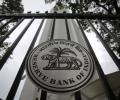
By no means do economists see the Reserve Bank of India stop at just a 25-bp cut. Some of the economists such as Soumyakanti Ghosh of State Bank of India are of the firm view that rates have room to fall by a total of 75 bps in the current financial year, starting with 25 bps in the August 7 policy.

Most say a rate cut could come in RBI's June policy.

This development can strengthen the case for interest rate cut by the RBI.

Despite inflation easing, experts see RBI maintaining status quo on Dec 2

Global liquidity expected to continue amid ECB stimulus

Growth in India's gross domestic product for the June quarter of 2013-14, as well as for the entire 2014-15, was 4.7%.

The Reserve Bank in its first mid-quarter policy review on Monday kept the key interest rates unchanged because of elevated food inflation, rupee depreciation and uncertainty over foreign fund inflows.

The central bank is the money manager of the government, and not a guarantor of any debt.

There is a near consensus that at least a 25 basis points cut, if not 50, can be expected in the June policy.

This was the near-unanimous replies of 10 market participants.

The RBI expects inflation in 2015 to hover around 6 per cent -- its target for January 2016 -- and sees risks to the target evenly balanced.
The repo rate has been unchanged since January, when the RBI increased it by a quarter percentage point.

While Raghuram Rajan has said in the past that other factors, including domestic fundamentals, outweigh the US Fed policy meet, this time it would be different

RBI is expected to discuss about the impact of GST in its monetary policy.
The RBI cut rates for third time in 2015 due to favourable economic conditions.

Reserve Bank of India (RBI) Governor Raghuram Rajan's decision to cut rates last week surprised even top officials.
 © 2026 Rediff.com - Advertise with us - Disclaimer - Privacy Policy - Sitemap - Feedback - About us - Terms of use - Grievances