
'Nehru was an idealist, he was certainly a visionary in one way, but Mao Zedong was not. Mao Zedong was a very down-to-earth strategist. He wanted to take Tibet, to take the plateau, to take the rivers, to take the minerals.'
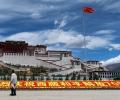
The Tibetan government-in-exile and China are continuing to hold back-channel talks and the last round took place this month, just days before US President Joe Biden signed a legislation that seeks to press Beijing for a negotiated settlement to Tibet's demands for greater autonomy.

China is trying to legitimise its claim over Tibet through museums, and cultural institutions in the region, according to Tibet Rights Collective.

'Lhasa is more than the Unesco World Heritage Sites it boasts of. It is more than a gateway to the mighty Himalayas.' 'It is about the warmth of its people: Unsaid, unspoken, but felt everywhere,' discovers Shruti Bajpai.

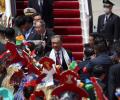
Wang Yang and Xi Jinping's visits signal the beginning of a major Chinese push to bring about a transformation of Tibet, observes Jayadeva Ranade, the distinguished China expert and retired RA&W officer.
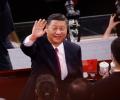
Xi arrived at the Nyingchi Mainling Airport on Wednesday and was warmly welcomed by local people and officials of various ethnic groups, Xinhua news agency reported.

US Secretary of State Mike Pompeo on Wednesday named Robert Destro, assistant secretary of state for democracy, human rights and labour, as the special coordinator for Tibetan issues. Destro will focus on advancing dialogue between the Communist-run government in Beijing and the Dalai Lama, protecting the distinct religious cultural and linguistic identity of Tibetans, improving respect for their human rights and much, much more, Pompeo said.

'Tibetans don't have jobs, and the military provides a job offer.' 'But the issue is whether China really trusts Tibetans.'
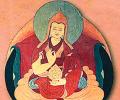
Tawang is very much a part of India, and if the present Dalai Lama decides one day to take rebirth in Tawang, the Indian government will openly welcome him and support him, notes Claude Arpi.
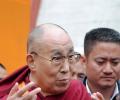
The Tibetan leader was to reach Tawang by chopper on April 4 but due to bad weather, he travel over 550 km by road from Guwahati to reach Tawang.
National security, consolidation of border defences and border security highlights China's Tibet policy, points out Jayadeva Ranade, the former senior RA&W officer and China expert.
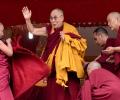
China is acutely conscious of the need for the next Dalai Lama to be under its control. It was for this reason that China recently stressed their claim on Arunachal Pradesh. There were rumours that the next Dalai Lama may be found in Tawang. If that happens, India-China relations will become tense and there may be demands for the child to be handed over to the Chinese, points out Ambassador T P Sreenivasan.

The Tibetan nation still lives under the yoke of the Chinese Communist Party, and Beijing today has a guilty conscience; this creates a great uneasiness for Xi Jinping and his colleagues observes Claude Arpi.
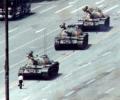
Why omit the Tiananmen massacre from the history of China's Communist party, asks Claude Arpi.

'The numbers of troops on both sides are enormous.' 'They are about 50,000-60,000 soldiers facing each other in that sector -- that's about the total number of troops that both sides had in the 1962 War in all sectors.'

Important for India was Xi's meeting with representatives of PLA officers and soldiers stationed in Tibet. The video of the encounter was interesting to watch, especially the large number of lieutenant generals and major generals, observes Claude Arpi.

Arpi deserves to be complimented for the commitment and hard work that have gone into this production. The frustrations of seeking reliable documentation from the catacombs of the Indian bureaucracy did not deter him from going after the best information available, and the result is one that he can take much satisfaction in. Ambassador Prabhat P Shukla, Member Advisory Council, Vivekananda International Foundation, reviews Claude Arpi's The End of an Era: India Exits Tibet.

The world must hang its head in shame for being a mute spectator to the 'cultural holocaust' in Tibet, says Major General Mrinal Suman (retd).
