
The rate of price rise for consumer foods eased to 4.7 per cent in January, from 4.96 per cent in December.

In the rural areas, 35.3 per cent of the workers are employed as casual labourers while the figure is 14.6 per cent in the urban areas.
Rediff.com's data journalists have visualised the National Sample Survey Office (NSS 68th round, July 2011-June 2012) data into a interactive map.
Rediff.com's data journalists have broken down the National Sample Survey Office 68 round (July 2011- June 2012) report data into a state-wise listing.
The drought of appropriate employment opportunities and rising incidences of unemployed educated graduates fail to inspire confidence about the future, says Kunal Kumar Kundu

7 million jobs will be created in formal sector in FY18

108 economists, social scientists said it was imperative that agencies like CSO and NSSO are not subject to political interference.

About 7 crore (70 million) people in the country are either unemployed or under-employed, the National Sample Survey Office has said in its latest report.
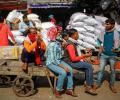
The Economic Survey will remain a documentation of the government's resolve to not recognise the severe stress on the labour markets and on the livelihoods of Indian households arising out of the pandemic and the consequent lockdown, observes Mahesh Vyas.

Rajan, who has also served as chief economist at the International Monetary Fund (IMF), said he had no idea what statistics are pointing at currently and "a revamp" was needed "to really figure out what India's true growth rate is".

Literate and rich sections of the society do not cooperate enough with surveyors collecting economic data.
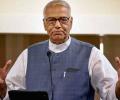
Yashwant Sinha explains where the Modi government has gone wrong in its handling of the economy.

The National Sample Survey Organisation has found wide disparities in the monthly consumption pattern of rural and urban households during 2007-08, with the former spending just half of what their urban counterparts did.
Since the poverty estimates released by the Planning Commission determine the eligibility of benefits such as BPL allocation of foodgrain to the states, he said, "a firm choice of reference period is necessary." Different reference periods (30-day recall period and 365-day recall period) used in the early surveys, he added, had prompted the Planning Commission to come out two with sets of poverty figures.
Job opportunities across the country grew at an estimated rate of 2.62 per cent every year, the latest quinquennial (once every five years) analysis by the National Sample Survey Organisation (NSSO) showed. The growth of unemployed, at 5.42 per cent per annum, outnumbered the rate of job creation during the survey period between 1999-2000 and 2004-05. Unemployment rate was found to be maximum in qualified graduates in rural and urban parts of the country.

The statement comes in the wake of two independent members of the NSC, P C Mohanan and J V Meenakshi, quitting the Commission over disagreements with the government on the back-series GDP data and delay in release of labour force survey. Mohanan was also the acting chairperson of the Commission.

'It is less polarising than Hindutva.'

'Unless the economy is sound in the country how can only three movies collected so much business in a single day?'

The Congress president tagged a Business Standard story which cited a report which said the unemployment rate is highest in 45 years.
The earlier you start on a diet of fruits and vegetables, the better it is for your health, say doctors.

Retail inflation rose marginally to 9.84 per cent in September, mainly due to a hike in food prices, particularly of vegetables.

The pace of retail price rise in January 2016 is the highest since 6.46 per cent in September 2014.

The government's decision to release the reports comes two days after over 200 scholars from across the globe issued a statement demanding release of all withheld reports produced by the NSO, including the household consumer expenditure survey that was junked.

The findings of the report showed consumer spending falling for the first time in over four decades in 2017-18. The government has, however, termed it a "draft" report, reports Somesh Jha.

States spent much more in the first three months of the current financial year compared to the corresponding period last year.

The employment rate in the country declined marginally from 39.2 per cent to 38.6 per cent between 2009-10 and 2011-12, the Rajya Sabha was informed on Wednesday.

Anik Jain, founder and CEO at Symbo, will answer your questions on insurance -- life, health, motor, travel, etc -- on a weekly basis.

Economic affairs secretary S C Garg said that all macroeconomic parameters are performing well.

In urban India, the fall in rice consumption was 0.2 kg per person per month.

As of now, 12 million Indians join the workforce every year.

Amid mounting criticism of poverty reduction estimates by the Planning Commission, Congress leader Digvijay Singh on Saturday joined Union Minister Kapil Sibal in questioning the criteria for fixing poverty line.
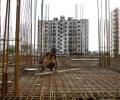
The construction sector is now India's second-largest employer after agriculture, the trend coinciding with India's high-growth phase and decline in poverty levels

Despite all of the PM's many strengths, it is increasingly clear that he does not necessarily have a coherent and clear worldview on matters of macro policy.

'The government has given up its focus on economic growth because it it not something Modi has been able to fully understand.' 'This explains the extraordinary focus on divisive politics by the BJP even at a time when the world's most important man in visiting India,' notes Aakar Patel.
.jpg)
The number of poor in the country declined to 27 crore (270 million) in 2011-12, from 40.74 crore in 2004-05, Minister of State for Planning and Parliamentary Affairs Rajeev Shukla said on Wednesday.

It keeps getting harder every day for the government to drive its narrative that ample jobs are being created. They sound increasingly silly as they try to defend the indefensible, says Mahesh Vyas.
Users of employment / unemployment statistics can enjoy the benefits of -- initially the speed of private enterprise and then, the stamp of official statistics with a hopefully small time lag, says Mahesh Vyas.

There is lack of scientific basis in computing the poverty line, says govt.

It's high time we now turn the popular question on its head -- when there is no growth in jobs for several years, how can the real GDP grow at 7 per cent per annum, says Mahesh Vyas.
 © 2026 Rediff.com - Investor Information - Advertise with us - Disclaimer - Privacy Policy - Sitemap - Feedback - About us - Terms of use - Grievances