
Common use products like hair oil, soaps and toothpaste will be charged with a single national sales tax or GST of 18 per cent instead of present 22-24 per cent

In case the repo rate keeps trending downwards, borrowers can expect a downward revision of their MCLR-linked loans.

It would be a good idea to create independent oversight committees for each regulatory institution and indeed, even for their appellate bodies, says A K Bhattacharya.

During March, the rate of inflation slowed to the weakest in four months and was below the long-run survey average

A likely easing in inflationary pressures in the forthcoming months will reopen the window for the RBI to once again prioritise growth and ease its interest rates.
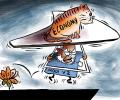
The reform priorities are clear: enhance savings, improve productivity. Just 25 basis points of moving interest rate up or down would not boost investment: Former RBI Governor Y V Reddy.

Net sales growth for the quarter ended December (Q3FY20) was 4.5 per cent on a year-on-year (YoY) basis for companies that have declared their results so far, compared to an 8.4 per cent rise in the first half of the financial year. This indicates that there could be a further rise in days' sales of inventory.
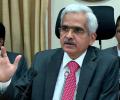
To a specific question on the change in RBI's stance from "neutral" to "accommodative", Das said it means that there will not be any rate hike from here on.
If this turns into reality, India's gross domestic product (GDP) growth will be the lowest since 2012-13, which could severely hit job creation and income growth in the near term.
It further pointed out that the twin balance sheet problem -- at the end of banks and corporate -- more attractive interest rates for borrowers in the bond market and from non-banking financial institutions are other reasons for slow bank credit growth.

Patra, as executive director of the central bank, was the principal advisor to the Monetary Policy Department since July 2012.
Growth impulses, while improving, remain fragile, and a rate hike will be disruptive to interest costs.
While efforts are being mounted on a war footing to arrest its spread, COVID-19 will impact economic activity in India directly through domestic lockdown. The second-round effects, it said, would operate through a severe slowdown in global trade and growth.
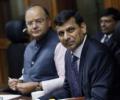
RBI Governor Raghuram Rajan has been pursuing hawkish monetary policy stance to keep inflation under check.

A weak dollar overseas also aided the rupee rise while fresh sell-off by foreign funds in domestic stocks capped the currency's gains, forex dealers said.

Prices of food articles contracted by 3.47 per cent in June on a yearly basis. Vegetable inflation stood at (-)21.16 per cent.
'Prime Minister Modi stated several times that we shall not let this challenge go away without converting it into an opportunity to undertake systemic reforms.' 'And hasn't that been reiterated in action?'

The 6-member Monetary Policy Committee, headed by Reserve Bank of India Governor Urjit Patel, in its fifth bi-monthly review, kept the repo rate unchanged at 6 per cent and reverse repo at 5.75 per cent.

The final and most significant reset in the relations between the government and the RBI is the manner in which the process of appointing the governor and deputy governors of the central bank has been changed.

A two-year extension at the helm of the RBI still looks a real possibility

The broad market depicted strength. 1,525 shares rose and 1,131 shares fell. A total of 156 shares remained unchanged

Reversal in the declining economic growth trajectory is clearly the need of the hour and all steps should be taken to bring about this change.

Since last month, the realty (down 23%), auto (down 16%) and finance (down 14%) indices have underperformed the market by falling over 13%, as against 8% decline in the benchmark indices

Delivering a public speech hours after the RBI launched a rescue act for Yes Bank on March 6, Governor Shaktikanta Das reiterated the RBI's affirmation to do whatever was needed to combat the coronavirus impact. On that day, India had only one confirmed COVID-19 infection, the World Health Organisation was five days off from declaring it as a pandemic and the financially debilitating lockdowns were not even on the horizon. Das' promise on efforts to mitigate COVID-19 impact appeared as a footnote in news reports from the event.

If imputed inflation for April and May is used, then you have inflation of over 6 per cent for two consecutive quarters, which is a worrying signal for the RBI.

Rajan said the process of dialogue with the government did not reach a stage where he could have agreed to stay on
The supply-side driven inflationary pressures, from food or fuel prices, would be mitigated by a neutral stance and a prolonged pause on rates, says Gaurav Kapur.
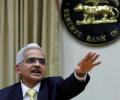
CII suggested the policy measures required to ease the tight liquidity situation by cutting CRR by at least 50 basis points.

RBI targets to keep inflation at 4 per cent, (+/- 2 per cent), and its rise beyond this comfort zone will put pressure on the central bank to hike rates.
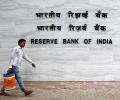
Given the pressure from India Inc and the banking fraternity, it is surmised that the portfolio rejig will take place before April.

The bond market expects at least 25 basis points cut in the June 6 policy.

During the month, inflation in vegetables shot up to 35.99 per cent, as against 26.10 per cent in October. Likewise, the prices of cereals and eggs grew at a faster pace of 3.71 per cent.

Currency scarcity weighed on manufacturing performance where growth of new work flows slowed

'Banks are being encouraged to lend instead of parking their resources with the RBI and earn risk-free interest income,' points out Tamal Bandyopadhyay.
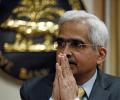
'Three external members of the first MPC are respected researchers with excellent academic background, but there is no harm in considering academicians with diverse backgrounds such as finance and labour along with economists for this body,' recommends Tamal Bandyopadhyay.

'If there is an RBI majority in the committee, there is no question of a veto.'
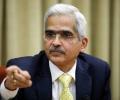
RBI governor Das flags growth slowdown, deputy raises alarm on inflation

As the government plans to take sector-specific steps to tackle the slump, Finance minister Nirmala Sitharaman will soon hold talks with representatives from various sectors to get and take steps so that the confidence of those sectors can be restored.
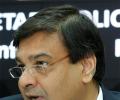
Chetan Ghate, Pami Dua and Ravindra Dholakia have been appointed for 4 years

RBI governor is seen succeeding International Monetary Fund (IMF) chief executive officer, Christine Lagarde, next year.
 © 2026 Rediff.com - Advertise with us - Disclaimer - Privacy Policy - Sitemap - Feedback - About us - Terms of use - Grievances