
The disruptions caused by COVID-19 have more severely impacted small and mid-sized corporates, including NBFCs and MFIs, in terms of access to liquidity.

To help revive the economy battered by COVID-19, Finance Minister Nirmala Sitharaman on Monday announced a slew of measures, including Rs 1.1 lakh crore credit guarantee scheme for improving health infrastructure, and enhancing the limit under the ECLGS by 50 per cent to Rs 4.5 lakh crore for the MSME sector facing liquidity crunch. Sharing the details of stimulus package, the finance minister said this comprises eight relief measures and other eight measures to support the economic growth. She announced Rs 1.1 lakh crore loan guarantee scheme for COVID-affected sectors, including health sector, which includes guarantee cover for expansion or for new projects. Besides, she said, additional Rs 1.5 lakh crore limit enhancement done for Emergency Credit Line Guarantee Scheme (ECLGS) scheme.

Collection dived to 75-80% in November-December from 99% after demonetisation.

Other reputed firms like McKinsey, Boston Consultancy Group, PwC, Ernst & Young and KPMG had also applied for getting the mandate from Bandhan.

Mudra Bank being launched on April 8.
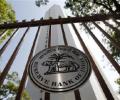
The Reserve Bank on Friday set up a three-member committee under former Governor Bimal Jalan to scrutinise applications for new bank licences, which are expected to be awarded by January.

A bunch of CEOs in their mid-30s and early 40s are trying to rectify the scenario where shady lending applications trap hapless borrowers with astronomically high interest rates and even bodily harm if the money was repaid. Anup Roy reports.

Rural populations will get will get employment in the industrial corridors following amendments to the land acquisition bill.

A vast majority of borrowers are in the essential services' supply chain with tiny and micro businesses, and this has sprung back.

Banks have collected about 1,500 kg of gold from temples and trusts under the Gold Monetisation Scheme (GMS) since its launch last November.

Enthused by India's financial inclusion drive, US-based Accion, one of the biggest micro finance organisations in the world, has renewed its focus in India. Michael Schlein, bottom, left, chief executive officer of Accicon, tells Namrata Acharya in an email interview the Wall Street and Silicon Valley are eager to participate in opportunities presented by the issuance of the small finance and payment bank licences, the expanded banking correspondent opportunities, and the Jan-Dhan Yojna.

How will the RBI announcement on loan moratorium work for those with home loans, auto loans, personal loans, consumer durables loan? Here's what experts have to say.

He added however that reasonable profit must be there at the bottom of the pyramid as the business has to be self-sustaining

Reserve Bank of India Governor Shaktikanta Das on Friday said the central bank will ensure adequate liquidity in the system to ease the financial stress caused by the Covid-19 pandemic. The central bank reduced the reverse repo rate -- the rate at which banks park their fund with the central bank -- by 25 basis points to 3.75 per cent.

Finance Minister Nirmala Sitharaman on Wednesday announced Rs 3 lakh crore collateral free automatic loan for businesses, including MSMEs, to benefit 45 lakh small businesses. Detailing parts of the Rs 20 lakh crore economic stimulus package, she said this loan will have a 4-year tenure and will have 12-month moratorium, she said.

Draft guidelines for Small Banks and Payments Banks were issued by the RBI in July and comments were invited till August 28.

'Common sense says if one can afford, servicing the loans during this period is a better bet than postponing it by three months,' says Tamal Bandyopadhyay.

The BJP MP said the guidelines for grant of licences were 'brazenly flouted'.

The Reserve Bank on Wednesday said it plans to issue new bank licences around January, "consistent with the highest standards of transparency and diligence."
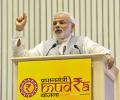
The Pradhan Mantri MUDRA Yojana can lend between Rs 50,000-Rs 10 lakh to small entrepreneurs.

New players show up after 3 years; northern states take lead in loan growth.

Farmers have suffered a lot on account of natural calamities.

South leads; North-East at bottom but moves ahead, finds out the IndiaSpend Team

Pulbic banks have no reason to cheer Budget announcement.

Bandhan Bank to fund SMEs, create jobs, says FM

The list of corporations publishing biographies has lengthened steadily as companies have realised the effectiveness of story telling as a brand building tool. Kanika Datta investigates the rising trend.

Indian regulators have identified certain groups as 'financial conglomerates' and they are being monitored closely for any systemic risks they may pose.

For people at the bottom of the pyramid, which I would rather address as mass market or emerging class; the primary challenge in accessing banking services are not just affordability but applicability and accessibility of services.

'What we need is right skilling, re-skilling and up-skilling.'

Bringing in the untapped informal sector into the formal one will benefit business.

Mudra Bank will be a Rs 20,000-crore institution, which would "primarily be responsible for refinancing all micro-finance institutions.
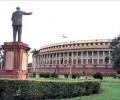
From 1952 to 1967, each of the three Lok Sabhas sat for an average of 600 days and more than 3,700 hours. In comparison, the 15th Lok Sabha -- from 2009 till 2013 -- has met for just 345 days and 1,331 hours, says Shreya Singh
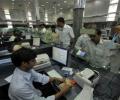
For the first time in our economic history a government has thought about more than 50 per cent of our economic activity instead of the five per cent represented by the Sensex companies, observes IIM-B professor R Vaidyanathan.

NDA government has shunned populism.

Indian economy about to take-off
 © 2026 Rediff.com - Advertise with us - Disclaimer - Privacy Policy - Sitemap - Feedback - About us - Terms of use - Grievances