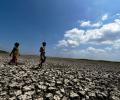
The onset of the southwest monsoon is being keenly watched this year as it may provide an early sign regarding its progress over the Indian subcontinent, particularly when El Nio is expected to rear its head during the latter half of the season.

The sharp rally in the midcap stocks has made valuations expensive, and there is room for a correction, wrote Christopher Wood, global head of equity strategy at Jefferies in his latest note to investors, GREED & fear. The midcap index, Wood said, now trades at 24.1x 12-month forward earnings compared with 18.7x for the Nifty. Rising crude oil prices, he believes, are another worry for India, which imports nearly 80 per cent of its annual crude oil requirement.

Emerging technologies like cybersecurity and the Internet of Things have the potential to add 1.4 million new IT jobs in India by 2027.

rediffGURU Chocko Valliappa offers advice on how to upskill yourself to advance in your career.

India is likely to witness normal rainfall during the southwest monsoon season this year, the India Meteorological Department said on Thursday. Rainfall will be 96 per cent to 104 per cent of the Long Period Average (LPA) of 87 cm of the 1971-2020 period, it noted. Earlier, the IMD used to consider the LPA of 88cm of the 1961-2010 period.

While weather forecasters remain divided on how the monsoons will play out in India over the next few months, analysts believe the news at the current juncture - at best - can trigger a knee-jerk reaction in the markets. They believe it is too early to say whether the sub-par monsoon on account of El Nino can seriously dent the market sentiment in the short-to-medium term. "These are just initial forecasts and we will have another round / status update from the weather forecasters a month down the line.

Monsoon in August was almost 24 per cent below normal, which was the sixth driest August since 1901. It came on the back of a 7-per cent monsoon shortfall in July.

G P Sharma, President (Meteorology) of the Skymet Weather said the Long Period Average of the rainfall during June to September will be 103 per cent with an error margin of plus or minus 5 per cent.

Renewed inflationary pressures, led by a spike in prices of vegetables and cereals, have cast a spell on the equity markets in the past month. The BSE Sensex and Nifty50 have declined up to 2 per cent each during the period, clipping the 13 per cent rally from the March lows, shows data from ACE Equity. Investors typically consider shares of fast-moving consumer goods (FMCG) companies as defensive bets, putting their weight behind them in a falling market.

Monsoon normally starts withdrawing beginning September 1 from west Rajasthan.
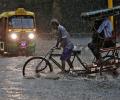
As the month ended with 33 per cent deficiency, which translates to around 67 per cent of the Long Period Average, several parts of the country have been witnessing drought-like situation.

States have been told to prepare in advance to counter any impact of an adverse southwest monsoon.

Also, the monsoon this year may end up being the driest since 2015, which recorded a rainfall deficit of 13 per cent, they said.

Rainfall in August is predicted to be below normal (less than 94 per cent of LPA), but the situation is expected to improve comparatively in September, the IMD said.
The southwest monsoon might finally start withdrawing from parts of North-West India over the next three days, signaling the end of its four-month journey over the country that started in June, the India Meteorological Department (IMD) said. However, though the retreat might begin from next week, the rains might not descend quickly, as the met department predicted fresh spells of rains in Vidarbha, Chhattisgarh and east MP on September 21-22 and over Odisha, Coastal areas north Andhra Pradesh and Gangetic West Bengal on September 19-21. "Due to anti-cyclonic flows over northwest India at lower tropospheric levels, dry weather is very likely over west Rajasthan, Punjab, Haryana, Chandigarh and Delhi during the next five days. "Hence conditions are becoming favourable for the withdrawal of Southwest Monsoon from parts of northwest India during next three days," the IMD said.

Sanjib Jha, CEO, Coverfox Insurance Broking, answers your health insurance related queries.

Less-than-expected rainfall and a poor spatial distribution, experts say, can rekindle fears of a rise in food and fuel inflation that can have an impact on the RBI's monetary policy. The fear of less than optimal rainfall due to El Nino this year, analysts believe, is the biggest short-term risk for the markets, which they said has not been fully priced in yet by them. Monsoon set over Kerala on June 08, a week later than its scheduled date.

The Indian markets have seen a good run in the last three months with the S&P BSE Sensex rising around 7 per cent and the Nifty50 moving up 7.5 per cent. The next leg of the market rally from here on, analysts suggest, will be driven by a growth in corporate earnings over the next few quarters. That said, they do not expect material / sharp downgrades to India Inc's earnings estimates despite headwinds for the economy.

India recorded 125 extremely heavy rainfall events during September and October of 2021, the highest in five years, owing to late withdrawal of the southwest monsoon and higher-than-normal low-pressure systems, India Meteorological Department (IMD) said on Tuesday.

Mohapatra said there is a 40 per cent chance of a normal rainfall, 22 per cent above normal, 12 per cent excess and 18 per cent below normal.

The Supreme Court on Thursday refused to entertain a PIL seeking the implementation of a uniform judicial code in courts across the country on issues such as case registration, use of common judicial terms, phrases and abbreviations of legal terms.
Monsoon is likely to be 96 per cent of the long period average

East India, along with a major portion of central India, is likely to be at a higher risk of being rain deficient, especially during the first half of the season.

Skymet said September would be much better and it expects it to end at 111 per cent of the LPA

The southwest monsoon is likely to arrive over Kerala on May 31, a day earlier than its normal onset date, the India Meteorological Department (IMD) said.

Skymet said the monsoon this year could be 100 per cent of the long period average (LPA) with a model error of plus and minus 5 per cent.

The met department said that rainfall in August is projected to be within the normal range at 97% of LPA. In August and September, India receives around 43 mm of rainfall.

Omkeshwar Singh, head, Rank MF, a mutual fund investment platform, answers your queries.

In Delhi, Safdarjung, the base station for the national capital, recorded 44.2 degrees Celsius, while Mungeshpur observatory in northwest Delhi, reported 47.3 degrees Celsius.

The Indian IT services sector is scrambling to retain talent since digitisation-led transformation has increased the demand for a digitally skilled workforce. As a result, the pull for jobs for tech professionals is also coming from non-IT sectors, leading to higher attrition among IT companies. The average number of tech jobs from non-IT sectors has seen a 41 per cent uptick in March-May'21 versus March-May'19, according to data from Naukri.com.

Skymet is the first major Indian weather forecasting agency to have issued a monsoon forecast for 2016.

A normal monsoon will augur well for the country's agriculture sector and boost crop yields. However, good rains - and surplus crops - could also depress prices, hurting farm income, unless adequate steps are taken.

This should augur well for the rabi crops as delayed withdrawal will leave enough moisture in the soil for early sowing.

In another forecast for August, IMD Director General Mrutunjay Mohapatra said monsoon is also likely to be normal in the month.

The 'Salary Survey 2015' was administered on 100,000 registered users on the website.

As the kharif season is setting in, India is scrambling to source fertilisers from the international market. It is set to sign long-term contracts - especially with Morocco and Latin American countries - to ensure steady flow of supplies. "We have to source fertilisers wherever it is available because crops have to be secured.

'IIM Ahmedabad has seen one of the best placement seasons ever and this change can be attributed to the markets opening up after the pandemic.'

Nearly 21 per cent of the country has received "deficient" rainfall till July 31, the India Meteorological Department on Monday said.

This interactive maps shows you the rainfall received across India in the months of June and July.

July and August are expected to receive 107 per cent and 104 per cent of rainfall
 © 2026 Rediff.com - Investor Information - Advertise with us - Disclaimer - Privacy Policy - Sitemap - Feedback - About us - Terms of use - Grievances