
In the next 36 months nearly 25 to 40 per cent of jobs will be under threat from AI and job losses are inevitable.

A new report indicates India has become the world's fifth most digitalised economy and ranks fourth globally in AI performance, driven by increasing AI adoption and a strong digital infrastructure.

Chief Economic Advisor V Anantha Nageswaran highlights the challenges of digital access, data governance, interoperability, and cyber security in India's digital public infrastructure (DPI), despite its world-class scale.

Artificial Intelligence (AI) adoption has led firms to moderate hiring, primarily at the entry-level, according to a report.

Learning from East Asia, India must reform its district administration with performance, accountability, and vision to achieve the goal of Viksit Bharat, points out Deepak Mishra.

ICRIER has suggested that the government hasten tax reforms by lowering peak customs duties to ensure export competitiveness of domestic industry.
A higher transaction tax is likely to defeat the very purpose of commodity markets by forcing farmers and hedgers to exit due to greater cost, an ICRIER report said.
Economic think-tank Indian Council for Research on International Economic Relations has warned that higher economic growth of 7-7.5 per cent annually cannot be achieved in the next five years unless the government accelerates reforms.

The Budget should undertake further reductions in import tariffs and seriously consider an announcement of India's intention to join one or both of the two Asian mega-regional free trade agreements, suggests Shankar Acharya, former chief economic adviser to the Government of India.

After climbing to the highest level in more than five years to 4.7 million tonnes in FY24, India might import fewer quantities of pulses this financial year at 4-4.5 mt on the back of good monsoon and higher domestic production, Bimal Kothari, chairman of India Pulses and Grains Association (IPGA), said in New Delhi on Friday. Kothari was addressing reporters on the sidelines of a seminar on pulses titled "Bharat Dalhan-2024".

Three years after India declared its goal to become a net-zero economy by 2070, the policy design for achieving the target has begun, with the NITI Aayog forming dedicated multi-sectoral committees to prepare a transition plan. In 2021, India joined a select group of nations that set a target year for becoming net-zero carbon economy. At COP26 in Glasgow, Prime Minister Narendra Modi outlined a five-pronged 'Panchamitra' climate action target for India and committed to a net-zero target by 2070, joining nations like the US, the UK, and China.

Several candidates, including Taranjit Singh Sandhu, the BJP's Amritsar candidate, are promising resumption of India-Pakistan trade via the Attari-Wagah land route.
Till such time as the study is complete, the plan to allow 51 per cent foreign direct investment in speciality retail sectors such as consumer electronics and sports goods has been put on hold.

Her research was focused on urban development, macro-economic reforms, industrial development, and social sector development issues in India.

There is no plan to direct over the top (OTT) communications players who generate large amounts of traffic to give a 'fair and proportionate' share of their revenues to telecom network operators, the communications ministry has said. A senior official allayed any such apprehension by saying: "We have no proposal of this kind or anything like this which we are working on. "There is no fresh reference on this matter to the regulator (Trai)," he said. The ministry's view is significant as telecom network operators have been escalating this issue since July when Trai issued a consultation paper called 'Regulatory Mechanism Over OTT Communication Services and Selective Banning of OTT Services'.

What some of our leaders were up to on the first day of November...

Finance Minister Nirmala Sitharaman on Thursday said India has ramped up the import of crude oil from Russia at discounted prices amid sanctions on Moscow as part of the country's inflation management. "In a situation where global prices were going beyond anyone's affordability, at that stage to take a very strong political decision, I respect the prime minister for his courage on this to get it from Russia because they are ready to give it to you at discount. And how speedily did we manage to do it," she said. India ramped up its import from Russia from about 2 per cent of the total shipment of petroleum products to 12-13 per cent in a couple of months as part of inflation management, she said at a seminar organised by economic think-tank Icrier.

Ahluwalia was married to former deputy chairperson of Planning Commission Montek Singh Ahluwalia and is survived by her husband and two sons.

The Union government could target a fiscal deficit of 5.8-6 per cent of nominal GDP for 2023-24, and it should continue its capital expenditure push and look to simplify the personal income tax regime, economists recommended Finance Minister Nirmala Sitharaman and her team during their pre-Budget interaction on Monday. Starting last week, Sitharaman had eight pre-Budget consultations this time. More than 110 invitees representing seven stakeholder groups participated in these meetings, the finance ministry said in a statement. The stakeholder groups included representatives and experts from agriculture and agro-processing industry; industry, infrastructure & climate change; financial sector and capital markets; services and trade; social sector; trade unions and labour organisations; and economists.

The government has asked Chinese mobile companies to increase their exports from India and there is no proposal to ban the sale of handsets below Rs 12,000 made by such firms, Union Minister Rajeev Chandrasekhar said on Monday. The Minister of State for Electronics and IT also said that Indian companies also have a role to play in the country's electronic ecosystem but it does not mean exclusion of foreign brands. "Only issue that we have raised and done very transparently with some of the Chinese brands is that we have said that our expectation is that they will do more exports.

The first five months of 2023 have witnessed at least six major events/trends that augur badly for global economic and socio-political prospects, points out Shankar Acharya, former chief economic adviser to the Government of India.
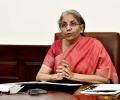
Finance Minister Nirmala Sitharaman on Wednesday said India is "very close" to arriving at the specifics of the two-pillar taxation proposition at the G20 and is in the last stage of finalising the details. A total of 130 countries had in July agreed to a overhaul of global tax norms to ensure that multinationals pay taxes wherever they operate and at a minimum 15 per cent rate. The finance ministry had then said that some significant issues including share of profit allocation and scope of subject to tax rules are yet to be addressed and a 'consensus agreement' is expected by October after working out the technical details of the proposal.

The World Bank must become Archimedes's lever to help change the world into a more prosperous, inclusive, and sustainable planet in the 21st century. The change in leadership now provides that opportunity, observes Ajay Chhibber.

It is a trend that economists and researchers say might continue. The data shows the share of this age group in the net EPF accounts created - a proxy for net new formal jobs created - fell from 37.9 per cent in 2018-19 to 24.1 per cent in 2021-22.
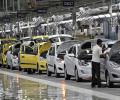
With the Indo-Pak dialogue in tatters and the respective armies exchanging fire across the Line of Control, an unexpected opportunity has presented itself for boosting trade between the two countries.
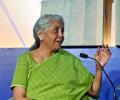
Finance Minister Nirmala Sitharaman on Thursday said inflation management cannot be "singularly" left to the monetary policy as a majority of activities are outside its purview in the current context. Speaking at a seminar organised by economic think-tank Icrier, the finance minister said that both the fiscal policy and the monetary policy have to work together to contain inflation. Consumer price index (CPI) based inflation or retail inflation is ruling above the Reserve Bank's comfort level of 6 per cent since January.
It's a season of change at economic think tanks.

The country's demographic dividend is dissipating, with seriously adverse consequences for young India, asserts Shankar Acharya, former Chief Economic Adviser to the Government of India.
The reports by ICRIER on impact of organised retail on neighbourhood stores and NCAER on FDI in multi-brand retail were originally expected to be submitted by February, but were later postponed to April. "We are expecting the two reports to be given to us soon, they (ICRIER and NCAER) have asked for time extension. I think they have asked time till July," Minister of State for Industry Ashwini Kumar told reporters on the sidelines of a CII seminar in.

Despite being a neighbour, Pakistan has never accounted for more than 2 per cent of India's total exports, and its share in India's total imports is less than 1 per cent. On the other hand, bilateral trade between India and Bangladesh has increased five times.
The bulk of this money will, however, be spent on buying imported equipment, mainly from Europe and China.
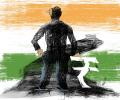
The employment situation remains dire. Whatever can be done to promote greater low-skill employment should be pursued aggressively, advises former chief economic adviser Shankar Acharya.
'The package is for the distressed farmers who are committing suicide due to the severe drought,' Nitin Gadkari tells Arup Roy Choudhury and Sanjeeb Mukherjee.

From Covid-19 essentials, such as Vitamin C supplements and thermometers, to bicycles, laptops, and personal weighing scales, demand for certain items galloped during last financial year as the pandemic altered what Indians used on a day-to-day basis. Imports of outdoor sports equipment, handbags for women, and dentures, among others, plummeted. With outdoor activities coming to a halt last year and schools functioning virtually, imports of sports goods witnessed a decline, while inbound shipments of laptops and battery chargers saw a sharp uptick, according to the import data for the financial year 2020-21.

The Indian economy is expected to grow around 10 per cent during the current financial year on the likelihood of fewer COVID-19-linked supply disruptions and buoyancy in the global economy, said Poonam Gupta, director general of economic think-tank NCAER. The real challenge, however, would be to sustain a growth rate of 7-8 per cent in years to come, she said. "We could see annual growth in the ballpark range of about 10 per cent. "The reasons for this perceived optimism are: fewer supply disruptions; increased pent-up demand in the traditional and contact-intensive services; and a buoyant global economy.

Experts said many of the programmes started in the last one year have been dogged by poor implementation, something which the state seriously needs to answer as it faces a tough electoral battle in the months ahead.
Macroeconomic management is usually a lot more comfortable with lower fiscal deficits. The sooner we get there, the better for the economy, says former Chief Economic Adviser to the Government of India Shankar Acharya.

Growing number of Internet and broadband connections can give the Indian economy the much-needed fillip by adding $ 17 billion to the gross domestic product (GDP) annually.

The Finance Minister himself admitted that the tax proposal could have some inflationary bearing.

With inflation topping the government agenda, economists have told Finance Minister Pranab Mukherjee to focus on policies to boost agricultural productivity in the upcoming Budget for 2011-12.
