
Auto makers Tata Motors and General Motors India on Monday announced they will cut prices of their products after Finance Minister P Chidambaram decided to reduce excise on automobiles in the interim Budget 2014-15.
Led by strong growth in its luxury sedan Chevrolet Optra, auto major General Motors India on Tuesday reported a 123.5 per cent growth in car sales in June 2004 to 2,418 units from 1,082 units in the same month last year.
General Motors India on Thursday said its car sales surged by 162.8 per cent in January 2003 to 1,477 units over 562 units in the same month last year.
Maruti, Tata Motors and Ford Motor India have already made similar announcements.
General Motors India on Friday said it will hike the prices of its entire range of models by up to Rs 20,000 with effect from October 8 as it looks to minimise the impact of adverse currency movement and high input costs.

Much of Mary Barra's first year as CEO was spent dealing with crisis.
Auto major plans to cut technology outsourcing from 90 to 10 per #162 TCS, Wipro, others could be at receiving end

General Motors India on Tuesday increased vehicle prices by up to Rs 61,000 in order to partially offset the impact of rising input costs and expiry of reduced excise duty concessions.
General Motors India on Monday said its car sales soared by 112.6 per cent in August on good demand of the new premium mid-size model Chevrolet Optra.

The company said it will inspect and if necessary, replace the clutch pedal lever.
Maruti Suzuki India has hiked prices of its vehicles across all models, except the entry level sedan DZire, by up to 3.4 per cent.
General Motors will invest Rs 100 crore (Rs 1 billion) in its manufacturing facility at Halol in Gujarat, for penetrating into the Indian small car segment, company's Vice President P Balendran said on Friday.

The recall will affect 2,910 units of the sedan version of Sail and 1,090 units of compact car variant of the model.
Automobile giant General Motors will invest Rs 1,000 to Rs 1,200 crore (Rs 10-12 billion) to set up a power train (engine and gear box) manufacturing facility at its Talegaon Plant near Pune.
.jpg)
The company will be increasing the prices of its compact car Beat, SAIL and multi-purpose vehicle Enjoy by 1.5 per cent, which translates to a range of Rs 2,000 to Rs 10,000.

We no longer have the ambition to rival China save through words. We are happy to be fighting ourselves and digging up disputes from centuries ago as a substitute for real development, argues Aakar Patel.

General Motors aims to grab at least 5 per cent market share in India within the next decade.

Thousands of workers of every description -- from journalists to steel workers, from painters to New York cops, from auto to engineering workers -- marched for two hours down 5th Avenue one of Manhattan's most iconic thoroughfares, reports Jyoti Punwani.

In March 2021, Ola Electric founder Bhavish Aggarwal was seen surveying an empty 500-acre land surrounded by shoe factories, temples, bakery shops, coconut trees and dusty roads in Pochampalli town of Krishnagiri district, Tamil Nadu. Many excavators and workers were busy at the construction site to build the Ola Futurefactory for electric vehicles.

Of the 15 car manufacturing companies in India, eight have a market share of below 2 per cent, raising questions about their long-term future in a competitive market that has already seen Ford Motors and General Motors slam the door on India.

Posco Daewoo, the South Korean conglomerate whose Cielo sedan and Matiz hatchback were once the pride of Indian car owners, is looking to re-enter India. And its return journey is riding on plans to sell electric bikes and e-cycles. The company termed India's robust economic growth and surging consumer demand as reasons behind its comeback plans, saying they make India "one of the world's most promising consumer markets," according to Y S Choi, general manager, Posco Daewoo South Korea.
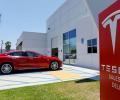
'Gujarat is the frontrunner at present.'
'However, Tamil Nadu's robust automobile ecosystem and Telangana's aggressive incentives make them strong contenders.'

Barra says GM is working on putting out the right products here because it will be difficult to make a mark globally without India.

The stock of the country's largest passenger vehicle maker, Maruti Suzuki India (MSIL), has been hitting successive all-time highs over the past three trading sessions. The rally in the scrip has helped it notch over a 21 per cent gain since the start of February, outperforming the National Stock Exchange Nifty Auto Index. The gains for the leader of small passenger cars have been more recent, as the company still trails the Nifty Auto over one- and two-year periods.

Hyundai Motor India expects SUV sales to account for 65 per cent of its overall volumes in 2024, while it gears up to enter the EV segment early next year, aiming to garner 20 per cent of its total sales by 2030, its COO Tarun Garg said on Tuesday. The automaker, which got around 60 per cent of its overall volumes from sports utility vehicle (SUV) sales last year, plans to invest Rs 7,000 crore on its second plant at Talegaon, according to Maharashtra Deputy Chief Minister Devendra Fadnavis. The company officials however declined to comment on the matter.

Corporate India is starting to step up its capital expenditure plans amid government incentives and signs of rising demand, company executives and analysts have indicated. This coincides with the Reserve Bank of India (RBI) recently citing a double-digit growth in private capital expenditure. Healthy balance sheets of banks and corporates, along with increasing capacity utilisation and improving business sentiment, are contributing to a favourable environment for sustained growth in private sector investments, the RBI said in its policy last week.
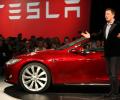
If Tesla comes in, India's position as a manufacturing hub will rise many notches, as it will become only the second country, after China, to have both Apple as well as Tesla.

South Korean auto giant Hyundai Motor Company is considering tax implications of listing its Indian unit before taking a final call, according to sources privy to the development. Hyundai Motor is mulling an initial public offering (IPO) for its Indian arm to raise around $3 billion (at a valuation of up to $30 billion), and talks are in the early stages between the company and bankers, banking sources revealed. Hyundai Motor India Ltd (HMIL), however, declined to comment on the development.
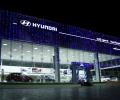
Legal battles initiated by 1,000-odd former employees of the Talegaon plant continue to present a challenge for the acquisition process.

US President Joe Biden visited the Detroit Auto Show to highlight electric vehicle manufacturing in America.

'We are going to have hybrid cars, which, as far as I know, none of our competition is working on, and this includes ethanol.'

Both are finding it difficult to sell one each of their plants -- Chennai Maraimalai Nagar (Ford) and Talegaon near Pune (GM) -- and are finding the road blocked by employee severance snarl-ups, report Sohini Das and Shine Jacob.

George Acland from Great Britain ran a coffee plantation in Sri Lanka and set up India's first jute mill in 1855. He raised capital and imported the machinery for the mill on the banks of the Hooghly in West Bengal. His company wasn't a great success, but his pioneering work paved the way for India to dominate the jute industry.

In 1937, a hydrogen-powered German airship flying into New Jersey caught fire and crashed, killing 35 passengers on board. It was sort of a man-made disaster as some 100 people were loaded on to a balloon filled with the most flammable material in the universe. The airship was named Hindenburg. Eight decades later, in 2017, a graduate of international business management from the University of Connecticut founded a "forensic financial research" firm to specialise in spotting wrongdoings and frauds, or what it calls man-made disasters, at companies around the globe and take market bets against them.

US auto major Ford Motor Co will shut its two manufacturing plants in India and will sell only imported vehicles in the country as part of a restructuring exercise, according to people aware of the development. The company, which invested about USD 2.5 billion at its Chennai (Tamil Nadu) and Sanand (Gujarat) plants, will stop selling vehicles such as the EcoSport, Figo and Aspire which are produced from these plants. Going ahead, it would only sell imported vehicles like Mustang in the country.

Clock 11% growth in the first 11 months of 2022.

That means a manufacturer looking at a market like India needs to decide whether small, cheap cars or small, expensive cars or both will work better for them, says Pavan Lall.
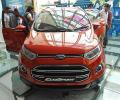
American automaker Ford on Thursday said that it had withdrawn plans to manufacture electric vehicles (EVs) in India and it won't invest in the country under the performance-linked incentive (PLI) scheme. "After careful review, we have decided to no longer pursue EV manufacturing for exports from any of the Indian plants. "We remain grateful to the government for approving our proposal under the PLI and for being supportive while we continued our exploration. "Ford India's previously announced business restructuring continues as planned, including exploring other alternatives for our manufacturing facilities.
 © 2026 Rediff.com - Advertise with us - Disclaimer - Privacy Policy - Sitemap - Feedback - About us - Terms of use - Grievances