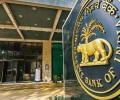
The Reserve Bank of India (RBI) booked massive gains on its foreign currency sales and needed to provide much lesser for its reserves in 2020-21 (FY21), helping it to carve out a significant Rs 99,122-crore dividend for the government, revealed the RBI's annual report for FY21. By doing so, the central bank's risk buffers have reduced to the bare minimum, which may restrict some of RBI's scale of operations, and would likely hamper dividend payout for financial year 2021-22, said analysts. The annual accounts are for nine months ended March 31, 2021 since the RBI changed its accounting year from July-June to April-March from FY21.

Let's wait for the monetary policy on February 8 -- to see how it complements the fiscal commitments, points out Tamal Bandyopadhyay.


Six consecutive profitable quarters after an equal number of losses - for Bharti Airtel, the turnaround has been quick. But it is not a result of higher tariffs or absence of exceptional items alone. Execution and strategy are playing a part, too. Bharti Airtel's chief executive officer Gopal Vittal summed it up in a post-result conference call last month. "We track the profit in each of our 237,500 (cell) sites.

Society of Manufacturers of Electric Vehicle (SMEV) on Thursday said sales of EVs in India fell 20 per cent in the financial year 2020-21 to 236,802 units. In 2019-20 sales of electric vehicles (EVs), including electric two-wheelers (E2W), electric three-wheelers (E3W) and electric four-wheelers (E4W), stood at 295,683 units. For FY21, the E2W segment sales declined by 6 per cent to 143,837 units, as compared to 152,000 units in FY20, SMEV said in a statement, adding that the FY21 E2W sales included 40,836 high-speed and 103,000 low-speed E2W. The E3W segment registered sales of 88,378 units as against 140,683 units sold in FY20.

Listed companies' net profit as a percentage of gross domestic product (GDP) has hit a decadal high and is expected to edge even higher over the next two financial years. According to an analysis by ICICI Securities, India's Inc net profit stood at Rs 8.4 trillion, or 4 per cent of GDP of Rs 210 trillion for the trailing 12-month period ending September. This is the highest since financial year 2011-12 (FY12), when it was at 4.6 per cent.

Some of India's largest companies have seen a slowdown in the growth of temporary, contract and casual jobs, as compared to the increase in their total workforce. The absolute number of such jobs is up 30 per cent between financial year 2017-18 and 2021-22 (FY18-22), shows an analysis of data collated from the annual reports of S&P BSE 100 companies. Forty-eight firms were considered for the final analysis based on the availability of uniform data across the last five years. In comparison, the total workforce numbers are up 36 per cent in the same period.

The central government is on track to meet its fiscal deficit target of 6.4 per cent of the GDP for 2022-23 on the back of strong growth in revenue collections, the World Bank said in its India Development Update on Tuesday. High nominal GDP growth in the first quarter supported strong growth in revenue collection, especially Goods and Services Tax (GST), despite tax cuts on fuel. Notwithstanding an increase in spending due to expanded fertilizer subsidies and food subsidies for vulnerable households in response to the commodity price shock, the government is on track to meet its FY22/23 fiscal deficit target of 6.4 per cent of GDP and the general government deficit is projected to decline to 9.6 per cent from 10.3 per cent in FY21/22 and 13.3 per cent in FY20/21.

Infosys raised the lower-end of its FY20 revenue guidance and the revised forecast now stands at 9-10 per cent growth in constant currency terms.

The payouts were 22 per cent lower than the previous year's tally of Rs 7,938 crore.

Indian companies' market capitalization has grown at the fastest pace last year among major economies despite contraction in GDP, economists from SBI said, flagging the risks to financial stability it poses. Further, retail investors have shown higher interest in markets and their numbers have increased by 1.42 crore in FY21 and another 44 lakh in April and May, they said in a note, wondering if this will be a lasting behavioural change or is transitory. The economists at the country's largest lender attributed the growth in equity markets to lower returns on other financial instruments amid a low rates regime, increase in global liquidity, and even a tendency to spend more time at home because of mobility restrictions which led many to trade more.
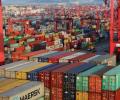
Though the government has been pushing for exports of high-value manufactured goods across major markets in place of raw materials and input goods, India's top exports to China remain in the raw materials category.

Custom authorities have been keeping strict vigil on the cargo movements from Bhutan, Taiwan, China, Afghanistan, South Korea Japan, and Dubai since January.

India Inc's cash pile was up 13.8 per cent last fiscal year, thanks to a combination of higher profits in sectors such as IT and fund raising by top companies such a Reliance Industries, Bharti Airtel and Tata Motors, among others.

If 2019-20 (FY20) was an unusual year for highway construction in India, with the pace of work slowing down for the first time since the Narendra Modi government assumed power in 2014, largely due to the general elections in May and liquidity crunch, the outbreak of the Covid-19 pandemic in 2020-21 (FY21) only made matters worse with lockdowns and labour unavailability. The pace of highway construction in 2021-22 (FY22) has not been able to bulldoze the pandemic barriers in a year marred by two Covid-19 waves - the second at the start of the fiscal year, the third towards the close. With localised lockdowns and restrictions on mobility, highway construction growth in the country has now fallen to a five-year low.

Foreign portfolio investors (FPIs) have pumped in a whopping $33.8 billion into domestic equities and debt till February 15 this fiscal year -- the highest since FY15 when it was nearly $46 billion --taking their net outstanding investments to a record $592.5 billion, as per a report. Of the total FPI assets of $592.5 billion, $537.4 billion were in equities and $51.38 billion in debt, according to the data collated by Care Ratings. The maximum holding is in financial services sector at $191.3 billion, followed by software ($76.1 billion), oil & gas ($50 billion), automobiles & auto components ($26.9 billion, pharmaceuticals & biotechnology ($22.8 billion), sovereign ($21.7 billion--debt), household & personal products ($20.2 billion), capital goods ($19.8 billion), food, beverages & tobacco ($15.7 billion) and insurance ($13.4 billion).

The government has tweaked the income tax laws to make it easier for the new owners of loss-making public sector undertakings (PSUs) to carry forward the accumulated losses and set them off against future profits. This will result in significant tax savings for the new owners if they are able to turnaround operations of the ailing PSU within a few years. This will, in turn, boost the post-tax earnings and returns for the new owners.

The government has limited room to reduce expenditure without further weakening growth, it noted.

Chairman A M Naik said H2 of 2020-21 will herald better economic and business activity in terms of tendering, good liquidity, as well as revival of labour and supply chains.

Public sector banks (PSBs) have written off a massive Rs 8 trillion of loans in the seven years of the Narendra Modi government in office. This is more than twice the capital infused by the Bharatiya Janata Party-led government during the period. Between 2014-15 and 2020-21 (FY21), the Centre had infused Rs 3.37 trillion into PSBs. At Rs 1.06 trillion, FY19 saw the highest capital infusion.

Banks operating in India reported fraud of Rs 4.92 trillion as on March 31, 2021, which represents nearly 4.5 per cent of the total bank credit, showed Reserve Bank of India (RBI) data, which was sought under the Right to Information (RTI) Act by Saurabh Pandhare. The data showed 90 banks and financial institutions reported a total of 45,613 cases of loan fraud till March 31, 2021. State Bank of India - the country's largest lender - reported the highest amount of loans as fraud - Rs 78,072 crore as on March 31, 2021.

Edtech giant Byju's is set to lay off nearly 2,500, or 5 per cent, of its employees as part of an "optimisation" plan. The move by India's most valuable start-up comes amid a funding winter and steep losses. "To avoid redundancies and duplication of roles, and by leveraging technology better, around 5 per cent of Byju's 50,000-strong workforce is expected to be rationalised across product, content, media, and technology teams in a phased manner," said the company in a statement. In June, Byju's laid off about 600 employees at its group companies -WhiteHat Jr and Toppr.

The Centre is looking to improve disclosures made by public sector undertakings (PSUs), and has asked such companies to share monthly progress made on capital expenditure targets and corporate social responsibility (CSR) initiatives undertaken by them. New details such as gender-wise reporting of contractual workers, unused land, and profit share in joint venture companies have also been added in the list of disclosures. The Department of Public Enterprises (DPE), which publishes the Public Enterprises Survey and collects information for Memorandums of Understanding (MoUs) signed with PSUs, is looking to integrate data collected from government-owned companies.
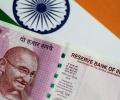
India's current account swung to a deficit for the first time in the current fiscal, with the gap coming at $1.7 billion or 0.2 per cent of the GDP in the December quarter. In the current fiscal, as the pandemic impacted trade, the current account had been in surplus in the previous two quarters, at $15.1 billion and $19 billion, respectively, as per the data on balance of payments released by the RBI on Wednesday. The critical measure of a country's external strength now stands at a surplus of 1.7 per cent of GDP for the first nine months of the fiscal year as against a deficit of 1.2 per cent in the year-ago period. In the December quarter, there was a rise in the merchandise trade deficit to $34.5 billion from $14.8 billion in the preceding quarter, and an increase in net investment income payments.

Thierry Delaporte's pay package would be around 34 per cent higher than the total compensation that Wipro CEO Abidali Neemuchwala received in financial year 2019-20 (FY20). It also brings the Wipro CEO's salary on par with other top IT firms such as Infosys and Cognizant.

India Inc's philanthropic spends have grown by 3.62 per cent to Rs 22,000 crore in FY21 as profits expanded, and a majority of the allocations have been done to pandemic-linked causes, a report said on Tuesday. The report by rating agency Crisil said that while the first wave saw greater spending in cash largely through the PM-CARES Fund, the preference shifted to more direct support through in-kind spends in the second wave. Corporate contributed only Rs 85 crore to the PM-CARES Fund during the second wave between March and June 2021, as against Rs 831 crore to what was classified as 'others'.

Or else customers will face capacity shortages and high fares.

Else customers will face capacity shortages and high fares.
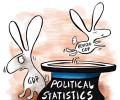
The GDP growth is estimated to come at the "deceptively high" level of 20 per cent for the April-June 2021 quarter but is far below the same in the pre-COVID times, rating agency Icra said on Wednesday. Icra said the low base of the last year, when the GDP had contracted by close to 24 per cent, "conceals" the impact of the second wave of COVID-19 infections. Economic activity is boosted by robust government capital expenditure, merchandise exports and demand from the farm sector, it said, estimating the GDP to grow by 20 per cent and the gross value added (GVA) will register a growth of 17 per cent for the June quarter.

Together with its share buyback worth Rs 16,000 crore completed in January this year, TCS shareholders will receive a record Rs 30,250 crore from their company in FY21.

The EPFO had decided that 8.15 per cent interest from its debt income would be credited immediately and the remaining 0.35 per cent capital gains from the equity sale would be given later, subject to its redemption.

With all major US export-oriented drug manufacturing plants in the country up for inspection in 2022, some estimates peg that at least 20-30 per cent of the new product launches lined up for the US will be subject to on-site inspection by the US Food and Drug Administration (USFDA). The last two years saw limited physical inspections due to travel restrictions during the pandemic. "Pre-Covid, the frequency and number of inspections of manufacturing plants in India by USFDA had increased significantly," analysts from ICICI Securities Research noted. "With growing ANDA filings, especially for complex products. "We expect this trend to return with the environment normalising," analysts from ICICI Securities Research noted.

While growth metrics for Infosys was skewed to a single vertical and it is struggling to get a handle on costs, TCS has been able to manage growth and keep cost inflation under control.
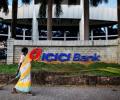
Fitch Ratings has affirmed ICICI Bank's ratings at 'BB+' with a negative outlook and retained the lender's viability rating at BB. The negative outlook comes despite the agency recently revising upwards the operating environment outlook of domestic banks to stable from negative, citing better than expected recovery in business and economic activity following the COVID-19 second wave. Economic momentum and regulatory measures should support modest improvements in the domestic banks' financial profiles over the next 12-24 months, even though challenges remain the agency said in a late Monday note.

Pessimism largely emanates from the fact that the volume outlook for FY20 isn't encouraging at the moment.
The bulk of the incremental profits will come from oil & gas and automobile sectors.

About 300 employees would come under the ambit of voluntary decision.

About 7 per cent was priced between Rs 3 crore and Rs 5 crore, 22 per cent priced between Rs 5 crore and Rs 8 crore, and 15 per cent above Rs 8 crore.

Radhakishan S Damani, investor and promoter of the D-Mart supermarket chain, has broken into the elite club of the top 100 global billionaires. Damani, who grew up in a single-room apartment in Mumbai, is now ranked 98th on the Bloomberg Billionaires Index with $19.2 billion as his net worth. The index is a daily ranking of the world's richest people. The other Indians on the top 100 rich list ahead of Damani are Mukesh Ambani, Gautam Adani, Azim Premji, Shiv Nadar, and Lakshmi Mittal.
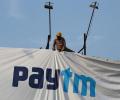
Digital payments and financial services firm Paytm has filed a draft red herring prospectus for its proposed Rs 16,600-crore initial public offering (IPO) with the Securities and Exchange Board of India.
 © 2026 Rediff.com - Advertise with us - Disclaimer - Privacy Policy - Sitemap - Feedback - About us - Terms of use - Grievances