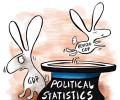
It is also likely to assume a deflator of around 4 per cent. That could take the nominal GDP outlook for FY21 to around 10 per cent. It is this nominal GDP forecast on the basis of which the finance ministry is calculating key Budget targets like the fiscal deficit as a percentage of GDP and tax revenue growth for the coming year.

The first spending item on the chopping block is capital expenditure, followed by operating costs and overheads, including sales and marketing expenses.

DGCA has also permitted the airline to deploy newly-inducted planes for capacity expansion.

The increased tax target comes at a time when consumer spending and sales growth are slowing down and most companies are not investing in new capacities.
While presenting her 2021-22 Union Budget, Finance Minister Nirmala Sitharaman had set a fiscal deficit target of 6.8 per cent of nominal gross domestic product (GDP) against the 2020-21 Revised Estimate of 9.5 per cent. The fiscal correction in the upcoming 2022-23 Union Budget is unlikely to be that steep. Even as discussions among top Budget-makers are ongoing, the fiscal deficit target for 2022-23 may likely be in the range of 6.5-6.8 per cent.

FSN E-Commerce Ventures, which runs online marketplace for beauty and wellness products Nykaa, has filed preliminary papers with markets regulator Sebi to raise Rs 3,500-4,000 crore through an initial share-sale.

There are also signs that the private sector investment cycle is slowly coming back, as capacity utilisation figures across industry continue to slowly creep up. A pickup in investments will front load profitability, says Akash Prakash.
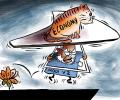
India's growth outlook has weakened sharply this year, with a crunch that started with the non-banking finance institutions spreading to retail businesses, car-makers, home sales and heavy industries.
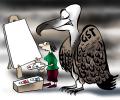
Experts said if the slowdown, and subsequent weakness in GST mobilisation, continued, it would curtail the Centre's resources to a considerable extent in the current financial year.
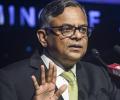
The 14 listed Tata group companies in which Tata Sons holds a stake are paying out a record Rs 35,441 crore to their shareholders by way of dividends and share buyback for FY21.

Logistics services provider Delhivery is likely to launch its downsized initial public offering (IPO) this week, said people in the know. The Softbank-backed firm may trim its issue size from Rs 7,460 crore to Rs 5,500 crore to align with the volatile market conditions, sources said. Sources added the fresh issue component of the IPO could be reduced to Rs 4,500 crore and the OFS component to Rs 1,000 crore.

Gold jewellery demand in India is likely to decline in the second and third quarters of this fiscal due to hike in import duty, high volatility in prices and inflationary pressure, according to a report. While demand is likely to contract by 8 per cent year-on-year in the second quarter of FY23, the decline is expected to be higher at 15 per cent in the third quarter due to the exceptionally high base in the same period of FY22, Icra said in a report. According to the report, the exceptional third quarter performance in FY22 was due to the post-Covid reopening of the economy and the substantially high demand in the wedding and festive seasons.

The country's largest carmaker Maruti Suzuki India (MSI) on Tuesday reported 6.14 per cent decline in consolidated net profit at Rs 1,241.1 crore for the fourth quarter ended March 31, 2021. The auto major had posted a net profit of Rs 1,322.3 crore in January-March quarter of 2019-20, MSI said in a regulatory filing. However, revenue from sale of products stood at Rs 22,959.8 crore as compared with Rs 17,187.3 crore earlier, up 33.58 per cent.

The month of March could be worst in many years, with imports estimated only around 18 tonnes amid the coronavirus pandemic and the nationwide lockdown, said an industry player. The import in March 2019 was 72.5 tonnes, according to the GFMS data.

Corporate India's credit quality showed a sharp improvement in the second half of FY22, but high input prices and withdrawal of pandemic-related relief measures can pose pressures in the new year, rating agencies said on Friday. Crisil Ratings, which rates a large number of financial sector entities, reported an improvement in the credit ratio -- the number of upgrades to downgrade -- to 5.04 times in the second half of this financial year, from the 2.96 per cent in the first half of the fiscal. It attributed the improvement to a sustained rebound in demand, which lifted revenues of most sectors to pre-pandemic levels and proactive relief measures by the government that cushioned the pandemic blow.

There are loans to salaried people where the borrower is employed, but has failed to make repayment. Such loans would be identified and sold in a pool to ARCs.

Despite a slowing economy, the Budget does not envisage any major stimulus through the budgeted fiscal deficit figures, said Goldman Sachs.

The government has budgeted for total expenditure of Rs 34.83 lakh crore or 6.8 per cent of GDP. While the net tax revenue rose from Rs 5,75,697 crore in October 2020 to Rs 10,53,135 crore till October 2021, a growth of 82.93 per cent annualized, total expenditure rose only by 9.95 per cent, led by infra spending to Rs 18,26,725 crore from Rs 16,61,454 crore during the same period, the RBI said in the financial stability report.

Consumption of petrol and diesel will contribute more than half of the Centre's exclusive share in GST in FY20, reports Abhishek Waghmare

Business activity contracted in Q2 FY20, the first contraction since 2013-14 and the second since the 2008 global financial crisis, report, Abhishek Waghmare and Anup Roy.

Tata group companies have outperformed the broader market over the past four years, under the chairmanship of N Chandrasekaran. However, the group's fortunes rely heavily on the performance of Tata Consultancy Services (TCS) now, as compared to the past. The combined market capitalisation of the group's listed companies has nearly doubled in the last four years, against a 77 per cent rally in the benchmark Sensex during the period. The overall market value of 16 key group firms - excluding listed subsidiaries of such entities - stood at Rs 16.8 trillion as of Friday. This was close to 2x the Rs 8.45 trillion as of February 21, 2017 - the day Chandrasekaran took charge as chairman of Tata Sons.

More than a year of Covid-19 has pushed most businesses into gloom but Reliance Industries Ltd (RIL) managed to reduce its gross debt 25 per cent, enabling it to turn towards its next phase of capital expenditure that has come in the form of a Rs 75,000-crore plan for green energy and power storage. The company managed to stay afloat during the pandemic because of its large presence in the consumer-centric businesses of retail and telecommunication (see chart: "A new Reliance"). These two businesses constituted 45 per cent of its EBITDA during FY21 from 36 per cent in FY20.

The brokerage believes the economic growth cycle is not fully priced in. It has revised upwards the earnings per share (EPS) estimate for Sensex.

E-commerce platform Snapdeal is looking at filing its Draft Red Herring Prospectus (DRHP) in the next few weeks to launch an initial public offering in first half of next year, according to sources. Sources close to the development said the company is looking at a $250 million (around Rs 1,870 crore) IPO that could value Snapdeal at about $1.5-1.7 billion. Snapdeal is looking at filing the DRHP in December-January time frame, and launch the IPO in the first half of 2022 after the necessary approvals, they added. One of the sources said the founders will not be selling shares as part of the IPO, and major shareholders are also expected to hold onto their shares.

However, both developers as well as analysts are hopeful that these business metrics will pick up once activity resumes.

The gains came on expectations that the company will post strong growth given its presence in application to peer services and the fast-growing communication platform as a service segment.

Though India was under lockdown for only seven days of the quarter, global demand and commodity prices began falling from February as COVID-19 was spreading in other countries. 1,002 listed companies - excluding banks, non-bank lenders, insurers, brokerages, and IT firms - reported a combined pre-tax loss of around Rs 2,700 crore during Q4.
Sitharaman's Budget missed deficit target for the third year in a row, pushing shortfall to 3.8 per cent of GDP in the current fiscal as compared to 3.3 per cent previously planned.

We are adapting to the situation by innovating new delivery modelss, launching brand campaigns that are impactful in the current context and closely monitoring changes in consumer buying behaviour, he said.

Investors are pushing back more often against companies' resolutions on what is paid out to top executives. In the first four months of financial year 2022-23 (FY23), there have already been five such rejections, according to shareholder voting data from tracker Adrian, a platform maintained by the proxy advisory firm Institutional Investor Advisory Services India (IiAS). Two of these have been at multiplex chain PVR and direct-to-home company Dish TV India.

IndiGo has proposed to issue 185,000 shares worth to Chief Executive and Whole-time Director Ronojoy Dutta under the company's Employee Stock Option Plan (ESOP). The shares that can be exercised at a price of Rs 765 apiece is worth Rs 14,15,25,000. Dutta can exercise 25 per cent of that at the end of first year, 35 per cent at the end of second year, and the remaining in December 2023 when his current tenure ends.

It's a busy season for Indian producers of orthodox tea. As Sri Lanka, the world's largest supplier of orthodox tea, struggles with its worst economic crisis, a window of opportunity has opened up in neighbouring India. Calls to Indian planters and exporters from foreign buyers of Sri Lankan orthodox tea are pouring in and the buoyant sentiment is reflecting in prices at auction centres. Orthodox tea refers to loose-leaf tea which is produced using traditional or orthodox methods such as plucking, withering, rolling, oxidation and drying.

Vodafone Idea (Vi) lost 12.4 million subscribers in the first quarter of FY22, the most since the fourth quarter of FY20, as the second wave of Covid hurt its operational and financial performance. Vi had managed to trim subscriber losses in the third and fourth quarters of FY21. However, it lost 12.4 million subscribers and its customer base shrunk to 255.4 million in the first quarter of FY22. Sequential fall in 4G users was modest, indicating that most of the loss was in the low-margin 2G segment.

'Personal income tax collections have been high on account of impressive advance tax mop-up.'

Sixty-six such parties claimed IT exemption in FY20 without complying with statutory requirements under the Representation of the People Act and 2,174 have not submitted contribution reports, the EC said.
Some of the top indebted companies likely to face financial headwinds in the coming quarters include NTPC, PowerGrid, Tata Steel, Adani Power, JSW Steel, UPL, and Steel Authority of India. Together these 201 companies owed Rs 14.9 trillion to their lenders at the end of September 30, 2019, up 4.1 per cent year-on-year (YoY) during the first half of FY20.

The key risks against a fast recovery would include long delays in business travel resumption, delays in commissioning, etc.

Chief economist at State Bank of India has revised downward the full-year growth forecast to a low 6.8 per cent from 7.5 per cent earlier for FY2023, citing "the way below GDP numbers for the first quarter". The National Statistical Office on Wednesday released the Q1 growth numbers which showed a consensus growth of 13.5 per cent, pulled down by the poor show of the manufacturing sector, which reported a paltry 4.8 per cent expansion in the first three months of FY23, negating the robust show by the services sector. Consensus forecast was 15-16.7 per cent of which the RBI made the highest forecast of 16.7 per cent.

Paytm will look to raise up to $1.5 billion as part of primary share sale, leading up to its initial public offering (IPO), which is planned for November, a person familiar with the developments said. The company is looking to file its draft red herring prospectus (DRHP) by July, according to sources. According to this person, though the details of the listing are being worked out, Paytm may take the qualified institutional buyer (QIB) route to list and issue fresh equity to raise funds.

Engineering giant Larsen & Toubro (L&T) handed out a pay cheque of Rs 61.27 crore to its chief executive officer (CEO) and managing director (MD) SN Subrahmanyan in the last financial year (FY22), which is a near 115 per cent hike over FY21, as executive compensation at India Inc comes under sharp focus after two years of Covid-19. In fact, the total compensation of L&T's executive directors (including Subrahmanyan) in FY22 was 120 to 670 times the median remuneration of the company's employees, data from its FY22 annual report shows. This points to sharp hikes that the top management saw in their remuneration during the period, experts in human resources said. In FY21, L&T's executive compensation was 56 to 337 times the median remuneration of company employees.
 © 2026 Rediff.com - Advertise with us - Disclaimer - Privacy Policy - Sitemap - Feedback - About us - Terms of use - Grievances