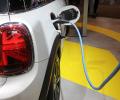
Maruti Suzuki India will launch electric vehicles in the country only after 2025 as demand for such vehicles at the moment is less and it would like to sell around 10,000 units a month whenever it enters the electric mobility space, company chairman RC Bhargava said on Wednesday. Addressing a virtual conference on the company's second quarter earnings, he said under the current circumstances a lot of things in the EV ecosystem such as batteries, charging infrastructure and electric supply are done by other parties and therefore the costing is not in the hands of the company. Also with fuel prices going up, car market leader Maruti Suzuki India is intensifying its focus on more CNG offerings of its models.

Passenger vehicle sales in India could hit a record of over 38 lakh units in FY23 but the strong growth momentum is not expected to carry over to 2023-24 with pent-up demand already been released, according to Tata Motors Passenger Vehicles managing director Shailesh Chandra.

China's covid crisis could provoke a raw material crunch for India's EV industry later this year.
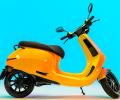
Ride-hailing major Ola on Wednesday said it will launch its electric two-wheeler range in New Zealand. This will help support the New Zealand government's goal of bringing on road 64,000 new electric vehicles by the end of 2021, while also helping the public sector become carbon neutral by 2025, Ola said in a statement. According to the industry sources, the company plans to launch the range in New Zealand over the next 6-9 months.
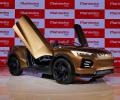
Homegrown auto major Mahindra & Mahindra on Tuesday said it plans to launch 16 electric vehicles (EVs) by 2027 across SUV and light commercial vehicle categories to strengthen its leadership position in India's electric mobility segment. The company, which has set a cumulative revenue growth target of 15-20 per cent by 2025, is keeping its options open to either bring in private equity investors or carve out its EV business into a separate entity to drive its growth. M&M, which has already announced plans to invest Rs 3,000 crore in EVs, is also considering a new brand name for the electric SUVs that it will launch by 2027.

In a boost to the electric vehicle boom in India, Taiwanese major Hon Hai Technology Group (aka Foxconn) is likely to set up an EV manufacturing unit in India through its subsidiary Foxtron. Amid speculation that the company may look at Tamil Nadu and probably the Ford India unit near Chennai for its new facility, sources indicate that the group was already betting big in the electric vehicle component space in India through Bharat FIH, which is already having a tie up with companies like Ola Electric and Ather. Bharat FIH currently has two manufacturing units in Tamil Nadu's Sriperumbudur that manufactures phones like Apple iPhones and Xiaomi phones.

To ramp up domestic battery manufacturing capacity and reduce the dependence on imports, the government has initiated talks with a few lithium-rich countries to supply the mineral to Indian companies, industry sources informed Business Standard. The Ministry of External Affairs (MEA) held a meeting with the ambassadors of countries, including Argentina, Chile, and Bolivia, among others, to put forth its request.

'In terms of semiconductors, challenges do remain in the pan industry, but I think we are much better than where we were a year or so back.'

The all-new ZS EV will be available in two variants -- Excite and Exclusive, priced at Rs 21.99 lakh and Rs 25.88 lakh, respectively. The company said it has initiated bookings for the Exclusive variant, while bookings for the Excite trim will commence from July 2022. The model comes with the largest in-segment 50.3-kWh (kilowatt-hour) battery with advanced technology, offering a 461-km certified range in a single charge.

When there is a state government committed to development, it is important that Mumbai has a civic body that, too, shares that goal, Modi said.

German luxury car maker Audi on Thursday launched three all-electric SUVs under its e-tron range with prices starting from Rs 99.99 lakh kicking off its electrification journey in the country. The three all-electric SUVs -- e-tron 50, e-tron 55 and e-tron Sportback 55 -- are priced at Rs 99.99 lakh, Rs 1.16 crore and Rs 1.18 crore respectively (all prices ex-showroom), Audi India said in a statement. Commenting on the launch of the e-tron brand in India, Audi India Head Balbir Singh Dhillon said, "we are launching not one, but three electric SUVs that begin our electrification journey." The three electric SUVs are "the perfect confluence of luxury, zero emissions, performance and everyday usability", he added.

With Tata Motors subsidiary taking over Ford's passenger vehicle (PV) manufacturing unit at Sanand in Gujarat, uncertainty over the future of Ford's Maraimalai Nagar unit in Tamil Nadu continues, with workers protesting on Thursday demanding a better severance package. There are over 2,000 employees working at the unit. On Thursday, there was a meeting between agitating employees and the state labour department. The workers started protests at the Chennai unit after Tata Passenger Electric Mobility signed a tripartite memorandum of understanding with Ford India and the Government of Gujarat for acquisition of Ford's PV manufacturing plant at Sanand.

Tata Motors on Monday said its subsidiary and Ford India have inked a pact with the Gujarat government to acquire FIPL's Sanand vehicle manufacturing plant. Tata Passenger Electric Mobility Ltd (TPEML) -- a subsidiary of Tata Motors -- and Ford India Pvt Ltd (FIPL) have today signed a memorandum of understanding (MOU) with the Gujarat government for the potential acquisition of FIPL's Sanand vehicle manufacturing facility, including land, buildings, vehicle manufacturing plant, machinery and equipment, Tata Motors said in a regulatory filing. The MoU also includes the transfer of all eligible employees of FIPL Sanand's vehicle manufacturing operations, subject to the signing of definitive agreements and receipt of relevant approvals, it added.

Ratings agency ICRA on Wednesday revised downwards growth forecast for the domestic passenger vehicles industry to 8-11 per cent in the ongoing fiscal from the earlier estimate of 14-17 per cent on account of the ongoing semiconductor shortage. Similarly, for the two-wheeler segment, it said the volumes are expected to contract by 1-4 per cent in FY2022 against an earlier prediction of 6-8 per cent growth as affordability and demand sentiments of target clientele was hit sharply by the second wave of COVID-19 pandemic. With around 5 lakh units of production lost by various automakers in the passenger vehicles segment due to the semiconductor shortage, ICRA said the earnings loss for the OEMs (Original Equipment Manufacturers) could be around Rs 1,800 crore to Rs 2,000 crore for the ongoing fiscal.

With its fleet of nearly 1,000 electric three-wheelers in Delhi-NCR, it moves around 100,000 commuters daily. The company will use the funding to rapidly increase its fleet size within Delhi-NCR as well as other key cities around the country.

Both are finding it difficult to sell one each of their plants -- Chennai Maraimalai Nagar (Ford) and Talegaon near Pune (GM) -- and are finding the road blocked by employee severance snarl-ups, report Sohini Das and Shine Jacob.
Tata Motors is actively considering tapping into some of the export markets beyond South Asia, for its range of electric vehicles (EVs) as it sees an opportunity of selling affordable EVs in markets outside India. The export plans will coincide with the commercial launch of the Curvve - an electric SUV concept that broke cover on Wednesday, in two years from now, Shailesh Chandra, MD, Tata Motors PVs and Electric Mobility, told Business Standard. "We are actively thinking of the international markets and we would like to go with a portfolio of products. "We have identified a few markets and in a couple of years, we should commence the same," said Chandra.
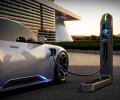
With a million-odd electric vehicles (EVs) - two-wheelers, e-rickshaws, buses and passenger cars - expected to hit the road this calendar year, the shift from gasoline-powered vehicles has become irreversible. Now the question is whether the supply chain is ready for this shift. Key components - the high-powered lithium-ion battery and the cells which go with it, the electric motor, and the electronics powered by chips - account for nearly 60 per cent of the cost of an EV.

Ministries such as road transport and heavy industries are learnt to have objected to NITI Aayog's attempts to become an implementing body for the EV programme.

India's largest oil firm IOC will build the nation's first 'green hydrogen' plant at its Mathura refinery, as it aims to prepare for a future catering to the growing demand for both oil and cleaner forms of energy. Indian Oil Corporation (IOC) has drawn a strategic growth path that aims to maintain focus on its core refining and fuel marketing businesses while making bigger inroads into petrochemicals, hydrogen and electric mobility over the next 10 years, its chairman Shrikant Madhav Vaidya said. The company will not set captive power plants at all its future refinery and petrochemical expansion projects and instead use the 250 MW of electricity it produces from renewable sources like solar power, he told PTI in an interview.

Electric mobility in India is touted to be the way to the future, but implementation of large-scale projects to bring infrastructure for charging is still lacking.

An unhappy, restive mood prevails at the Ford factory Maraimala Nagar, 50 km from Chennai, and the surrounding area. The security is tight - not just Ford security personnel but also Tamil Nadu state police who are posted at the main gate. From September 9, when Ford India announced it was phasing out its units in India and leaving, workers at its manufacturing unit at Maraimala Nagar have held onto one hope: that the state government will step in to save their jobs.

Tata Motors on Wednesday launched its Tiago EV with introductory prices for first 10,000 customers ranging between Rs 8.49-11.79 lakh

Suzuki and Toyota are in talks for electric mobility and MSI would continue to access technology from its parent.
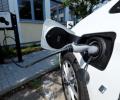
Electric vehicle market is likely to attract investments of Rs 94,000 crore over the next five years and is expected to generate business opportunities in the real estate sector, according to a joint report by Colliers India and Indospace. The report 'Electric Mobility in Full Gear' mentioned that the electric vehicle (EV) industry in India is currently at a nascent stage but it is likely to grow, backed by government initiatives and a move towards recognising climate change. "India is taking a step towards sustainability and has vowed to cut its carbon emissions. "At the recently concluded CoP26 summit, India pledged to reach net-zero carbon emissions by 2070. "In India, the transport sector is currently the third-largest emitter of CO2. This is leading to increased thrust on EVs in India," it said.

Bhavish Aggarwal, the founder of ride-hailing firm Ola who disrupted the electric scooters market in the country, is planning to launch an electric sports car in 2024. The plan will put it in competition with Indian players, such as the Tata group and Mahindra & Mahindra, and global giants like Tesla and Hyundai. Aggarwal, recently, took a group of reporters to the firm's design studio at the Ola campus in Bengaluru where his teams are working on several EVs, including scooters, motorcycles, sedans, and SUVs - and even robotaxis.

India's traditional companies are now moving full scale into the renewable and alternative energy space that had been dominated by smaller players over the past decade. Companies such as government-owned NTPC and the Adani and the Tata groups restructured their businesses well in time to become major players in the green space. At the same time, other conventional companies, such as Larsen & Toubro and Reliance Industries Ltd (RIL), which have a presence both in the energy sector as well as myriad other activities - construction, technology and retailing - are tying up with new-age companies to hitch a ride to a greener path.

Billionaire Gautam Adani on Monday said his infrastructure conglomerate will invest between $50-70 billion in organic and inorganic growth opportunities across the entire energy value chain over the next decade. Speaking at an industry event, he said the port-to-energy group will invest over $20 billion in renewable energy generation alone. "Over the next decade, we will invest over $20 billion in renewable energy generation.

The first all electric Mercedes AMG launched in India

For every one experienced candidate being recruited by e-two wheeler companies, 10 have no prior experience; recruitments are for skilled, low-end jobs, not for managerial or supervisory roles.

'I have personally been very keen on investing in lithium ion battery technology for some time.'

Automobile companies are worried about challenges from electric mobility, automation and connected vehicles.
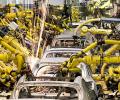
The sharp increase in commodity prices on account of the Russia-Ukraine war has put automakers in a fix. After the frequent price hikes in the current fiscal, manufacturers fear that any more price increases may further dent the already weak demand in certain segments. "We have taken several hikes and cannot immediately do it again. "We will have to closely watch the situation and act accordingly," said an official at an auto firm, declining to be identified. Even for companies like Tata Motors Passenger Vehicles, which has had a strong volume run and a robust order book, passing on the entire costs has been tough.

After his wide-ranging talks with Modi on the second and final day of his India visit, Johnson said the new defence and security partnership will enable India to strengthen its domestic defence industry as well as help the two countries protect vital shared interests in the Indo-Pacific.

The transaction - the second one in less than a year - is seen as an effort to restore investor faith in the company following a dismal performance by its UK subsidiary, Jaguar Land Rover Automotive.

'Wherever in the world there is political instability, those countries are beset with severe crises today. But India is in a much better position than the rest of the world due to the decisions taken by my government in the national interest,' President Droupadi Murmu said in her address to both Houses of Parliament.

Besides opening up the possibility of a policy that allows vintage cars retrofitted with electric batteries to ply on roads, this also gives a clue to how cars older than 15 years that are banned can be valued again by a similar conversion to EVs, says Ritwik Sharma.

Finance Minister Nirmala Sitharaman presents her fourth Budget in Lok Sabha on Tuesday.

Indian auto industry's dependence on China is high and it will continue to be so in the BS-VI era and as the country moves towards electric mobility. Domestic players lack both technological competence and the sheer pricing advantage that support Chinese imports.

Growing the number of electric vehicles on Ola's platform is part of the terms SoftBank has put forth for the funding
 © 2026 Rediff.com - Investor Information - Advertise with us - Disclaimer - Privacy Policy - Sitemap - Feedback - About us - Terms of use - Grievances