
Pharma major Cipla Ltd on Thursday reported a 3.7 per cent rise in consolidated net profit at Rs 1,353.37 crore for the second quarter ended September 30, 2025. The company, which had posted a consolidated net profit of Rs 1,305.01 crore in the second quarter of the last fiscal year, said its managing director & global CEO, Umang Vohra, has decided not to seek re-appointment upon completion of his current term on March 31, 2026, Cipla Ltd said in a regulatory filing.

For decades, multinational pharmaceutical companies and Indian drugmakers worked in ways that supported each other: MNCs brought innovation and brands, while Indian companies built scale through generics and cost efficiency. There was an important overlap - generic drugs - but this is shrinking fast. And the consequences are reshaping India's gigantic pharmaceutical market.

Abbott will exclusively distribute and market Extensior in the country, becoming the second company to secure sole distribution rights for Novo's semaglutide portfolio in India, after Emcure Pharma.

Buoyant domestic sales are expected to lift revenues for pharma companies by 8-11 per cent in Q3FY26, even as declining generic Revlimid (cancer drug) sales in the US remain a key drag. Most brokerages forecast a modest 2-4 per cent growth in profit after tax (PAT) for the quarter. Hospitals and diagnostics companies, meanwhile, are likely to post much stronger numbers, with revenues seen growing 20-22 per cent year-on-year (Y-o-Y).
Drug major Cipla on Tuesday said its consolidated net profit increased 30 per cent to Rs 1,222 crore in the fourth quarter ended March 31, 2025. The Mumbai-based drug firm had reported a consolidated net profit of Rs 939 crore for the January-March period a year ago.
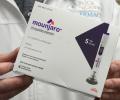
'As more patients are prescribed these drugs, intolerance due to gastrointestinal and other side effects will become more visible, leading to higher discontinuation rates.'
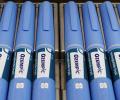
The semaglutide patent expiry next year could unleash a wave of generic versions from Indian drugmakers, with prices expected to go lower -- at least 80 per cent.

The US Food and Drug Administration's (USFDA)'s new draft guidelines aimed at speeding up and reducing the cost of developing biosimilars - lower-priced, near-replicas of complex biologic medicines - could significantly benefit Indian biotech companies.

In an event-heavy week, stock investors will track ongoing quarterly earnings, the US Federal Reserve's interest rate decision, and macroeconomic data for market direction, analysts said. Moreover, progress in India-US trade negotiations will remain a key focus for investors, an expert said.

Prices for Indian consumers are expected to come down significantly from the current Rs 17,000-Rs 26,000 monthly.

Concerns over weakening demand for Indian pharmaceutical (pharma) drugs in the US - their largest export market - have weighed heavily on investor sentiment this year. While the Nifty 50 has gained 6.02 per cent year - to - date (as on September 15), the Nifty Pharma index has declined 5.18 per cent, National Stock Exchange data shows.
The Indian pharmaceutical industry is likely to benefit from a major wave of patent expiries in the US, as small-molecule drugs worth $63.7 billion are expected to go off-patent between 2025-29, a 65 per cent rise over the previous five years, according to a report by Antique stock broking limited.
As the market buzzes with news of Cipla promoters exiting the business through a stake sale and Ahmedabad-based Mehta family-led Torrent Pharmaceuticals racing to acquire its rival, Cipla, an analysis reveals that if the deal were to go through, both companies might need to divest as many as 15 brands to comply with Competition Commission of India (CCI) norms. A recent analysis by Bernstein shows that Cipla and Torrent share a presence in 332 products (based on product and molecule data from market research firm IQVIA). Bernstein analysts Nithya Balasubramanian and Parth Shah noted that, while this may appear as a high number, a significant portion of these products lack significance.
Drug major Cipla on Tuesday said it has launched drone-powered deliveries of critical medicines - cardiac, respiratory and other essential chronic therapies - to hospitals and pharmacies across Himachal Pradesh in partnership with Skype Air Mobility, a Gurugram-based drone delivery company. Cipla is the first among large Indian pharmaceutical companies to adopt drone-based deliveries to facilitate expedited supply to stockists in remote areas, it claimed. The Mumbai-based firm said the use of drones will support the on-time delivery of its medicines to chemists and clinics in remote areas, and minimise risks of affecting cold chain products due to temperature excursions.
India's third-largest pharmaceutical company by revenue, Cipla, is up for grabs in a three-way fight between Torrent Pharmaceuticals, Dr Reddy's Laboratories (DRL) and private equity (PE) giant Blackstone. Analysts say it is more likely for a strategic investor like Torrent or DRL to acquire Cipla than a PE firm, which may not derive healthy returns at Cipla's current market price (CMP) after the recent gains.

Analysts have turned cautious on Cipla, as the recently issued form 483 by the US FDA with eight observations to its Pithampur (Indore) plant is expected to delay the launch of the company's key generic - Advair - in the US. The Indore plant contributes around 5 per cent of Cipla's revenues, as per analysts' estimates. While the respiratory product, which is used to treat asthma, had cleared the pre-approval inspection of the regulator at the Indore unit; the final approval could be unlikely until the company clears the recent US FDA observations, analysts say.
A strong performance in the July-September quarter of 2023-24 (Q2FY24), an upward revision in the margin guidance and sustained momentum in US sales has helped the stock of pharmaceutical major Cipla gain about 2 per cent over the last two trading sessions. The brokerages have upgraded the earnings estimates for this financial year (FY24) by 6-9 per cent to factor in the improved margin guidance and sales in the US market. Led by the US market, which rose by 31 per cent, the company posted a 16 per cent growth in revenues.

Indian drugmakers supply 47 per cent of the generic medicine requirements in the US, and tariffs would have increased prices in the US domestic market for patients, who are already dealing with drug shortages.

However, Cipla was very clear it does not want to get into vaccine manufacturing.
Indian pharmaceutical companies may have units abroad as part of "distributed manufacturing" across various locations, according to industry veterans. This may come about over the next five to 10 years.

'Obesity is a raging conversation globally now, and manufacturing of generics will pick up after the patent expires.'
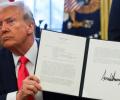
Industry insiders in India warn that any such move in the pharmaceutical sector could be counterproductive for the US as it may face increased drug shortages if tariffs are imposed on such imports.

An insider said that over the past decade or so Cipla has become immune to the exits of leaders. There have been no directional change in the long-term strategies.

Cipla is among the three Indian companies that signed a non-exclusive licensing agreement with US-based Gilead Sciences to make and distribute the latter's repurposed Ebola drug Remdesivir in 127 countries including India.

A football fan, Kamil Hamied is known to be a calm and quiet person who wants to do something for society, like his uncle Yusuf.

Kamil's elder sister Samina Vaziralli has taken on an expanded role

Those leaving the company include Nikhil Chopra, head of India business, Nikhil Lalwani, who served as head of US business, and Kunal Khanna, head of chronic and emerging therapies.
Analysts are expecting pharmaceutical companies to post sales growth of 10-11 per cent in the second quarter this financial year while the Ebitda (earnings before interest, tax, depreciation, and amortisation) margins are anticipated to improve by about 110 basis points. Ebitda improvement will be led by lower input costs because prices of active pharmaceutical ingredients (APIs) are 5-15 per cent lower year-on-year (Y-o-Y). Axis Capital said sales growth would be around 10 per cent, of which growth in the India market would be 11 per cent or so.
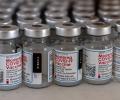
India's drug regulator Drugs Controller General of India has granted permission to Mumbai-based pharmaceutical company Cipla to import Moderna's COVID-19 vaccine for restricted emergency use in the country, official sources said on Tuesday.

Cipla is recalling the drug for failed impurities and degradation specifications.

Hetero has priced the injectable drug at Rs 5,400 per 100 mg vial. With More drugmakers in line to launch the drug soon, the prices may see a further erosion.
Company aims to build five Rs 100 cr-plus brands and launch products from South African arm in domestic market

Respiratory product paves way for launch in larger markets and greater earnings visibility.
The tailwind of low price erosion in the US generics market, seen by domestic pharmaceutical companies in calendar year 2023 (CY23), may be reversing slowly, caution analysts. According to the latest data from US-based Centers for Medicare and Medicaid Services (CMMS), price erosion in calendar year 2024 (CY24) on a year-to-date (YTD) basis stood at a high of 15 per cent in the oral solid dosage (OSD) segment compared to a low of 1 per cent in CY23. This erosion, according to a report by Antique Stock Broking, was the highest in the last three years.

Novartis said it is partnered with generic drugmaker Lupin Ltd to sell the drug in India

Cipla, the country's leading drug maker, has sent a legal notice to George Washington University of the United States on a recent symposium it had organised in India.

"We have launched Oseltamivir brand, called Antiflu, which is the only flu medicine from India to be prequalified by World Health Organisation," Cipla's Chairman and Managing Director, Y K Hamied said.

Cipla's fortunes on Monday took a veritable bow after the company said Friday that Q4 net profit dropped 24%.

The plan was activated in October last year.
 © 2026 Rediff.com - Investor Information - Advertise with us - Disclaimer - Privacy Policy - Sitemap - Feedback - About us - Terms of use - Grievances