

The semaglutide patent expiry next year could unleash a wave of generic versions from Indian drugmakers, with prices expected to go lower -- at least 80 per cent.
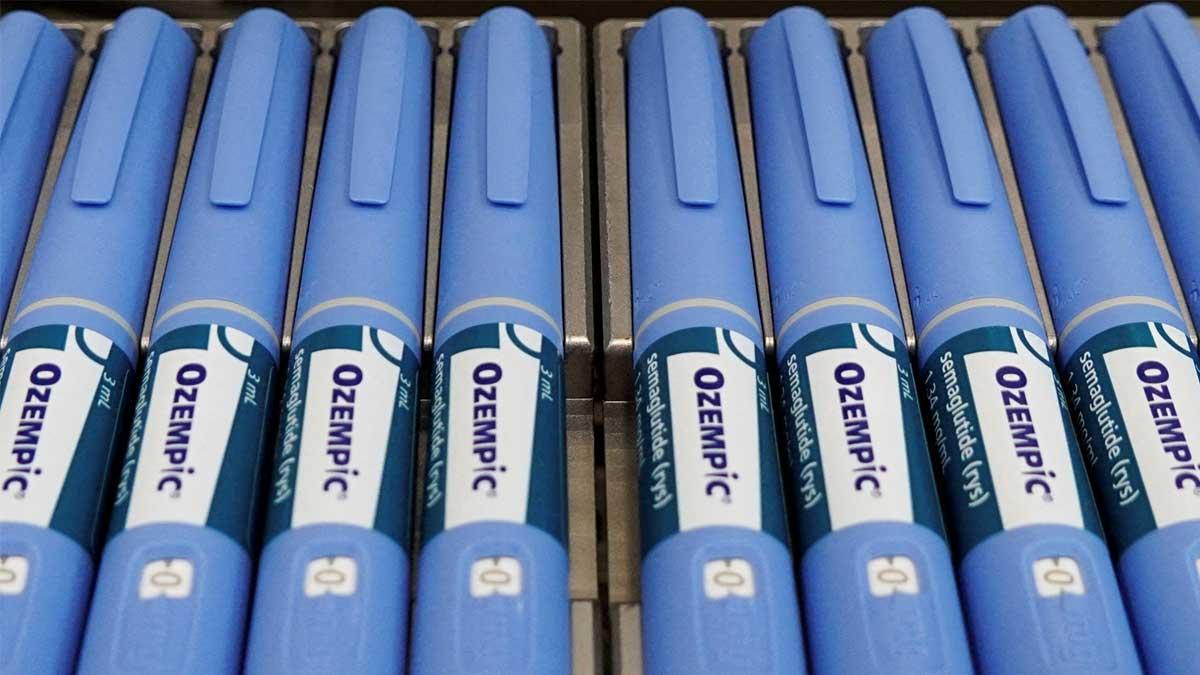
Danish drugmaker Novo Nordisk has launched its semaglutide-based diabetes therapy Ozempic in India, in a bid to expand its footprint in the booming glucagon-like peptide (GLP-1) market.
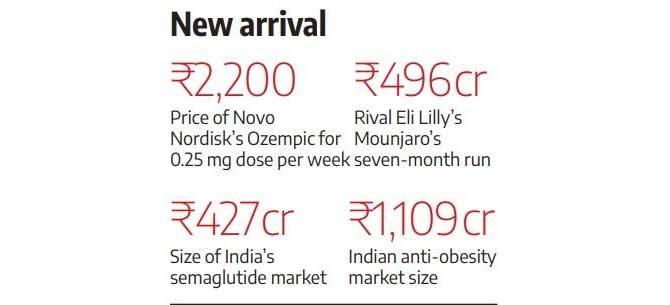
The drug will cost Rs 2,200 for a 0.25 milligram (mg) dose per week.
This comes just months ahead of the drug's patent expiry in March next year.
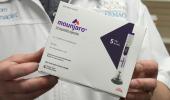
Novo's push on affordability comes as competitor Eli Lilly's Mounjaro continues to dominate the diabetes and obesity market, as it has become the highest selling drug in India for the last two months.
A once-a-week injectable GLP-1 agonist used to treat type-II diabetes, Ozempic has found global demand for its benefits in patients with obesity, or other weight management issues.
The drug will be available in three dosage forms -- 0.25 mg, 0.5 mg and 1 mg.
The pre-filled pen, which consists of four doses of 0.25 mg injection required for initiation, costs Rs 8,800 per month (Rs 2,200 per week).
Cost of 0.5 mg per month is Rs 10,170 (Rs 2,542.5 per week), while 1 mg will be priced at Rs 11,175 (Rs 2,793.75 per week).
With this bracket, Ozempic will be available at an insulin price zone in India, according to Vikrant Shrotriya, managing director at Novo Nordisk India.
"The whole logic of launching an innovation in India is not just a launch, but also accessibility so that people are able to buy it," Shrotriya told Business Standard in an exclusive interaction.
Heating Competition
Novo Nordisk and Eli Lilly have been vying for a larger pie of the Indian anti-obesity market worth Rs 1,109 crore, even as demand for weight-loss drugs increases in a country with the third-highest population of people living with obesity.
Launched in March this year, Mounjaro (tirzepatide) has already raked in Rs 496 crore in its seven-month run.
The drug had a first mover advantage, transitioning from vials to injectable pens within the first four months of its launch.
To counter this, Novo launched Wegovy in June 2025 for obesity management.
However, the drug has seen comparatively slow uptakes, with revenues reaching Rs 50 crore till November.
This led to Novo announcing a 30 to 35 per cent price cut for Wegovy across all dosage forms.
"The price cuts led to Wegovy's consumption seeing a 70 per cent rise in just 15 days, lifting Wegovy's market share from 9 per cent in October to 14 per cent in November," said Sheetal Sapale, vice president (commercial) at market research firm Pharmarack.
Experts believe that the semaglutide patent expiry next year could unleash a wave of generic versions from Indian drugmakers, with prices expected to go lower -- at least 80 per cent.
Firms such as Dr Reddy's (DRL), Cipla, Mankind and Sun Pharma are already looking to grab a share of India's Rs 427 crore semaglutide market.
"There are more than 14 anti-obesity drugs in the pipeline," said Sapale.
The fight against generics has reached courts, with Novo pleading to stop firms from manufacturing and exporting their variant of semaglutide.
However, in its judgments this month, the Delhi high court has allowed both DRL and Sun Pharma to manufacture generics, on the condition that they will not sell in India and export only to non-patent protected markets.
Ozempic entry introduces semaglutide portfolio in India
With Ozempic's introduction, Novo would complete its semaglutide portfolio in the country, providing a range of treatments.
Apart from Ozempic, the company currently markets the only two officially available forms of semaglutide in India -- Rybelsus (oral) and Wegovy (injectable).
The drugmaker also has a partnership with Emcure Pharma to exclusively distribute and market its weight loss drug under a separate brand name -- Poviztra.
Novo is going to distribute and market the drug itself, with Ozempic expected to hit the markets from the day of its launch, Shrotriya said.
"This is a full-scale launch for all three strengths, accounting for an unrestricted supply. We are making sure that we are strong enough to supply across India," he added.
An industry executive told Business Standard that India is fast becoming an emerging hotspot for weight-loss treatments, with the second highest population living with type-II diabetes after China, alongside rapidly increasing obesity rates.
According to World Health Organization's 2023-2024 estimates, India has around 101 million people living with diabetes, with another 136 million individuals with pre diabetes.
Studies also indicate that the country has 254 million people with generalised obesity and 351 million with abdominal obesity.
However, doctors add that Ozempic and Mounjaro have been approved just for treatment of type-II diabetes, with only diabetic patients allowed to be prescribed the drug.
Feature Presentation: Ashish Narsale/Rediff





 © 2026