
Karnataka Chief Minister Siddaramaiah met Prime Minister Narendra Modi and insisted on demands pertaining to the state, including on Fair Recovery Price of sugarcane, All India Institute of Medical Sciences for Raichur, the release of flood relief among others.

Rising water levels in the Ganga and Varuna rivers have caused a fresh bout of floods in Varanasi, inundating low-lying areas, disrupting daily life, and damaging crops.

A landslide on the Kedarnath route in Uttarakhand killed two pilgrims and injured six, while heavy rain led to the temporary suspension of the Char Dham and Hemkund Sahib pilgrimages.
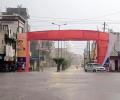
Heavy rainfall across North India leads to fatalities, structural damage, travel disruptions, and school closures. Eastern states brace for more rain.

Incessant rainfall in Uttar Pradesh has caused floods in 13 districts, with major rivers like Ganga and Yamuna exceeding danger levels. Varanasi, Prayagraj, and other cities are severely affected, leading to displacement and disruption of daily life.
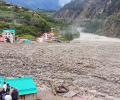
Landslides blocked arterial roads leading up to Dharali where dozens of people were trapped and many homes and cars swept away by the raging waters on Tuesday. Eleven Army personnel from the nearby camp in Harsil were among those missing.
'China has thus far been cautious, emphasising its focus on development rather than weaponising water resources.'

Kerala Chief Minister Pinarayi Vijayan on Wednesday termed as 'baseless', Union Home Minister Amit Shah's claim that the state government did not heed the Centre's warning regarding a possible natural calamity in Wayanad due to heavy rains.

The heat wave is likely to impact parts of Jammu and Kashmir, Himachal Pradesh, Uttarakhand, Punjab, Haryana, Delhi, Rajasthan, Madhya Pradesh, Jharkhand, Odisha and Gangetic West Bengal, the Met office said.

India has received 20 per cent less rainfall since the start of the monsoon period on June 1, with the rain-bearing system making no significant progress between June 12 and 18, according to the India Meteorological Department (IMD).

Temperatures in 17 locations breached 45 degrees Celsius on Monday, with the punishing heat affecting health and livelihoods.

A sudden downpour in Delhi caught citizens off guard and caused heavy waterlogging and traffic jams on Tuesday while Mumbai breathed a sigh of relief as showers stopped a day after heavy rain brought the metropolis to its knees.

Temperatures in 17 locations breached 48 degrees Celsius on Monday, with the relentless heat affecting health and livelihoods across large parts of northwestern and central India.

The rains could lead to a rise in the water levels of the Yamuna, which has been flowing above the danger mark of 205.33 metres for days now.

Due to heavy rains in some areas of Haryana on Sunday, the water level of Yamuna rose slightly, she said.

The water level of the Yamuna reached 205.92 metres at 4 pm on Monday and remained above the danger mark of 205.33 metres, officials said.

Chief Minister Arvind Kejriwal, who visited the Wazirabad water treatment plant, warned of rationalising water supply to deal with "acute shortage".

The situation could worsen if weather predictions of more rain in the capital and upper catchment areas come true.

A study by an international team of researchers had warned two year ago that the South Lhonak lake in Sikkim may burst in the future and significantly impact the downstream region.

Prime Minister Modi last week called for optimal grain storage, fire audits and mock drills in hospitals as preparations for the harsh summer forecast by the meteorological department.

Major rivers of the state, including the Brahmaputra, were flowing above the danger level at different places.

Delhi Chief Minister Arvind Kejriwal on Wednesday urged the Centre to intervene to ensure that levels of the Yamuna, flowing at an all-time high of 207.55 metres, don't rise further.

Gujarat will host the next round of G20 meetings from March 27 to April 4, during which three conclaves will be held in the state on a range of issues, where delegates from different countries will converge for participation, an official said.

An official from East Delhi district said the evacuation process began on Monday night after floodwaters entered some areas.

The water level of the Yamuna in Delhi breached the danger mark again on Sunday following a surge in discharge from the Hathnikund Barrage into the river after heavy rain in parts of Uttarakhand and Himachal Pradesh.

The Yamuna river in Delhi swelled to 207.25 metres and was flowing precariously close to the all-time record level of 207.49 metres.

A red alert indicates heavy to extremely heavy rains of over 20 cm in 24 hours, while an orange alert means very heavy rains of 6 cm to 20 cm of rain.

Now, she fears that she will not be able to return to her humble home after officials told them that their shanties were "illegal".

The flow rate at the Hathnikund barrage saw a marginal rise on Tuesday afternoon, oscillating between 50,000 and 60,000 cusecs.

The water level of the Yamuna in Delhi on Tuesday followed a downward trend and dropped below the danger mark of 205.33 metres by 8 pm, the Central Water Commission's data showed.

The water level of the Yamuna in Delhi, which has been hovering around the danger mark of 205.33 metres for the last few days, dropped below the threshold again on Saturday morning.
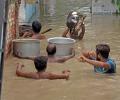
The water level at the Old Railway Bridge crossed the 208-metre mark Wednesday night and rose to 208.48 metres by 8 am on Thursday. It is expected to rise further, according to the Central Water Commission, which has termed it an "extreme situation".

The NRSC satellite imagery revealed that the lake covered approximately 162.7 hectares. Its area increased to 167.4 hectares on September 28 but drastically reduced to 60.3 hectares.

Evacuation of people living in low lying areas of the Yamuna floodplains began Monday evening with the river crossing the danger mark due to release of water from Hathnikund barrage in Haryana amid heavy rains in the northern belt of the country.

The water level of the Dhauli Ganga river at Joshimath flowed at a perilously high level, breaching all records, Central Water Commission officials said after a part of Nanda Devi glacier broke off in Uttarakhand's Chamoli district leading to massive floods.

In a first since the signing of the Indus Water Treaty between the two countries, three female officers will also be part of the Indian delegation, which will be advising the Indian Commissioner on various issues during the meeting, the official said.

The Yamuna river in Delhi swelled to the highest recorded level in 10 years on Tuesday and is expected to rise further, officials said on Tuesday.
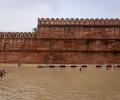
The Yamuna surged to a record 208.48 metres at 8 am, the Central Water Commission said on Thursday, adding that it is likely to rise to 208.75 metres by 4 pm.

The rain ebbed in some places in north India and pelted down in others on Tuesday, with at least seven more people dead and hundreds stranded as raging waters gushed through villages, towns and fields -- from the desert state of Rajasthan to the hills of Himachal Pradesh.

Bharadwaj said it has not rained in Delhi in the last 3-4 days, yet still the water level in Yamuna reached 208.66 metres.
 © 2026 Rediff.com - Investor Information - Advertise with us - Disclaimer - Privacy Policy - Sitemap - Feedback - About us - Terms of use - Grievances