
The Union government's revenue from securities transaction tax (STT) is on track to exceed its Budget projection for the current fiscal year, with the mop-up already surpassing 50 per cent of the annual estimate. Provisional figures reveal that the Centre has collected approximately Rs 14,000 crore in the first half of this fiscal year up to September, according to a government official. This amount exceeds half of the full-year target of Rs 27,625 crore set for FY24.

The finance minister's assertion that industry should not expect any spectacular announcements in the 2024 interim Budget suggest that the electoral imperatives of more tax concessions or higher expenditure on welfarist programmes could be far less pronounced than they were before the 2019 interim Budget, expects A K Bhattacharya.

The ministry of minority affairs informed the Lok Sabha that in 2022-2023, it had been allotted Rs 5,020.5 crore (Rs 50.20 billion); in the Revised Estimates, it had got Rs 2,612.66 crore (Rs 26.12 billion); and had spent, until the end of March this year, Rs 712.5 crore (Rs 7,12 billion).

The situation raises concerns about whether the promised freebies will once again push the state into a revenue deficit.

The defence expenditure was 5,55,484 crore while the central government expenditure was 39,44,909 crore for the year 2022-23, according to the data shared by the government in the response.

India's gross tax revenue, comprising both direct and indirect taxes between April and July, reported a growth rate of merely 2.8 per cent to Rs 8.9 trillion compared to the same period a year ago, as shown by government data on Thursday. This growth was dampened by direct tax figures, offsetting the healthy growth in goods and services tax collections and Customs duties. While net tax revenue contracted by 12.6 per cent to Rs 5.8 trillion up to July, accounting for 25 per cent of the Rs 23.3 trillion full-year target, this could be attributed to the increased tax devolution to states during the period.

The scarcity of resources is particularly evident in the case of Rajasthan compared to many other states.

Earlier, proceeds from disinvestment were shown separately as part of the miscellaneous receipts in the Capital Receipts Budget.

The agency received Rs 911 crore to manage its affairs in the Budget Estimates for 2022-23, which was later decreased to Rs 906.59 crore in the Revised Estimates.

The deficit stood over Rs 8 trillion in the first seven months of the current financial year. Non-tax revenues, comprising transfers from the RBI and dividends of the public sector units, shored up the Centre's revenues.
The gross tax revenues have touched 65 per cent of the Budget estimates at Rs 17.81 lakh crore during the first eight months of the current fiscal till November, propelled by corporate and personal income tax mop-up, according to the Economic Survey 2022-23 presented in Parliament on Tuesday. The survey, authored by Chief Economic Advisor V Anantha Nageswaran, said the 'substantial reforms' in India's taxation ecosystem post-2014 and policy reforms have removed the distortionary incentives from the economy. Reforms like GST, reduction in corporate taxes, exemption of sovereign wealth funds and pension funds from taxes, and removing Dividend Distribution tax have reduced the tax burden on individuals and businesses.

The finance ministry has cautioned that global and regional uncertainties and domestic disruptions may keep inflationary pressures elevated in the coming months, warranting "greater vigilance" by the government and the Reserve Bank of India (RBI). "Russia's decision to terminate the Black Sea grain deal, along with dry conditions in major wheat-growing areas, caused a price spike in cereals. Domestic factors like white fly disease and an uneven distribution of monsoon exerted pressure on vegetable prices in India," the ministry said in its latest Monthly Economic Report for July, released on Tuesday. However, the report maintained, the recent price surge in certain food items "is expected to be transitory". "Tomato prices are likely to decline with the arrival of fresh stocks by the end of August or early September.

The agency had received Rs 946.51 crore to manage its affairs in the Budget Estimates for 2023-24, which was later increased to Rs 968.86 crore in the Revised Estimates.
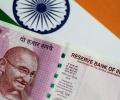
In November, the fiscal deficit widened by Rs 2.2 trillion, the highest ever in any month this financial year.

Sustaining the current 19.5 per cent growth rate in income and corporate tax collections may be difficult in next fiscal year given headwinds from a slowing world and high base effect, a government source said. Net direct taxes, which are made up of personal income tax and the tax levied on corporate earnings, have seen a record growth in current fiscal year, topping up the numbers projected in the Budget. The expected lower nominal GDP growth in 2023-24 on the back of threats of global recession could impact income tax collection, the government source told reporters ahead of the presentation of Union Budget 2023-24 on February 1.

For fiscal year FY23, the 2022 Union Budget had targeted a capex outlay of Rs 7.5 trillion, which is 35.4 per cent higher than the FY22 Budget Estimate of Rs 5.54 trillion.
Public-sector enterprise stocks have seen a good run thus far in 2023-24 (FY24), with the S&P BSE PSU Index surging by over 26 per cent during the period, compared to an 11 per cent increase in the benchmark S&P BSE Sensex.

If this happens, it will be an "unprecedented development" in the civic body's journey as budget is traditionally passed by a House, they said.

Finance Minister Nirmala Sitharaman in her speech in Lok Sabha said, "Our vision for the 'Amrit Kaal' includes technology-driven and knowledge-based economy with strong public finances, and a robust financial sector. To achieve this, Jan Bhagidari through Sabka Saath Sabka Prayas is essential."

Per capita income in the state has consistently been below the national average for at least 24 years. However, it has narrowed the gap with the all-India level in recent years.
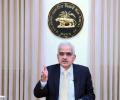
The challenge for the RBI in 2024 is likely to be less about containing elevated inflation and more about curbing excessive financial market exuberance and a 'problem of plenty', notes Sajjid Chinoy, Chief India Economist JP Morgan.

Chief Economic Advisor V Anantha Nageswaran on Thursday said the economy is expected to grow at 6.5 per cent in the current fiscal notwithstanding deficient rains in August. India recorded economic growth of 7.8 per cent in the April-June quarter of 2023-24 against 13.1 per cent in the year-ago period. India's economy in Q1 grew at the fastest pace in a year, on the shoulders of a boost in capital expenditure both at central and state levels, along with stronger consumption demand, especially in rural areas, and improved performance in the services sector, he said.

The finance ministry has finalised the framework to issue sovereign green bonds in line with global standards, according to sources. The government intends to mobilise Rs 16,000 crore from the issuance of green bonds during the second half of the current financial year. It is a part of the borrowing programme for the second half of this fiscal. The framework is ready and it would be approved soon, the sources said.
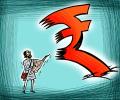
The Centre is staring at a combined shortfall of up to Rs 1 trillion in excise and Customs revenues in the current financial year (FY23) compared to the Budget estimates (BE), mainly because of duty cuts on edible oil and petroleum products. The government set a target of Rs 3.35 trillion for excise and Rs 2.13 trillion for Customs mop-up for FY23 while presenting the Budget in February. "As excise duty collection is mainly driven by diesel volumes, we might see a clear gap in the level budgeted for FY23, following the reduction in cesses on petrol and diesel in May. We are expecting somewhere between Rs 80,000 crore and Rs 1 trillion dip in excise and customs duty collections," a senior government official told Business Standard.

Finance Minister Nirmala Sitharaman on Wednesday allocated nearly Rs 12,544 crore to the department of space as India plans a human spaceflight -- Gaganyaan -- next year and sets out to explore the moon and neighbouring planets.

Fiscal deficit would be brought down to below 4.5 per cent by 2025-26, Finance Minister Nirmala Sitharaman said on Wednesday. She also said that tax receipts for the next fiscal are budgeted at Rs 23.3 lakh crore and states would be allowed 3.5 per cent of GDP as fiscal deficit. To finance the fiscal deficit in 2023-24, net market borrowing from dated securities is estimated at Rs 11.8 lakh crore, Sitharaman said while presenting the Union Budget for 2023-24 in the Lok Sabha.
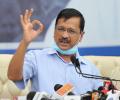
Sources in the Delhi government said the ministry of home affairs has stopped the Kejriwal government's budget and it will not be tabled in the assembly on Tuesday.

Pre-Budget excercise next month should scrupulously avoid adventurism of all types and refrain from making excessively ambitious projections on revenue and expenditure numbers for 2023-24, suggests A K Bhattacharya.

The railways has spent more than Rs 1 lakh crore on safety measures between 2017-2018 and 2021-22 with a steady growth in expenditure on track renewal, according to an official document.

With the first quarter gross tax mop-up reaching Rs 5.6 lakh crore, Icra Ratings on Friday said the government is set to exceed the budgeted tax collection target of Rs 22.2 lakh crore for 2021-22, led by indirect taxes. The government has budgeted a modest 9.5 per cent growth in tax collections at Rs 22.2 lakh crore for FY22, over FY21 collections of Rs 20.2 lakh crore. However, despite the second wave of the pandemic, the April-June quarter tax collections rose to Rs 5.6 lakh crore, which is 39 per cent higher than Q1 of FY20.
Mumbai, which adds 37 per cent to the total direct tax mop-up, has reported tax collection of Rs 4.93 trillion so far, against the full-year target of Rs 5.35 trillion.

Fiscal deficit for 2021-22 worked out to be 6.71 per cent of the gross domestic product (GDP), lower than 6.9 per cent projected by the Finance Ministry in the revised Budget Estimates, according to government data released on Tuesday. Unveiling the revenue-expenditure data of the Union government for 2020-21, the Controller General of Accounts (CGA) said that the fiscal deficit in the absolute terms was be Rs 15,86,537 crore (provisional).

'Inter-ministerial coordination, information on the proposed PSUs, and due diligence are taking longer than expected to conclude the process.'

After the government sought Parliament's nod for a second batch of supplementary demand for grants that will cause a hit of Rs 2.99 trillion to the exchequer, doubts suddenly arose about the government's ability to meet the Budget projections of reining in its fiscal deficit at 6.8 per cent of gross domestic product (GDP), or Rs 15.06 trillion, for the current financial year. Till now, many were of the opinion that the government would succeed in checking the deficit at a much lower figure than what was given in the Budget Estimates (BE). The government had sought Parliament's approval to spend Rs 3.74 trillion extra, but Rs 74,517.01 crore will be matched by equal savings on other heads.
The central government's fiscal deficit touched 32.6 per cent of the annual target in the current financial year till August as against 31.1 per cent recorded a year ago, according to official data released on Friday. In actual terms, the fiscal deficit -- the difference between expenditure and revenue --- was Rs 5,41,601 crore during the April-August period of this financial year. Fiscal deficit is an indicator of the government's borrowings from the market.

Populism gains momentum during election periods, and this trend is evident in at least four states: Telangana, Rajasthan, Madhya Pradesh and Chhattisgarh.

While the fiscal year has just begun, any windfall surplus will be welcomed by the government as it bids to meet the fiscal deficit target of 5.9 per cent of GDP, amidst lack of clarity on exactly to what extent will recession in the West impact India's trade and tax collections.

The central government's fiscal deficit touched 21.2 per cent of the annual target in the June quarter as against 18.2 per cent in the year-ago period, according to official data. The fiscal deficit is the difference between total expenditure and revenue of the government. It indicates the total borrowing that are needed by the government.

The Union government's fiscal deficit further widened to Rs 9.53 lakh crore, which is nearly 120 per cent of the annual budget estimate, at the end of October of the current financial year, according to official data released on Friday. The deficit widened mainly on account of poor revenue realisation. The lockdown imposed to curb spreading of coronavirus infections had significantly impacted business activities and in turn contributed to sluggish revenue realisation.

Direct tax collection, including personal income tax, rose by 35.46 per cent to Rs 6.48 lakh crore in the current fiscal up to September 8, reflecting an uptick in the economy. The country recorded a GDP growth of 13.5 per cent during the first quarter ended on June 30, 2022. Direct tax collection, net of refunds, stands at Rs 5.29 lakh crore which is 30.17 per cent higher than the net collections for the corresponding period of last year, according to the data released by the Income Tax Department.
 © 2026 Rediff.com - Advertise with us - Disclaimer - Privacy Policy - Sitemap - Feedback - About us - Terms of use - Grievances