
Alloting more funds for MNREGA and PM-KISAN could wipe out the entire additional money that the Centre may have for FY25.

The Budget should use the extra RBI surplus to better effect, suggests A K Bhattacharya.

The fiscal deficit, gap between expenditure and revenue.

Net direct tax collection in the eight months of the current fiscal touched 58.34 per cent of Budget Estimates (BE) at Rs 10.64 lakh crore. The net tax collection for April-November stood at Rs 10.64 lakh crore, which is 23.4 per cent higher than the corresponding period of last year, the ministry of finance said.

Of the total proposed allocation, over Rs 1 lakh crore is meant for BSNL and MTNL-related expenses, including Rs 82,916 crore infusion in BSNL for technology upgradation and restructuring at BSNL.

The size of Budget 2024-25 has increased 6.1 per cent to Rs 47.66 lakh crore because of the rise in expenditure and higher allocation for capital expenditure and social sector schemes.

'Compare the new slabs with the previous years to understand if your tax liability will increase or decrease after the Budget.'

Continuing on the fiscally prudent path, the Modi government in the interim Budget refrained from announcing populist measures, which will help it trim the fiscal deficit to 5.1 per cent of the GDP next fiscal and 4.5 per cent in FY26.

'There is no immediate threat to the government, and they would prefer the growth agenda.'

The Reserve Bank of India's (RBI's) record surplus transfer to the government has raised hopes among bond traders that the government might reduce its gross borrowing for the current financial year (2024-25/FY25) by up to Rs 1 trillion. The RBI approved a dividend of Rs 2.11 trillion for the central government for 2023-24, marking an increase of roughly 141 per cent from 2022-23 (FY23). In addition, the contingency risk buffer has been raised to 6.5 per cent from the previous 6 per cent.

Defence exports grew 33 per cent in the calendar year 2023 (CY23) to around Rs 21,083 crore while domestic defence orders serviced by listed companies were Rs 48,000 crore. The sector is poised for steady growth. Budgeted domestic capex is likely to hit Rs 3 trillion per annum, and exports could reach $6 billion by FY29.

As per the Interim Budget 2024-25 document tabled in the Lok Sabha, the government is not expected to receive any money from monetisation of public assets in the current fiscal.

Whether she will pare the fiscal deficit target of 5.1 per cent of GDP, using the record dividend received from the RBI, or expand flagship government programmes will be keenly watched.

The central government's fiscal deficit during 2023-24 at 5.6 per cent of the GDP was better than previous estimates of 5.8 per cent on account of higher revenue realisation and lower expenditure, according to official data released on Friday. In actual terms, the fiscal deficit -- or gap between expenditure and revenue -- was Rs 16.53 lakh crore, or 5.63 per cent of the GDP, which grew 8.2 per cent in 2023-24.

Analysts and economists have hailed the fiscal projections in the interim Budget, saying the lower fiscal deficit forecast shows that the government, even in an election year, is serious about fiscal consolidation and that the numbers look achievable. According to Devendra Kumar Pant, the chief economist at India Ratings, the two broad themes of the interim Budget are fiscal consolidation and stepping up focus on agriculture/rural to course correct, to some extent, the differential benefits of the ongoing economic growth that's tilted in favour of upper-income bracket/urban households. The projected fiscal deficit numbers for FY24 and FY25 suggest that the government is serious about achieving the fiscal consolidation path of 4.5 per cent fiscal deficit by FY26, and given the nominal GDP growth assumption and revenue buoyancy, the target appears plausible, Pant said in a note.

...to fund the revenue gap. Of the gross market borrowing of Rs 14.13 trillion estimated for FY25, Rs 7.5 trillion, or 53 per cent, is planned to be borrowed in the first half.

The Army has now fallen behind the other two services for four years in a row.

The new excise policy, introduced in Delhi in November 2021, made sweeping changes to the city's liquor trade.

Senior policymakers say it is a tough task and the finance ministry may resort to the time-tested method of carrying forward part of the subsidy payment burden to the next fiscal year.
Direct tax collection, net of refunds, moderately exceeded the revised estimates (RE) for the financial year 2023-24 (FY24) on the back of personal income tax revenues, but corporation tax receipts fell short of the RE. Net direct tax collection stood at Rs 19.58 trillion in FY24, surpassing the RE of Rs 19.45 trillion by Rs 13,000 crore, or 0.7 per cent. The government had revised up FY24 projections for personal income tax by 13.5 per cent over the Budget estimates (BE) of Rs 9 trillion, at Rs 10.22 trillion.

The new government that presents the full Budget for 2024-2025 in July should be ready to restructure the way divestment is managed and implemented, proposes A K Bhattacharya.
The net direct tax collection so far this fiscal rose 19.41 per cent to Rs 14.70 lakh crore, reaching about 81 per cent of the full-year target, the income tax department said on Thursday. "The provisional figures of Direct Tax collections up to January 10, 2024, continue to register steady growth," the Central Board of Direct Taxes (CBDT) said in a statement. Direct Tax collection, net of refunds, stood at Rs 14.70 lakh crore which is 19.41 per cent higher than the net collection for the corresponding period of last year.

The Centre could further moderate its divestment target for 2024-25 (FY25), as it does not expect large receipts from asset sales - except some ongoing strategic ones, including IDBI Bank, which could spill over into next financial year. Also, it may drastically reduce its FY24 divestment target of Rs 51,000 crore. "We are still evaluating the Budget estimates for FY25. "New big-ticket asset sales are unlikely.

'The global situation is not very good.'

The push to develop Ayodhya as a tourism centre, accompanied by large-scale infrastructure projects, comes on the back of years of limited income growth and tourist inflows.
The Union government's finances witnessed significant improvement in August after a stressful first four months of the current fiscal year. India's gross tax revenue, comprising both direct and indirect taxes, for the first five months of 2023-24 surged 16.5 per cent year-on-year (Y-o-Y) to Rs 11.8 trillion. During the April-July period, gross tax revenue increased by a mere 2.8 per cent compared to the Budget Estimate of 12.1 per cent growth for FY24.

The net direct tax collection increased by 21.82 per cent to over Rs 9.57 lakh crore till October 9, helped by good inflow from corporates and individuals, the Finance Ministry said on Tuesday. The net collections have reached 52.5 per cent of the full-year budget estimates (BE) of Rs 18.23 lakh crore. The provisional figures of Direct Tax collections up to October 9, 2023, continue to register steady growth, the statement said.

All eyes will be on whether Sitharaman will deliver a populist budget leaving more money in hands of the common man or push the reform agenda by staying on the fiscal glide path to lower the fiscal deficit to 4.5 per cent of GDP by 2025-26.

On the back of robust tax collection, the ratio of direct taxes to gross domestic product (GDP) this financial year is likely to be the highest in this century so far. This, along with strong goods and services tax (GST) collection, may drive up receipts from central taxes as a proportion of GDP to the highest level or close to the highest since 2008-09 despite subdued excise and customs duty receipts. This will be due also to lower nominal GDP projected in the first advance estimates for 2023-24.

'We crossed Rs 1.7 trillion in three months this financial year.'
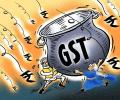
GST collections jumped 15 per cent to nearly Rs 1.68 lakh crore in November, the finance ministry said on Friday. Goods and Services Tax (GST) mop-up was over Rs 1.45 lakh crore in November 2022.

The Union government is projected to share about 32 per cent of central taxes with states during the financial year 2024-25 against the 15th Finance Commission's recommendation of 41 per cent. The Revised Estimates (RE) for FY24, too, show a similar share of states in the central taxes at 32 per cent. In absolute terms, however, there has been an increase in the amount devolved to states compared to the Budget Estimates (BE) for FY24 at Rs 11 trillion.

India's economy grew 7.6 per cent in the September quarter of this fiscal and remained the fastest-growing large economy, mainly due to better performance by manufacturing, mining and services sectors, the government data showed on Thursday. The gross domestic product (GDP) expanded by 6.2 per cent in the July-September quarter of 2022-23. India remained the fastest-growing major economy, as China posted a 4.9 per cent growth in July-September 2023.

However, finding the funds to fulfill them will be a herculean task.

Tax devolution shares, which threaten to create a north-south divide among states, may have more to do with per capita income, and not so much with population.

There hasn't been any dramatic moment in the first act (the Budget) but nobody would complain. It's par for the course as long as the figures don't change in the main Budget, which will be presented after general elections.
'We now look at divestment as an opportunity for maximising the value of public assets, not necessarily as a short-term resource-raising measure.'

But the government will present a second tranche of Supplementary Demands for Grants during the Budget session of Parliament in February, when it can seek additional spending.
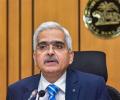
The RBI raked in a massive net income gain from foreign exchange currency sales as a buffer for the rupee during tumultuous geopolitical upheavals last year owing to Russia's invasion of Ukraine.

The government plans to borrow a record Rs 15.4 lakh crore from dated securities in FY24 to meet its expenditure requirement to prop up the economy.
 © 2026 Rediff.com - Advertise with us - Disclaimer - Privacy Policy - Sitemap - Feedback - About us - Terms of use - Grievances