
Oil marketing companies IOC, BPCL and HPCL have invited expressions of interest from start-ups that wish to be enrolled as fuel entrepreneurs for doorstep delivery of high-speed diesel through mobile petrol pumps.

India may see a structural shift in supplies of crude oil with Russia emerging as a key source of fuels, a development that reduces New Delhi's dependence on West Asian oil, gives Indian refiners better bargaining power with price-setter Saudi Arabia, and improves overall energy security. The unexpected surge in supplies of Russian crude in the last few months, unthinkable until the war in Ukraine, may also deliver other unforeseen gains such as boosting exports of refined fuels to Europe, which historically has counted on Russian shipments. India has jumped on to the bandwagon of opportunistic buying of Russian crude but if calibrated carefully, Urals crude can be a long-term asset for India refiners.
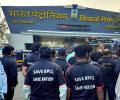
With the privatisation of BPCL appearing inevitable, there are worries that the new promoter would soon move to lower wages.
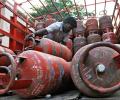
The ministry of petroleum and natural gas is evaluating a threshold at which the subsidy on liquefied petroleum gas (LPG or cooking gas) will be reinstated. According to a senior government official in the know, a survey is currently being conducted to determine the price at which maximum consumers will keep buying domestic cylinders. One of the options also being considered is to limit any subsidy disbursal only to Pradhan Mantri Ujjwala Yojana (PMUY) beneficiaries.

Privatisation-bound Bharat Petroleum Corporation Ltd (BPCL) on Monday said it will exit Numaligarh refinery in Assam by selling its entire stake to a consortium of Oil India Ltd and Engineers India Ltd for Rs 9,876 crore. The sale of Numaligarh Refinery Ltd clears the way for privatisation of India's second-largest fuel retailer. In keeping with the Assam Peace Accord, the government had decided to keep Numaligarh Refinery Ltd (NRL) in the public sector. As part of this, BPCL was to sell its entire 61.65 per cent stake to state-owned firms.

India's equity markets are on a roller-coaster ride, after delivering spectacular returns for two consecutive years - in 2020 and 2021. The benchmark National Stock Exchange's (NSE's) Nifty50 is down 1.5 per cent in the first nine months of the current calendar year 2022 (CY22) as foreign portfolio investors sold Indian stocks due to rising bond yields in the US and across global markets, including India. The sell-off in the Indian equity markets has, however, not been broad-based and largely limited to sectors facing earnings headwinds from rising interest rates, lower commodity and energy prices, and likely economic recession in advanced economies.
IOC protests, says have invested in these facilities over a period of time.

"There is an alert to intensify security in and around the Bharat Petroleum Corporation Limited and Hindustan Petroleum Corporation Limited refineries following specific information about a possible terror attack," a police officer involved in the exercise told PTI on condition of anonymity.
Next phase of rise will unlikely be a combined exercise from the three oil marketing companies.
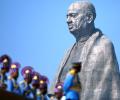
ONGC, Hindustan Petroleum, Bharat Petroleum, Indian Oil and Oil India listed the spending as part of their mandatory CSR commitment, but CAG noted that the Sardar Patel statue did not qualify for CSR funding.
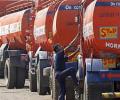
The state-owned refiner has offered 15,000 tonnes in a tender.

Since UK referendum outcome to exit European Union last Friday, 32 companies have hit record highs.

Petroleum and Natural Gas Regulatory Board in its July 2 order imposed a cost of Rs 100,000 on the three private fuel retailers who filed a complaint against Indian Oil, Bharat Petroleum and Hindustan Petroleum for indulging in 'restrictive and unfair trade practices and cartelisation'.
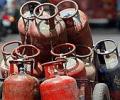
To help them make up for the revenue lost on selling auto and cooking fuel below cost.

Bond issue oversubscribed 15 times despite gloomy sovereign rating.
IOC has asked consumers to book LPG refill through IVRS or SMSes so that refills reach genuine users.
Oil marketing companies IndianOil, Bharat Petroleum and Hindustan Petroleum together blocked nearly 2.9 million LPG connections belonging to customers having more than one connection across states.
Even as automobile manufacturers are considering increasing the prices of their products, an increase in auto fuel prices is also imminent.

Govt was vary of giving BJP-leader and Gujarat Chief Minister Narendra Modi any kind of advantage on the eve of elections in the state.

Government-controlled oil-marketing companies (OMCs) have held back petrol and diesel price revisions for a week and are expected to continue doing so, ostensibly owing to political reasons. It appears that the Centre has informally conveyed to the three major OMCs to not revise fuel prices for the time being, two people in the government said. This informal directive follows the talks between the Centre and states on cutting taxes and bringing the auto fuels under the good service tax regime not fetching the desired results, so far.

Bharat PetroResources, a wholly owned subsidiary of BPCL and Videocon Industries, holds 40 per cent of the block. Brazil's Petrobras holds the remaining 60 per cent.
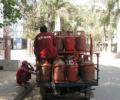
IndianOil Corp Ltd, for instance, saw a growth of around 22 per cent in volumes and nearly two per cent in its market share. It traded nearly 10,517 million tonnes (mt) of auto gas in December against 8,593 mt of auto gas in September.
According to data compiled by BS Research Bureau for BSE 100 companies, seven public sector companies -- Indian Oil Corporation (IOCL), Bank of India, Union Bank, Bharat Petroleum (BPCL), Oil and Natural Gas Corporation (ONGC), Hindustan Petroleum (HPCL) and GAIL -- have reduced their employee costs ranging from one per cent to 21 per cent.
Sources said a meeting of heads of the oil marketing companies -- Indian Oil, Bharat Petroleum and Hindustan Petroleum -- was called off.
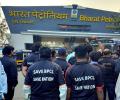
The divestment of Bharat Petroleum Corporation (BPCL) may hit a fuel price hurdle, according to officials dealing with the matter. They pointed out that the inconspicuous administered price regime could hamper the prospects for potential buyers of BPCL. A senior oil ministry official said public-sector oil-marketing companies (OMCs) take a hit when they sell petrol, diesel, and liquefied petroleum gas (LPG), three of the most popular petroleum products in the country.
BPCL plans to save Rs 500-800 cr, while HPCL eyes 10% reduction in total costs.
In a marginal relief to consumers, IndianOil, the biggest oil marketing company, has cut petrol prices by Rs 0.56 per litre with effect from midnight today.

This is the second hike in diesel price this month.
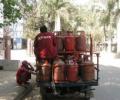
With the government preparing to restrict the number of subsidised cooking cylinders, oil marketing companies have launched a 'transparency' portal that allows customers to keep an eye on the number of cylinders sold in their account by the dealer.

Top corporates and banks, including Bharti Airtel, Maruti Suzuki, SAIL and SBI, have paid lower advance taxes during the July-September quarter reflecting the impact of slowdown.
Losses on sale of diesel at government-controlled rates have hit a record Rs 19.26 a litre, sending state-owned oil companies scrambling for ways to cover the mounting losses.

IOC urged the government to cut excise duty by Rs 8 (the current revenue loss) to Rs 6.78 per litre. It also demanded a cut in state-level taxes.
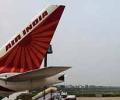
"Air India is unable to pay even after a 90-day credit period. They owe us about Rs 300 crore without interest. There is also no bank guarantee from Air India to any of the oil marketing companies. We do not know when will the company honour its dues," said a BPCL official on condition of anonymity.
State-owned oil firms have decided to "wait-and-watch" the international scenario and the rupee-dollar rate before deciding to cut petrol prices.
Three petroleum teams -- Indian Oil Corporation (IOC), Bharat Petroleum Corporation Limited (BPCL) and Oil and Natural Gas Corporation (ONGC) -- all boasting experienced Indian stars in their ranks, start as favourites in the Development Credit Bank Aga Khan hockey tournament, which commences at the Bombay Gymkhana on Sunday, May 15. The final is on May 21.
A higher government borrowing will 'crowd-out' the private borrowing and push interest rates higher.
Foreign institutional investors (FIIs) have raised their stakes in public sector oil marketing companies (OMCs) in the three months ended September 30 - the first quarter after the government decontrolled petrol prices and announced plans to decontrol diesel rates as well.

The three state-owned oil companies have decided to defer snapping fuel supplies to Air India. The airline owes the three firms over Rs 5,000 crore in past fuel bills.
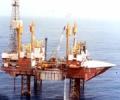
These firms are expected to incur an under-recovery of over Rs 121,000 crore (Rs 1,210 billion) during this financial year, compared to Rs 78,000 crore (Rs 780 billion) in 2010-11.

With the government putting off an increase in diesel prices, Petroleum Minister Murli Deora sought an increase in government subsidy to bail out the three oil marketing companies (OMCs). Deora met finance minister Pranab Mukherjee in Mumbai to seek an immediate release of `10,000 crore as interim subsidy to Indian Oil Corporation, Bharat Petroleum Corporation and Hindustan Petroleum Corporation.
