Amid growing concerns over the detection of human metapneumovirus cases in India, health experts have emphasised the virus is not new, and advised people to stay calm and take basic precautions.
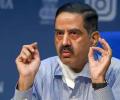
Bhargava, who is also a cardiologist, had tested positive for coronavirus infection around 7-8 days ago and was under home isolation

'All the big production houses are making superhero films, so I thought I should make one too. So I have made a genuine superhero film,' Vivek Agnihotri says about his new film, The Vaccine War.
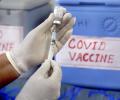
The durability of immunity post COVID-19 vaccination persists for nine months or more and a precautionary dose of vaccine which will be administered to healthcare and frontline workers and citizens above 60 years with comorbidities is to mitigate the severity of infection, hospitalisation and death, the government said on Thursday.
The poll panel carried out a "complete review" of the Covid status and took inputs from medical experts on "safety measures to be ensured" during campaigning and polling.

The Vaccine War leans towards stoking nationalistic fervour, but that shouldn't stop you from watching a film that is solemn about the Indian scientific community's achievement, notes Mayur Sanap.
Indian Council of Medical Research Director General Balram Bhargava had on Monday recommended the use of hydroxychloroquine for treating healthcare workers handling suspected or confirmed coronavirus cases.
The scientist, who is from Mumbai, had come to Delhi few days ago and tested positive for the virus on Sunday morning.

The health ministry further informed that in addition to 162 plants already sanctioned, the states have requested Centre for more than 100 such additional plants which are also being sanctioned.

The article claimed that the "ICMR tailored its findings to fit Prime Minister Narendra Modi's optimistic narrative despite a looming crisis".
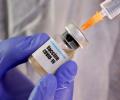
The comments of the Congress leader came after ICMR DG Balram Bhargava's letter to Bharat Biotech and principal investigators of medical colleges to complete the trial procedure of indigenous COVID-19 vaccine in a fast track method so that results of a clinical trial can be launched by August 15.

There is no scientific evidence so far to support the need for a booster vaccine dose against COVID-19, ICMR Director General Dr Balram Bhargava said on Monday underlining the completion of second dose for India's adult population is the priority for the government for now.
In response to a question on whether younger population were getting more affected, Indian Council of Medical Research Director General Dr Balram Bhargava said the comparison of data during the first and the second wave of COVID-19 has shown that there is not much age difference.

The Indian Council of Medical Research's national task force for COVID-19 has decided against including antiviral drug Molnupiravir in the clinical management protocol for COVID-19 as of now, official sources said on Tuesday.

The World Health Organisation has issued warning against XE, a new variant of Omicron first detected in the UK.
These kinds of assumptions to be used for a nation of India's size and "to put us in poor light is not desirable"
All COVID vaccines do not prevent infection and are primarily disease-modifying, said Dr Balram Bhargava, director general, Indian Council of Medical Research on Thursday.

NITI Aayog member (health) Dr VK Paul said all decisions on precaution doses are taken first and foremost based on the need.
These seven countries are South Africa, Bangladesh, Botswana, China, Mauritius, New Zealand and Zimbabwe.

The central government on Thursday said the months of September and October will be crucial in pandemic management and cautioned that festivals should be celebrated in accordance with COVID-19-appropriate behaviour.

"We are very worried about the rise in cases in Maharashtra. Don't take this virus for granted. It can come up unexpectedly. If we have to remain free of this virus, COVID-appropriate behaviour, containment strategy as well as vaccination has to be brought in," Paul said.

The decision to remove it from the guidelines comes in the backdrop of some clinicians and scientists writing to Principal Scientific Advisor K Vijay Raghavan cautioning against the "irrational and non-scientific use" of convalescent plasma for COVID-19 in the country.
The ICMR's statement came against the backdrop of the World Health Organization (WHO) suspending the testing of the drug in COVID-19 patients temporarily in its global study following safety concerns.

The government is taking the cutoff of about 100 days if reinfection occurs.
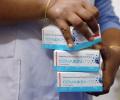
Bharat Biotech's Covaxin has demonstrated 77.8 per cent effectiveness against symptomatic COVID-19 and 65.2 per cent protection against the new Delta variant.

The world is witnessing the fourth surge of the COVID-19 pandemic and India has to be on guard and cannot afford to slacken, said Union health secretary Rajesh Bhushan on Friday.
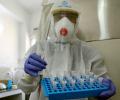
Three COVID-19 vaccine candidates, including two indigenous ones, are in different phases of development in India.
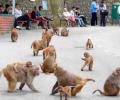
The Rhesus macaque monkeys, used worldwide in medical research, are believed to be the best non-human primates for such studies.
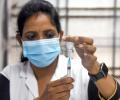
So far, 1.1 crore doses of Covaxin have been administered. Out of which 93 lakh received the first dose and out of that 4,208 (0.04 per cent) people got the infection which is four per 10,000 individuals. About 17,37,178 people received the second dose of which only 695 (0.04 per cent) tested positive for COVID-19, Bhargava said.
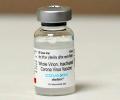
Safety and Efficacy results from the final analysis will be available in June, and the final report will be submitted to a peer-reviewed publication.
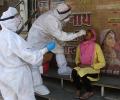
In a letter to the state chief secretaries on Monday, ICMR Director General (D-G) Dr Balram Bhargava said the COVID-19 diagnostic supplies are stabilising because of the indigenous production of the kits.
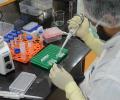
According to government sources, the matter was discussed by the national expert group on vaccine administration for COVID-19 in its last meeting held on August 22.

'We have to ensure the European situation does not occur in India and we don't see a spread like theirs.'

Union health secretary Rajesh Bhushan said 50 districts account for 66 per cent of the total caseload and the COVID-19 case fatality rate has progressively declined to 2.10 per cent, the lowest since the first lockdown was imposed on March 25.

The 'antisera' has been developed by the ICMR in collaboration with a Hyderabad-based bio-pharmaceutical firm. "With Biological E Limited we have developed an horse 'antisera' and we have just got clearance for conducting clinical trials for that," ICMR Director General Dr Balram Bhargava said at press briefing.

He further said that only a marginally high proportion of COVID-19 patients are of younger age and that the average of patients in the first wave was 50 years and in this wave, it is 49 years. He also said that the older population continues to be more vulnerable to be admitted in the hospital in the current wave.

One in 15 individuals aged 10 years and above were estimated to be exposed to SARS- CoV2 by August 2020, ICMR's 2nd sero-survey said.
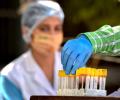
The company has set an affordable ceiling price of USD 3 (around Rs 225) per dose, it added.
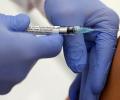
The DCGI arrived at the conclusion on Wednesday based on the recommendations of an independent expert committee which has also opined that compensation should not be paid to the volunteer, they said.
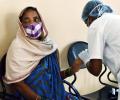
A total of 40,845 cases of black fungus or mucormycosis have been reported in the country so far, of which 31,344 are rhinocerebral in nature, and the death toll from the infections stands at 3,129, Union Health Minister Harsh Vardhan said.
 © 2026 Rediff.com - Investor Information - Advertise with us - Disclaimer - Privacy Policy - Sitemap - Feedback - About us - Terms of use - Grievances