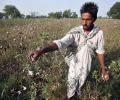
Monsanto has taken the government to court over the royalty.

The praise comes a year after Prime Minister Narendra Modi termed it a 'monument of UPA's failures'.

To meet the target, agriculture must grow at 15% compared to average of below 2% over the past four years
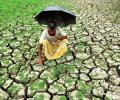
Modi's irrigation push in the Budget is aimed at scoring on the political front along with achieving growth targets

Unless supported by investment, any spark of a recovery could be temporary, hint economists.

Experts say the Bill should include higher-value food items than just cereals

Climate change, air quality, nutrition, even connectivity are joining the political agenda, and it will force a shift in policies.
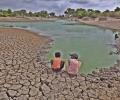
The well-irrigated states of Punjab, Haryana, Karnataka, western Uttar Pradesh and coastal states such as Odisha are, for the first time, feeling the effects of a poor monsoon.
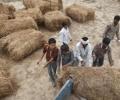
The agrarian crisis must be met with similarly speedy responses.
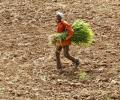
In spite of Budget's rural focus, the government has consistently stumbled in agriculture, says Shreekant Sambrani.
After one year in power, Prime Minister Narendra Modi is pretty much on the back foot, even if he continues to display bravado in his public pronouncements. He knows within his heart that he has wasted a lot of his political capital without getting much in return, says M K Venu.
India is threatening to block the World Trade Organization (WTO)'s trade facilitation agreement (TFA) reached at Bali last year unless its agricultural policies are permanently excluded from multilateral scrutiny.

Harassment, corruption and the burden of compound interest for years are also the reasons.

A provision of Rs 15,000 crore has been made in the budgetary estimate of 2016-17 towards interest subvention.

With facts and figures, the CAG report has highlighted how Gujarat was far from a role model for states across India, and that the progress made in this province in western India in improving agriculture, education, healthcare and empowerment of women and children, was not exactly creditable, says Paranjoy Guha Thakurta.
