
While the National Investigation Agency (NIA) sought a stay on the operation of the bail order so as to appeal before the Supreme Court, the HC refused the request, stating that Babu has been in jail for over five years.

The case pertains to the Elgar Parishad conclave held in Pune on December 31, 2017, which according to the Pune police was funded by Maoists.

The apex court on July 28 granted bail to the two accused, noting that the actual involvement of Gonsalves and Ferreira in any terrorist act has not surfaced from any third-party communications.

A weekly round-up of the most interesting videos on Rediff iShare.
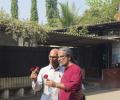
Researcher Rona Wilson and activist Sudhir Dhawale, accused in the Elgar Parishad-Maoist links case, were released on bail from a Navi Mumbai prison on Friday, more than six years after they were arrested. The duo walked out of the Taloja jail after completing bail formalities before the special NIA court, over a fortnight after they were granted bail by the Bombay High Court. The HC granted bail to Wilson and Dhawale on January 8, noting they had been in jail since 2018 and the trial in the case, in which anti-terror act UAPA has been invoked, was yet to start. Apart from Dhawale and Wilson, 14 other activists and academicians were arrested in the case. Eight of them have been granted bail till now, with one, Mahesh Raut, still in jail as the appeal filed by the National Investigation Agency (NIA) against his bail is pending before the Supreme Court. Jesuit priest and activist Stan Swamy, one of the accused, died in 2021 while lodged in judicial custody. The case pertains to provocative speeches allegedly delivered at the Elgar Parishad conclave held in Pune on December 31, 2017, triggering violence at Koregaon-Bhima, a village outside Pune city, the next day. The Pune police had claimed the conclave was backed by Maoists. The NIA later took over the probe.

The Bombay High Court has granted bail to researcher Rona Wilson and activist Sudhir Dhawale, arrested in the Elgar Parishad-Maoist links case. The court noted that they had been in jail since 2018 and the trial was yet to start. The court said the two had spent more than six years in jail as under-trial prisoners. The NIA, the prosecution agency, did not seek a stay to the HC order. Eight other activists have been granted bail in the case, which pertains to provocative speeches allegedly delivered at the Elgar Parishad conclave held in Pune on December 31, 2017.
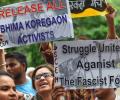
Prolonged incarceration without trial amounts to infringement of the right to life under the Constitution, the Bombay high court said while urging a special court to expedite the trial in the 2018 Elgar Parishad-Maoist links case.

Elgar Parishad-Maoist links case accused and former Nagpur University professor Shoma Sen was released from a prison in Mumbai on Wednesday afternoon, an official said.
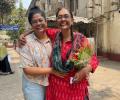
'She had been in jail for nearly 6 years; the charges had not been framed and the trial had not begun.' 'Even if it began, it would take years to complete.'
The Bombay high court on Thursday granted bail to activist Mahesh Raut, arrested in the Elgar Parishad Maoist links case.
A bench of Justices Aniruddha Bose and Sudhanshu Dhulia said the actual involvement of Gonsalves and Ferreira in any terrorist act has not surfaced from any third-party communications.

'I was laughing and crying at the same time. Right now, just extremely happy that she will be out and amongst us soon.'
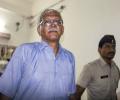
Activists Vernon Gonsalves and Arun Ferreira, accused in the Elgar Parishad-Maoist links case, are likely to walk out of jail only next week after securing bail from the Supreme Court on Friday as certain formalities are to be completed before they are released, defence lawyers said in Mumbai.

The release of activists Vernon Gonsalves and Arun Ferreira, accused in the Elgar Parishad-Maoist links case, could get delayed as a special NIA court in Mumbai on Monday rejected their pleas for temporary cash bail.

'Notwithstanding the seriousness of the allegations made, every accused had a right to a speedy trial and the court had to take into account long periods of incarceration without trial as an additional consideration for grant of bail.'
As the hearing started, Justice Bhat, who was on the bench with Chief Justice Uday Umesh Lalit, expressed his inability to be part of the hearing but did not elaborate on the reason.
Branded a Maoist by the Maharashtra police Arun Ferreira was released on bail on January 5. At his first press conference after his release he spoke about his ordeal and how the State has been muffling the voice of dissent.
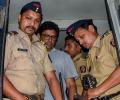
Maharashtra Police had on August 28 raided the homes of the prominent Left-wing activists in several states and arrested at least five of them for their alleged Maoist links, sparking a chorus of outrage from human rights defenders.
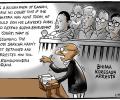
Uttam Ghosh offers his take on the arrests and Professor Guha's assertion of what the greatest Indian of our times would unquestionably have done had he been alive.
The case relates to Elgar Parishad, a conclave held in Pune on December 31, 2017. Pune Police had alleged that it had been backed by Maoists, and provocative speeches made there led to caste violence near Bhima-Koregaon war memorial the next day.

Poet-activist Varavara Rao, 81, is the only accused in the case to have secured an interim bail. The Bombay high court had in February this year granted Rao conditional bail for six months considering his medical condition. Rao had been in jail since his arrest in August 2018.

The HC had in its order last week said Bharadwaj was entitled to bail and its denial would be in breach of her fundamental right to life and personal liberty, guaranteed under Article 21 of the Constitution.
'We urge you to take remedial measures to address this blatant injustice pending withdrawal of the case against them,' the MPs write.
The special court judge D E Kothalikar has asked the national probe agency to file its reply on the matter on November 26.

ACP Shivaji Pawar has been asked to file his affidavit by August 15.
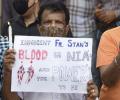
They also demanded action against officials of the National Investigation Agency (NIA), which is conducting a probe into the Elgar Parishad case, and former superintendent of the Taloja jail.
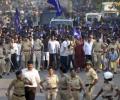
Eight activists accused in the Elgar Parishad-Maoist links case, who were denied default bail by the Bombay High Court earlier this month, told the HC on Thursday that they will file review petitions against the order which was based on a "factual error".

"We see no reason to interfere with the high court order," said a bench of Justices U U lalit, S Ravindra Bhat and Bela M Trivedi, refusing to consider the submissions raised by the NIA which had moved the apex court against the December 1 order.

The police official, while addressing a press conference on Wednesday, said the Elgar Parishad had been funded by the Maoists.
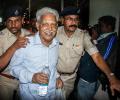
The court asked the Maharashtra police to file their case diary pertaining to the ongoing investigation in the case by September 24.
According to a media report published on Saturday, only one of the outfits to which eight of the arrested activists belonged was declared as unlawful.

The letters were reportedly recovered after the anti-Naxal operations in Maharashtra's Gadchiroli, in which 39 Maoists were killed, in April.
Varavara Rao reached home in Hyderabad on Thursday morning, while activists Vernon Gonsalves and Arun Ferreira, were sent to Mumbai by road.
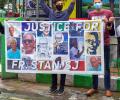
'If we accept this, then in a few years we will not see a democratic India that we know'
The bench, which also comprised Justices A M Khanwilkar and D Y Chandrachud, told the Maharashtra government to make its police officials "more responsible" on matters pending before the court.
The Pune Police had moved the court Saturday for extension of the 90-day period for filing chargesheet against the five persons, citing fresh arrests in the case.

The apex court also rejected the plea to appoint a Special Investigation Team for probe.

The law permits a person to approach the police or a magistrate to lodge a complaint and get their grievances addressed, the court noted.

He took up the causes of tribals marginalised after their lands has been taken over for dams, mines and townships, often without their consent.

She has been in custody as an undertrial since her arrest in 2018.
 © 2026 Rediff.com - Investor Information - Advertise with us - Disclaimer - Privacy Policy - Sitemap - Feedback - About us - Terms of use - Grievances