
A day after Finance Minister Nirmala Sitharaman flagged technical glitches on the income tax department's new e-filing website, IT major Infosys said it expects the system to stabilise in the course of this week. On Tuesday, Sitharaman had asked Infosys and its chairman Nandan Nilekani to fix technical glitches being encountered on the income tax department's new e-filing website, after users flooded her Twitter timeline with complaints.
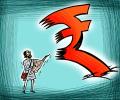
The Centre is staring at a combined shortfall of up to Rs 1 trillion in excise and Customs revenues in the current financial year (FY23) compared to the Budget estimates (BE), mainly because of duty cuts on edible oil and petroleum products. The government set a target of Rs 3.35 trillion for excise and Rs 2.13 trillion for Customs mop-up for FY23 while presenting the Budget in February. "As excise duty collection is mainly driven by diesel volumes, we might see a clear gap in the level budgeted for FY23, following the reduction in cesses on petrol and diesel in May. We are expecting somewhere between Rs 80,000 crore and Rs 1 trillion dip in excise and customs duty collections," a senior government official told Business Standard.
The protocol aims to "democratise" lending, reduce costs of credit, and ensure accessibility of credit to small companies and street vendors, according to Nandan Nilekani.

'With 1.3 billion consumers, India's market has great potential.'

The advantage of leasing is that you can get a new car every few years. You can also get to drive a high-end car without paying its entire price.

Ahead of the Union Budget 2023, insurers are hoping that the Centre will act on their recommendations, which includes increasing the limit for tax deduction under 80D of the Income Tax Act. Also among them are issuance of long-term bonds, tax incentives for home insurance premiums, and a separate section to claim deduction for term-insurance premium, among others. These suggestions would help improve the penetration of insurance in the country.

Ahead of the upcoming Union Budget, Society of Manufacturers of Electric Vehicles (SMEV) has asked Finance Minister Nirmala Sitharaman to either rejig the FAME II scheme or reintroduce FAME I, saying the programme meant to promote EVs in its second avatar has been able to achieve less than 10 per cent of its target. The Rs 10,000-crore FAME-II scheme which is to be implemented over a period of three years, came into effect from April 1, 2019. It is the expanded version of FAME India I (Faster Adoption and Manufacturing of (Hybrid) and Electric Vehicles (FAME) which was launched on April 1, 2015, with a total outlay of Rs 895 crore.

De-scaling of businesses, job losses and subsequent impact on disposable incomes has created negative sentiment among traders, business owners and workers alike, says Abhishek Waghmare.

Addressing party MPs at the general body meeting of the Congress Parliamentary Party in the central hall of Parliament, she said when facing a significant national challenge, it has been the tradition in our country to bring Parliament into confidence.

Finance Minister Nirmala Sitharaman on Thursday said inflation management cannot be "singularly" left to the monetary policy as a majority of activities are outside its purview in the current context. Speaking at a seminar organised by economic think-tank Icrier, the finance minister said that both the fiscal policy and the monetary policy have to work together to contain inflation. Consumer price index (CPI) based inflation or retail inflation is ruling above the Reserve Bank's comfort level of 6 per cent since January.

'The hour is very late, and the choice between triumph and tragedy knocks at our door,' says Ajay Shah.

India's tax pie seems to have undergone a subtle change with a sharp drop in direct tax collections resulting from a disproportionate impact of the COVID-19 carnage on incomes. The share of indirect taxes, which mainly comprise of levy on goods and services as well as import duty, has risen while that of direct taxes - made up of corporate and personal income tax - has gone down in 2020. In an interview with PTI, finance secretary Ajay Bhushan Pandey said in a pandemic like this where the economy has been impacted, any large scale changes impact direct taxes more severely, whereas indirect tax collection is mostly proportional to business turnover and compliance.

Liquidity in the banking system has slipped into a deficit for the first time in three weeks, prompting banks to borrow the largest quantum of funds from the Reserve Bank of India (RBI) in around a month and a half. The key catalyst for the sudden tightening in liquidity was due to outflows on account of advance tax payments, which occur towards the end of a quarter. Analysts also cited other factors such as a currency leakage and possible interventions by the RBI in the foreign exchange market, which contributed to the tighter liquidity conditions.

India's gross tax collections soared to a record high of Rs 27.07 lakh crore in the fiscal year ended March 31, led by impressive growth in corporate tax and customs, taking the tax-to-GDP ratio to an over two-decade high of 11.7 per cent, Revenue Secretary Tarun Bajaj said on Friday.

This could be the first instance when a consumer goods company would move court against NAA. The confrontation began after the government cut tax rates on over 175 items like toothpaste, shampoo, shaving cream and washing powder to 18 per cent from 28 per cent.
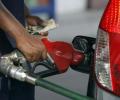
Petrol and diesel prices were hiked for the fourth consecutive day on Saturday by 35 paise per litre, pushing the total increase in rates on petrol to Rs 36 per litre and on diesel to Rs 26.58 since early May 2020 when taxes on the two fuels were raised to record levels. Petrol in Delhi now costs Rs 107.24 a litre and diesel comes for Rs 95.97, according to a price notification of state-owned fuel retailers. The latest increase that follows the unrelenting hike in international oil prices has pushed pump rates across the country to their highest-ever levels.
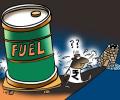
Finance Minister Nirmala Sitharaman on Monday ruled out a cut in excise duty on petrol and diesel to ease prices, which have touched an all-time high, saying payments in lieu of past subsidised fuel pose limitations. Petrol and diesel as well as cooking gas and kerosene were sold at subsidised rates during the previous Congress-led UPA government. Instead of paying for the subsidy to bring parity between the artificially suppressed retail selling price and the cost that had soared because of international rates crossing $100 per barrel, the then government issued oil bonds totalling Rs 1.34 lakh crore to the state-fuel retailers. These oil bonds and the interest thereon are being paid now.

The only real solution to the jobs crisis, whether in India or abroad, is to direct tech innovation towards job enhancing sectors, and disincentivising job-replacing ones, observes R Jagannathan.

The investigation against HUL was initiated on the basis of an anonymous complaint. It alleged 'profiteering' of around Rs 535 crore between November 15, 2017, and February 28, 2018.
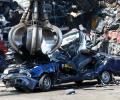
'Our automakers export 50 per cent of what they manufacture and once the policy comes into play, which is in the next 2-3 years, we would become a Rs 10 trillion industry.'

A newspaper vendor from Neknoor in Maharashtra tells Rediff.com's A Ganesh Nadar what he would like to see in Finance Minister Nirmala Sitharaman's Budget.

The Congress on Monday strongly criticised the Union budget, saying Finance Minister Nirmala Sitharaman's speech was oblivious to the declining GDP and the budget was a case of "wrong diagnosis and prescription".

The rates of price rise in many services used by the common man, including hospital and nursing, cook, domestic help and bus (fare), among others, have also touched double digits during the last four years, putting a burden on disposable income.

'When the average growth in the last three years was just 2.5%, how does that make us the fastest growing country?' 'They only tell you what has happened in the last 2 years; they are not taking into account what happened in FY21 on account of their mistakes.'

Only those who stick to the old I-T regime will get this benefit.

With the first quarter gross tax mop-up reaching Rs 5.6 lakh crore, Icra Ratings on Friday said the government is set to exceed the budgeted tax collection target of Rs 22.2 lakh crore for 2021-22, led by indirect taxes. The government has budgeted a modest 9.5 per cent growth in tax collections at Rs 22.2 lakh crore for FY22, over FY21 collections of Rs 20.2 lakh crore. However, despite the second wave of the pandemic, the April-June quarter tax collections rose to Rs 5.6 lakh crore, which is 39 per cent higher than Q1 of FY20.

Experts have flagged issues regarding the levying of new cess/tax, especially those related to complications in administering the cess.

The government on Tuesday extended the deadline for filing income tax and GST returns, raised the threshold of default that could trigger insolvency of a company, and waived charges on cash withdrawals from ATMs of other banks as a precursor to a broader stimulus package for the economy distressed by the coronavirus outbreak.

'Today, after mustering courage, I am resigning from the party post and primary membership of the Congress'
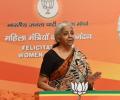
Nirmala Sitharaman is proving to be a better finance minister than her initial rookie status might have led people to expect, observes T N Ninan.
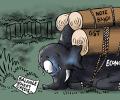
'The current budgetary practice of shifting expenditures off-balance sheet in order to be seen to be meeting fiscal targets should be discontinued; additional fiscal stimulus would be imprudent; individual income tax rates should not be cut; GST rates should not be raised now,' advise Arvind Subramanian and Josh Felman.

'I suggest a cut in the GST rates and an infusion of Rs 1.2 trillion into the economy in six months.'
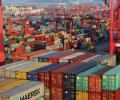
Currently, the five-year FTP aims to raise total exports to $900 billion but targets may be reduced

Tata Starbucks had hiked the base price of one its coffee variant after the GST Council cut tax rates on restaurants from 18 per cent to 5 per cent with effect from November 15, 2017.

India has a history of jugaad, and retrofitting vehicles is one such manifestation of the legendary Indian skill. Not so long ago autorickshaws and small Marutis used to strap on subsidised LPG cylinders and power themselves to a cheap ride. There were the odd explosions, lives were lost, but the jugaad continued. Then compressed natural gas (CNG) was introduced in Delhi following a court order. Initially, customised CNG kits were fitted to conventional (internal combustion engine or ICE) autos cheaply, enabling commuting at less than half of what you would cough up for diesel. The industry is better organised now with Suzuki and Hyundai designing CNG-fired vehicles, and Mahindra and TVS manufacturing liquefied petroleum gas (LPG)-powered three wheelers.

FinMin does not expect tax or non-tax revenue to reach anywhere close to the targets set in the interim Budget. Sources say that the challenge before the new government will be either to accept the reduced projection and tailor the Budget accordingly or set a more ambitious target.

There are indications or signs of the economy picking up -- collection of GST and consumption of electricity, said former RBI governor, C Rangarajan.

Consumption of gold is the highest among middle-income households - those with annual income between Rs 2 lakh and Rs 10 lakh - who account for an average of 56 per cent of gold sales over the last five years, according to a nationwide survey conducted by India Gold Policy Centre (IGPC) at the Indian Institute of Management, Ahmedabad (IIM-A). "Per capita consumption is highest among the rich, but total volume still rests with the middle-income group. "With increasing income, there is an increasing propensity to consume gold, although the share of gold in the portfolio does not increase with the same proportion of income," the survey report says.

Indian companies are expecting generous tax incentives from the Union Budget that will help them invest more in building capacities in the coming years. While the productivity-linked incentives (PLIs) are a good start to spur local manufacturing, the government should also take steps to boost consumer demand, which is not showing encouraging signs, say chief executive officers (CEOs) of India Inc. Statistics released by the Reserve Bank of India (RBI) shows that Indian banks had sanctioned loans worth Rs 75,558 crore in 220 new projects - a record low - in the pandemic-hit financial year ending March 2021. This is not showing any signs of a significant pick up in the last nine months of the ongoing financial year.

This meeting has led to the deferment of the Goods and Services Tax (GST) Council meeting by a day.
 © 2026 Rediff.com - Advertise with us - Disclaimer - Privacy Policy - Sitemap - Feedback - About us - Terms of use - Grievances