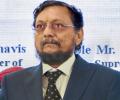
Chief Justice of India S A Bobde on Thursday said that nothing is conferred as right of freedom of speech in 'absolute and untrammelled terms' and the framers of the Constitution have struck a resilient balance between liberty and the rights and conditions on which the states can deny it.

The interesting fact was revealed to public for the first time by the Supreme Court Bar Association president and senior advocate Vikas Singh during his address on occasion of the farewell ceremony for the CJI.
The Allahabad High Court Bar Association has begun an indefinite strike to protest the proposed transfer of Delhi HC judge Yashwant Varma, who is under investigation after a large amount of cash was found at his residence. The Oudh Bar Association (OBA) of the Lucknow bench of the High Court has also condemned the transfer, calling for impeachment proceedings against Justice Varma. Both bar associations are concerned about the impact on public faith in the judiciary and have called for a reconsideration of the transfer decision.
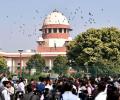
The Supreme Court on Monday said the trial of the Manipur ethnic violence cases, probed by the Central Bureau of Investigation, would be conducted in Guwahati, Assam, where it was transferred to earlier.

A Rs 1 crore defamation case and a petition seeking an injunction to restrain his autobiography has been filed against Rajya Sabha MP and former Chief Justice of India (CJI) Ranjan Gogoi by Assam Public Works (APW) president Aabhijeet Sharma at a local court in Guwahati.
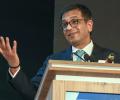
"We live lives which are relatively isolated from the political arm of the government -- but obviously judges have to be conversant with the impact of their decisions on the polity at large. That's not political pressure but an understanding by the court of the likely impact of a decision," CJI Chandrachud said in his address at the Oxford Union.
Justice Gogoi's tenure as judge and as CJI was marked by some controversies and personal allegations but that never came in his way of his judicial work that was reflected in the last few days when benches headed by him delivered some path-breaking judgments.

"I don't want you to cry but with anger, you have to shout and demand that we need 50 per cent reservation," the CJI said.
Bhushan submitted that his tweet about Chief Justice of India riding a motorbike was to underline his anguish at the non-physical functioning of the Supreme Court for last more than three months, with hardly any cases being heard.
The Supreme Court referred to a larger bench the legal issues stemming from a plea of BJP leader B S Yediyurappa, including the question whether a prior sanction to prosecute is needed under the Prevention of Corruption Act after a magisterial court order of inquiry. The questions revolve around the interplay between the provisions of the Prevention of Corruption Act and the Code of Criminal Procedure on the issue of prior sanction to prosecute a public servant.
In a significant development, the Supreme Court on Tuesday asked the Election Commission of India to provide details of cases in which it had either removed or reduced the period of disqualification from electoral rolls of leaders post their conviction in criminal cases.

The Supreme Court has sought details from the Allahabad High Court regarding controversial statements made by Justice Shekhar Kumar Yadav at a VHP function. The development comes amid calls for action against the judge for his remarks, which have been labeled as hate speech by some. The judge's statements were made at a VHP function on December 8, where he spoke about the Uniform Civil Code and the law working according to the majority. Several individuals and organizations, including lawyer Prashant Bhushan and CPI(M) leader Brinda Karat, have called for an inquiry into the judge's conduct and for his removal from judicial duties.
A seven-judge Constitution bench headed by Chief Justice D Y Chandrachud, by a majority of 6:1, set aside the apex court's five-judge bench verdict of 2014 in the EV Chinnaiah vs State of Andhra Pradesh case which had held that no sub-classification of Scheduled Castes (SCs) can be allowed as they are a homogeneous class in themselves.

The Supreme Court on Thursday upheld the constitutional validity of Section 6A of the Citizenship Act related to the grant of Indian citizenship to illegal immigrants in Assam by a majority verdict of 4:1.
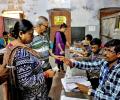
The Supreme Court of India has asked petitioners in two Public Interest Litigations (PILs) to make representations to the Election Commission of India (ECI) regarding their demand for uploading polling booth-wise voter turnout data on the ECI website. The PILs, filed by TMC MP Mahua Moitra and NGO Association for Democratic Reforms, seek a direction for the ECI to upload the data within 48 hours of the conclusion of polling in Lok Sabha and assembly elections. The ECI, represented by senior advocate Maninder Singh, expressed willingness to deliberate on the matter and suggested a meeting with the petitioners to address their concerns. The court has adjourned the hearing to the week of July 28.

A bench headed by Justice Sanjay Kishan Kaul said that nearly two years have passed and the possibility of retrieving electronic records is very less in the probe.
Chief Justice of India D Y Chandrachud has constituted an all-woman bench comprising Justices Hima Kohli and Bela M Trivedi to hear transfer petitions involving matrimonial disputes and bail matters on Thursday.
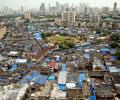
The Supreme Court of India has refused to halt the redevelopment project of Dharavi in Mumbai, allowing the Adani Group to proceed with their project. The court rejected a plea from Seclink Technologies Corporation, the original highest bidder for the project in 2018, which challenged the tender process and the award to Adani Properties Pvt Ltd in 2022. The court directed Adani Properties to make payments through a single bank account and ordered Seclink Technologies to file an affidavit detailing their increased offer for the project. The project work has already commenced, with constructions underway and 2,000 people employed on the site.

The Supreme Court of India has released an inquiry report into the alleged discovery of a large amount of cash at the residence of Delhi High Court judge Yashwant Varma. The report, which includes photos and videos, was uploaded on the court's website. Chief Justice of India Sanjiv Khanna has formed an in-house committee to investigate the matter and has asked the Delhi High Court Chief Justice to not assign any judicial work to Justice Varma. Justice Varma has denied the allegations, claiming they are part of a conspiracy to frame him. The inquiry report, submitted by the Delhi High Court Chief Justice, has been made public and calls for a deeper probe into the incident. The incident has raised concerns about judicial accountability and has prompted the Congress party to call for strong measures to uphold public trust in the judiciary.

Over 260 eminent citizens, including former judges and bureaucrats, have written to Chief Justice of India D Y Chandrachud urging him to take cognisance of DMK leader Udhayanidhi Stalin's 'eradicate Sanatan Dharma' comment, calling it "hate speech".

At the level of the high court, the official language is English, though many HCs have had to allow applications, petitions and even documents in regional languages, he said.

While some hailed it, others questioned it raising a controversy by saying Justice Bobde was neither wearing a mask nor a helmet.

Justice Ramana said that he took up the issues concerning the appointment of judges and infrastructure during his term and hoped that he stood up to the expectations of the legal fraternity.

The CJI said that to keep police excesses in check, dissemination of information about the constitutional right to legal aid and availability of free legal aid services is necessary.

Mufti said the fundamental rights enshrined in the Indian Constitution and guaranteed to all Indian citizens "are being brazenly impinged upon".
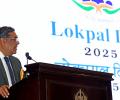
The Supreme Court of India will examine the jurisdiction of the Lokpal, India's anti-corruption ombudsman, in entertaining complaints against sitting high court judges. The court is considering a suo motu proceeding initiated over the Lokpal's January 27 order on the issue. The case involves two complaints filed against a sitting additional judge of a high court, alleging that he influenced a judge of the subordinate judiciary and a judge of the same high court set to deal with a suit filed against the complainant by a private company.
The Supreme Court of India has stayed a Lokpal order that allowed complaints to be filed against a sitting high court judge. The court termed the order "something very, very disturbing" and a concern for the independence of the judiciary. The bench issued notices to the Centre, the Lokpal registrar, and the complainant, directing them to keep the identity of the judge confidential. The court will hear the matter again on March 18.

Justice Bhushan, who was elevated as an apex court judge on May 13, 2016, was part of several landmark judgements including the November 2019 verdict by a five-judge Constitution bench which cleared the way for construction of Ram Temple at the disputed site at Ayodhya and directed the Centre to allot a five-acre plot to Sunni Waqf Board for building a mosque.

'One of the major challenges to the protection of rule of law and human rights is the inability of the formal justice system to deliver speedy and affordable justice to all'
The electoral bonds scheme for funding political parties should not become a tool for "legitimisation of quid pro quo" between power centres and people who are benefactors of that power, the Supreme Court said on Thursday as it underscored the need for reducing the cash component in the electoral process.

Senior-most Supreme Court judge Sanjiv Khanna on Wednesday recused himself from considering pleas seeking review of the apex court's judgment last year declining legal recognition to same-sex marriage, sources said.
Commencing final arguments on a batch of pleas against the verdict, the bench, heard senior lawyers including Abhishek Manu Singhvi, Salman Khursheed and Menaka Guruswamy for the petitioners.

Justice Bobde, who decided several key cases during his tenure including the historic Ayodhya verdict, was administered oath as the 47th CJI in November 2019 and retired on Friday.

According to the cause list of July 10 uploaded on the apex court website, a five-judge bench headed by Chief Justice DY Chandrachud would consider in chambers the pleas seeking review of the October 17 last year verdict.
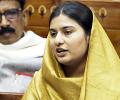
Samajwadi Party leader and Kairana MP Iqra Choudhary has moved the Supreme Court seeking effective implementation of the Places of Worship (Special Provisions) Act, 1991. This move comes amidst several petitions challenging the law's validity, including those filed by the Akhil Bhartiya Sant Samiti and lawyer Ashwini Upadhyay. The Supreme Court, in December 2022, had restrained all courts from examining fresh suits and passing interim orders in pending cases seeking to reclaim religious places. The Act aims to maintain the religious character of places of worship as they existed on August 15, 1947, but the dispute relating to Ram Janmabhoomi-Babri Masjid at Ayodhya was kept out of its purview. The court has listed Choudhary's plea with other pending pleas for February 17.
Activist Saket Gokhale had sought consent, a condition precedent for initiating criminal contempt proceedings, of the top-most law officer to initiate the case against the former CJI who had reportedly said at an event that the judiciary is "ramshackled" and it is quite unlikely for a person to get a timely verdict.
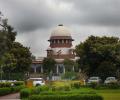
Commencing hearing on pleas challenging the constitutionality of the Places of Worship Act, 1991, the Supreme Court asked the Centre to reply to cross-pleas against or seeking implementation of statute.

Prior to the swearing-in of Justices Hima Kohli, Nagarathna and Bela M Trivedi, only eight women judges, including sitting judge Justice Indira Banerjee, were appointed as apex court judges.

Glimpses from the At Home reception hosted by President Droupadi Murmu at Rashtrapati Bhavan on Republic Day.

Congress leader Rahul Gandhi has criticized the government's decision to appoint Gyanesh Kumar as the new Chief Election Commissioner (CEC) in the middle of the night, arguing that it is "disrespectful" and "discourteous" given the ongoing Supreme Court challenge to the selection process. Gandhi presented a dissent note to the selection committee, stating that the process violates the Supreme Court order and undermines the integrity of the electoral process.
