
MahaRERA, the authority under Real Estate (Regulation and Development) Act, 2016, in Maharashtra, has blacklisted 644 housing projects in the state for not meeting project deadlines. The authority has prohibited them from being sold, advertised or marketed in the state. These projects were supposed to be completed and handed over to homebuyers in 2017 and 2018. Even though most of the projects are being developed by local developers, one big name on the list is Lavasa Corporation promoted by HCC whose registration expired in 2017.

'The rising cost of construction, the cost of doing business, high compliance, and inflation/interest rates going up have already reduced returns to single digits.'

'After Covid, people started looking for bigger houses with pools and landscaped gardens.' 'Even middle class buyers are looking at plots of land in smaller towns.'

Mumbai Metropolitan Region recorded housing sales of nearly 9,200 units in Q3 of calender 2020, against 3,620 units in the preceding quarter, registering a 1.5 times growth which is the highest growth seen any city except Chennai.
India's residential market is expected to sustain demand momentum despite rise in mortgage and property rates as sales this year across the top 7 cities are likely to breach pre-pandemic level of 2.62 lakh units, industry players said. After braving four back-to-back disruptions in form of demonetisation, RERA, GST and COVID-19 in the last 6 years, industry experts feel the housing market is going through a lot of structural changes and is now at the start of a long-term upcycle. Homebuyers body FPCE gives credit to the Real Estate Regulatory Authority (RERA) under the Real Estate (Regulation & Development) Act, 2016 for this improved buying sentiment.

About 7 per cent was priced between Rs 3 crore and Rs 5 crore, 22 per cent priced between Rs 5 crore and Rs 8 crore, and 15 per cent above Rs 8 crore.
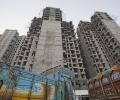
Average apartment size in residential projects launched in 2020 increased by 10 per cent to 1,150 sq ft, as builders expected demand for bigger flats to rise after the COVID-19 pandemic, according to property consultant Anarock. Average apartment sizes in seven major cities have risen by 10 per cent on a yearly basis to 1,150 sq ft in 2020 from 1,050 sq ft in 2019, it said in a report. The consultant said the average apartment sizes were reducing year-on-year since 2016 but the trend has reversed last year.

Most players are looking to invest anywhere between $500 million and $1 billion in new ventures in the next couple of years, said experts on this segment.

The Reserve Bank's rate-setting panel will start its 3-day deliberations on Wednesday amid expectations of yet another rate hike of 50 basis points to check high inflation, in line with similar actions taken by other major central banks, including the US Fed. Based on the recommendations of the Monetary Policy Committee (MPC), the RBI had effected 50 basis points increase in repo rate each in June and August after raising the short-term lending rate by 40 basis points in an off-cycle decision in May. The MPC, headed by RBI Governor Shaktikanta Das, is scheduled to meet during September 28-30.

Analysts, however, suggest investors remain selective on realty stocks and buy only where there is revenue visibility and a credible promoter backing.

Improved credit profile may make you eligible to transfer your existing home loan to another lender at a much lower rate.

Worli and Mahalaxmi in Mumbai Metropolitan Region are placed at second and third positions with average housing prices of Rs 41,500 and Rs 40,000 per sq ft, respectively.

50% of south-central Mumbai's high-end apartments remain unsold. The reasons include rocketing prices and a demand-supply mismatch. Of the unsold stock in south-central Mumbai, 38 per cent comprise units sized above 2,000 sq ft carpet area - too high for even wealthy Mumbaikars.

Housing sales are likely to be hit, especially in affordable and mid-income categories, following the RBI's decision to hike repo rate, according to real estate developers and consultants. However, the impact of RBI's decision to raise the benchmark lending rate by 50 basis points to 5.40 per cent is expected to be for a short term, they added. This is the third consecutive rate hike after a 40 basis points and 50 basis points increase in May and June, respectively.

Housing sales across seven major cities are estimated to fall 47 per cent year-on-year to 1.38 lakh units this year on lower demand because of the COVID-19 pandemic, according to property consultant Anarock. New housing supply, too, is likely to fall 46 per cent to 1.28 lakh units in 2020 in seven cities -- Delhi-NCR, Mumbai Metropolitan Region (MMR), Pune, Bengaluru, Hyderabad, Chennai and Kolkata.

Christmas is a perfect time for most NRIs to travel back to India and include property buying in their schedule. Ahmedabad, Kochi, Ludhiana and Chandigarh are some cities that witness generous investments from NRI investors.

A 5% increase is expected due to additional interest on approval costs.

Indian rupee, which earlier this week touched an all-time low, is likely to remain under pressure and may test new levels as a fallout of the US Federal Reserve indicating more interest rate hikes, experts said. The aggressive rate hikes will dampen demand and increase the possibility of a recession in the US. This could accelerate the pace of capital outflows, weaken the rupee and raise the threat of imported inflation.

India's real estate industry staged a rebound from 2020's downturn, with housing sales seen rising by over 50 per cent. The performance, though short of pre-COVID levels, has property developers hoping for stronger gains in the New Year and the beginning of a long upcycle. A strong foundation has been laid this year for revival in the Indian real estate sector, which is projected to reach $1 trillion mark by 2030 from $200 billion in the pre-pandemic year.
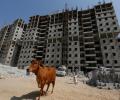
CREDAI-MCHI, a body of developers in Mumbai, has pegged the drop in sales booking at around 80 per cent in the February-March period this year. This is the second highest fall in residential sales in the past five years, after Q1, 2017, when the decline, due to the note ban, was 37 per cent.

Shankar Prajapati, a 57-year-old potter in Dharavi, has given up hope of getting a bigger house for his family. He lives cheek by jowl in a hutment measuring 200 square (sq.) feet (ft) in the nondescript shanty town. "We have surrendered to our fate. We cannot wait forever for better accommodation. "Perhaps we are not meant to dream big," despairs Prajapati. Raju Korde, president, Dharavi Redevelopment Committee, and a local resident, agrees with Prajapati.

Home First Finance will be answering readers' home loan queries. Mail your queries to getahead@rediff.co.in with the subject line 'Home Loan Query' and we will have your queries answered by Home First Finance.

A home loan is a long-term contract, so do shop around before signing on the dotted line, advises Sarbajeet K Sen.

Almost all the big mall developers/investors - such as Raheja-owned Inorbit Malls, Xander-APG joint venture Virtuous Retail South Asia (VRSA), property developer Prestige Estates Projects, and Blackstone-owned Nexus Malls - are looking to double their space in a year or two.

In a bad start to the new year, hotels are counting their losses again. Weddings and corporate events for this month have either been called off or postponed. The blow has throttled the nascent recovery which had kicked in around August. It is primarily hurting the banquet-driven hotel chains, some of which are seeing cancellations running into lakhs for a single day.

Despite a 56 per cent fall in residential launches in the first half of the year compared to the second half of 2019, Anarock Property Consultants believes that consolidation in residential real estate is expected to gain ground, and that branded players may garner a market share of 75-80 per cent.

Mumbai's property markets, where prices earlier crossed Rs 1 lakh per sq. ft in South Mumbai, are seeing a 20-25 per cent markdown from last year's levels.

There's no place like home, but even for the affluent buying one in India is difficult. On top of that, the coronavirus pandemic-now in its eighteenth month-has made life uncertain. A hopeful thing is buying a house looks alluring as loan interest rates fall below 7 per cent, their multi-decadal lows. The slow decline in GDP growth after demonetisation, followed by the economic shock caused by Covid-19 waves, has hurt us unevenly.
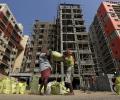
Housing sales across seven major cities in the country fell 35 per cent year-on-year to 50,983 units during the July-September period even as the demand recovered post lockdown, according to data analytics firm PropEquity. Sales stood at 78,472 units in the year-ago period in seven cities -- Delhi-NCR, Mumbai Metropolitan Region (MMR), Chennai, Kolkata, Bengaluru, Hyderabad and Pune.

'On an average we have been getting four to five such proposals a month, but we aren't pursuing them as they don't tick the boxes.'
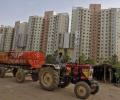
NRI demand would help offset the liquidity problem, which is presently affecting realty sales.
A recent report by Citi had pegged the total amount stuck in stalled projects across seven major Indian cities (Bengaluru, Mumbai Metropolitan region, National Capital Region, Ahmedabad, Hyderabad, Kolkata and Pune) at Rs 80,000 crore.

Despite the Sensex's 74 per cent run-up over the past year, the Indian equity market could still reward investors if the expected revival in earnings materialises, according to market experts. Returns during the coming year are more likely to be in line with longer-term trends (the Sensex's five-year return is around 14 per cent). Several factors are expected to aid the market's performance this year.
Leading property developers, such as Oberoi Realty, Tata Realty and Infrastructure, and Hiranandani, have turned to redevelopment of existing buildings in the expensive parts of Mumbai as a way of augmenting revenue. Experts estimate that Mumbai's redevelopment projects could be worth Rs 30,000 crore. As such, they are not new. What is new is that the big developers are interested in them. Leading the race is Oberoi Realty, which has set up a separate team for these projects.
'The fact that housing units worth a whopping Rs 4.5 lakh crore in top seven cities are stuck under various stages of non-completion indicates that there is a dire need to create stress-asset fund which will help bail out lakhs of distressed homebuyers,' says Anuj Puri, Chairman, Anarock Property Consultants, a real estate services company.

Some of the country's largest listed real estate developers - DLF, Prestige Estates, and Puravankara - are foraying into the Rs 50,000-crore residential property market of Mumbai, where home prices are among the highest in the world. All of them are set to launch residential projects in the financial capital of the country, where the market is dominated by players such as Runwal, Lodha, and Oberoi Realty, among others. Leading the race is Prestige, which has lined up 6 million square feet (msf) of new launches in the city across Mulund and Byculla in the third quarter of this financial year (2021-22).

'Do some profit booking and bring your equity allocation back to its original level.'

Experts say this is a good time to buy a house for self-use, points out Sanjay Kumar Singh.
The key demand drivers -- such as low home loan rates and income tax sops, particularly for affordable housing -- that supported the recovery in H2 FY2021, remain in place and will spur recovery again, feel experts.

Consultants who help lease these properties say this is the steepest decline at least in a decade.
 © 2026 Rediff.com - Investor Information - Advertise with us - Disclaimer - Privacy Policy - Sitemap - Feedback - About us - Terms of use - Grievances