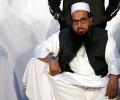
Sheikh Yousaf Afridi, a key Lashkar-e-Taiba figure and close associate of Hafiz Saeed, was shot dead by unidentified gunmen in Pakistan's Khyber Pakhtunkhwa, police said.
Sheikh Yousaf Afridi, a key Lashkar-e-Taiba figure and a close associate of Mumbai terror attack mastermind Hafiz Saeed, was shot dead by unidentified gunmen in Pakistan's Khyber Pakhtunkhwa, police said.
Pakistan's Punjab government has warned citizens against providing charity to banned organizations such as Jaish-e-Mohammad (JeM) and Lashkar-e-Taiba (LeT), stating that those who do so will face terrorism charges.

In a major counter-terror operation spanning three states, the Delhi Police has dismantled a Lashkar-e-Taiba (LeT) module comprising eight operatives, including seven Bangladeshi nationals who had illegally entered India and procured forged identity documents, an official said on Sunday.

Two important office bearers, Abu Shoib and Maulana Qari Abdul Hafeez, left the outfit with their supporters after negotiations with their hardline founder-leader Hafeez Mohammed Saeed failed.\n\n\n\n
Jamaat-ud-Dawa, a group linked to the Lashkar-e-Tayiba, poses a real threat to the United Kingdom, with its offices and camps in Pakistan providing a 'key portal' for young British Muslims seeking to join al-Qaeda. Though designated as a terrorist organisation by America in 2006, Jamaat-ud-Dawa remains a legitimate organisation in Pakistan, where it has hundreds of offices and numerous relief camps, a report in the Times of London said.
Banned terror organisation Jamaat-ud Dawa (JuD) has said that Pakistan Tehreek-i-Insaf chief Imran Khan has confirmed his presence at the January 29 Difa-e-Pakistan gathering.

Jamaat-ud-Dawa is under the scanner again. Banned afer being accused of having terror links following the Mumbai terror attacks, the outfit attacks has resurfaced at the centre of the aid effort to help hundreds of thousands of refugees fleeing Pakistan's war on the Taliban.

Pakistan plans to ban 10 terror outfits, including 26/11 mastermind Hafiz Saeed-led Jamaat-ud-Dawa and the dreaded Afghan-based Haqqani Network, a move seen by experts as a "paradigm shift" in the country's security policy in the wake of Peshawar school massacre.
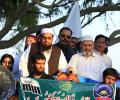
The recent sanctions imposed by the US on Lashkar front organisation Jamaat-ud-Dawa completely expose Pakistan that has consistently maintained that JuD is a charity organisation. The ban will also limit the donations to JuD, a major chunk of which is pumped into terror funds. Vicky Nanjappa reports.
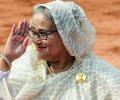
Some leaders of the banned Jamaat-ud-Dawa (JuD) of Mumbai terror attack mastermind Hafiz Saeed have claimed that their outfit played a role in last year's mass anti-government protests in Bangladesh that led to the ouster of prime minister Sheikh Hasina.
The United Nations Security Council has placed sanctions on Pakistan-based Jamaat-ud-Dawa, the front organisation of banned Lashkar-e-Tayiba, declaring it a terrorist organisation.Four top leaders of LeT including Hafiz Muhammad Saeed, Zaki-ur-Rehman Lakhvi, Haji Muhammad Ashraf and Zaki-ur-Bahaziq have also been declared as terrorists by the UNSC.Imposing the sanctions, the Council asked all member states to freeze their assets and impose travel ban and arms embargo.
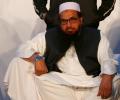
India has also taken note of reports of Saeed's son Talha contesting elections in Pakistan and said the "mainstreaming" of radical terror outfits in the neighbouring country is nothing new and that it has been part of its State policy for a long time.
'I believe that the grounds for my listing are based on heresy and disinformation by the Indian government'
Earlier in five such cases, the 70-year-old radical cleric had already been convicted for 36 years imprisonment.

As per the charges, these proscribed outfits were operating under the guise of charities and were involved in funnelling funds to terror suspects.
Once highly secretive, Pakistani hardline militant groups like Jamat-ud-Dawa and the pro Al Qaeda Sipah-e-Sahaba are plugging into western social networking sites like Facebook to expand their reach.
India on Thursday rubbished Pakistan's contention that it was not provided sufficient evidence about involvement of Jamaat-ud Dawa chief Hafiz Saeed in Mumbai attacks, even as it is seeking details about Islamabad's claim about banning outfits like JuD and Jaish-e-Mohammad.
A former Pakistani Colonel considered close to Jamaat-ud-Dawa leader Hafiz Mohammad Saeed has been put under house arrest in Rawalpindi as part of the crackdown on the group, which was declared a terrorist outfit by the United Nations, even as most of its activists in the garrison city and nearby areas remained untraceable.Police in Rawalpindi have confined top Jamaat-ud-Dawa leader Colonel Retired Nazir Ahmed to his residence in Chaklala for three months.
Casting doubts on Pakistan's "crackdown" on activists of Jamaat-Ud-Dawa (JuD) - a political arm of Lashkar-e-Taiba, Ansar Burney, a former Pakistani minister, on Thursday asked why "arrested" terrorists have not been produced in court.
The house arrest is said to be for a month.
The US has sought their immediate extradition.
The US said the removal of the ban on the Jamaat-ud-Dawa and Falah-i-Insaniyat Foundation would jeopardise Pakistan's ability to meet its commitments to fight terrorism.
The Jamaat-ud-Dawa, parent unit of the Lashkar-e-Tayiba, organised an anti-India meeting a stone's throw away from a reception hosted for Indian cricketers by Punjab province CM.

The agency's case is based on a National Investigation Agency complaint filed against the accused and Pakistan-based organisation Falah-i-Insaniyat Foundation.

An anti-terrorism court in Pakistan on Wednesday indicted Mumbai terror attack mastermind Hafiz Saeed on terror financing charges and is now being detained at the Kot Lakhpat jail.

Syed Firdaus Ashraf/Rediff.com presents the names of 10 global terrorists who, according to United Nations Security Council, are operating against India from Pakistan.
Saeed and the four men added to the fourth schedule of the ATA were also placed under house arrest on January 30 in Lahore amid an angry uproar from his party and political allies.
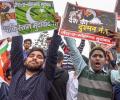
A statement issued by the Interior Ministry also said the crackdown on Jaish 'has been taken in line with the decision of the NSC meeting'.
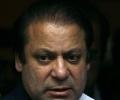
Behind Nawaz Sharif's 'peace with India' stance remain unanswered questions about his role in the Kargil conflict and his family's links with the Jamaat-ud-Dawa and Jaish-e-Muhammad, says Ajai Shukla

Aveek Sen on how the Lashkar e Tayiba looks at the world while focusing on India and Afghanistan.
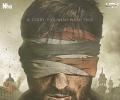
Hafiz Saeed's counsel said the "controversial" movie contains "malicious and filthy" propaganda against the Jamaat-ud-Dawa in general and Hafiz Saeed in particular.
Jamaat-ud-Dawa chief Hafiz Saeed may be the key conspirator of the Mumbai terror attacks, but Home Minister Sushilkumar Shinde referred to him in Parliament using honorifics like 'Mr' and 'Shri'.
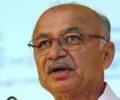
Calling Pakistan's bluff, India on Monday said Jamaat-ud-Dawa chief Hafiz Saeed had never been arrested in connection with Mumbai terror attacks even though its Interior Minister Rehman Malik claimed so.
He was the mastermind of the deadly 26/11 terror strike and the United States administration has already declared a bounty of $10 million for him.But the Pakistan government has, time and again, expressed its reluctance to prosecute Jamaat-ud-Dawa chief and Lashkar-e-Tayiba founder Hafiz Saeed.
Pakistan-based Jamaat-ud-Dawa has realised that mobile Internet is the future and that by foraying into it they would have a larger reach. Vicky Nanjappa reports why Indian agencies are visibly upset by the development
The government has information that terror groups have been investing money in Indian stock markets, Home Minister Sushil Kumar Shinde said on Friday.
At a media briefing, ministry of external affairs spokesperson Arindam Bagchi asked Pakistan to focus on setting its own house in order in containing terror networks and said that the international community is well aware of that country's credentials when it comes to terrorism.
Jamat-ud-Dawa chief Hafiz Muhammad Saeed, who has a United States bounty of 10 million dollars on his head, has said those enjoying government perks in Pakistan are not only violating the Constitution, but also principles outlined in Islam. Saeed, who founded the Lashkar-e-Tayiba, filed a petition before the Lahore high court challenging the 'VIP culture' for officials enjoying the top-most government posts in the country.
"As you all well know, Saeed is believed to be behind organising the 2008 Mumbai terrorist attack in which 166 people were killed, including six Americans. That is why he is actually now the subject of a Rewards for Justice programme," State Department spokesman Mark Toner told reporters.
 © 2026 Rediff.com - Advertise with us - Disclaimer - Privacy Policy - Sitemap - Feedback - About us - Terms of use - Grievances