
In its chargesheet, the NIA has alleged that Jundal during 2011 and 2012 had made "deliberate attempts for recruiting different persons through internet for joining Lashker-e-Tayiba terror organisation and carry out terror activities in India."
Alleged Laskkar-e-Tayiba operative Sayed Zabiuddin Ansari, alias Abu Jundal, wanted to take part in the 2008 Mumbai terror attack by landing in the city along with others, according to his confession.

Sayed Zabiuddin Ansari alias Abu Jundal, a 26/11 mastermind and prime accused in a conspiracy case of attack on Maharashtra Police Academy in Nashik, has complained to a local court that he was tortured with electric shocks by police, a charge denied by the prosecution.
A local court has granted permission to start trial against alleged LeT operative and Mumbai terror attack accused Sayed Zabiuddin Ansari alias Abu Jundal's in a special district and sessions court in the case of conspiracy to attack Maharashtra Police Academy
The Anti-Terrorism Squad of the Maharashtra police on Wednesday told the special Maharashtra Control of Organised Crime Act court in Mumbai that the Lashkar-e-Tayiba operative and a key 26/11 handler Sayed Zabiuddin Ansari alias Abu Jundal was involved in terror activities since as far back as 1996.
"Forensic experts would be called soon to conduct Jundal's voice measurement through audio spectrometer. Besides his interrogation, his voice sample collection is one of our top priorities during the custody period," a Crime Branch official said.
A local court is likely to frame charges against lashkar-e-Tayiba operative and key 26/11 handler Sayed Zabiuddin Ansari alias Abu Jundal next month in the 2006 Aurangabad arms haul case.
In a crucial evidence in Mumbai26/11 terror attack case, the voice samples of arrested Lashkar-e-Tayiba operative Sayed Zabiuddin Ansari alias Abu Jundal have matched with ones on the terror tapes intercepted during the strike.
Sayed Zabiuddin alias Abu Jundal, a prize catch in 26/11 terror case, picked up his first lessons in terrorism when Lashker-e-Tayiba terrorist Mohammed Aslam alias Aslam Kashmiri arranged for his arms training in Nepal in 2004.
Lashkar-e-Tayiba operative and a key 26/11 Mumbai attack handler Sayed Zabiuddin Ansari alias Abu Jundal sent money to India at least twice after the Mumbai attack, the chargehseet filed against him in another case in Mumbai says.
"With the arrest of terrorist handler Sayed Zabiuddin (alias Abu Jundal) ... on June 21, India has made a tremendous breakthrough in the investigations of the November 2008 Mumbai terrorist attacks that killed 166 people, including six American citizens," said Lisa Curtis of Heritage Foundation.
A Mumbai court on Monday issued a production warrant against suspected Laskhar-e-Tayiba terrorist Sayed Zabiuddin alias Abu Jindal, who was arrested in Delhi for his alleged complicity in the 26/11 terror attack. The warrant was issued by Additional Chief Metropolitan Magistrate P S Rathod, on an application by Special Public Prosecutor Ujjwal Nikam and 26/11 case Investigating Officer Ramesh Mahale.
The Anti-Terrorism Squad of the Maharashtra police on Saturday filed a supplementary chargesheet against alleged Lashkar-e-Tayiba operative and 26/11 Mumbai attack handler Sayed Zabiuddin Ansari, alias Abu Jundal, in connection with the 2006 Aurangabad arms haul case. "We have filed a 3,650-page chargesheet against Jundal, and named him as an key accused," said an ATS official.
A special court in Mumbai on Friday extended the police custody of the Lashkar-e-Tayiba operative and key 26/11 handler Sayed Zabiuddin Ansari alias Abu Jundal till September 3 in connection with the 2006 Aurangabad arms haul case.
The special Maharashtra Control of Organised Crime Act court on Tuesday remanded Lashlar-e-Tayiba operative and key 26/11 handler Sayed Zabiuddin Ansari alias Abu Jundal in Maharashtra Anti-Terrorism Squad custody till August 24 in connection with the 2006 Aurangabad arms haul case.
A Metropolitan court on Monday granted custody of Lashkar-e-Tayiba operative and key 26/11 handler Sayed Zabiuddin Ansari alias Abu Jundal to Maharashtra Anti Terrorism Squad in connection with the 2006 Aurangabad arms haul case.
Abu Jundal, one of the handlers of the 26/11 terrorists, on Friday expressed his desire before a metropolitan court to confess his complicity in the brazen attacks, a day after he was confronted with Ajmal Kasab, the lone surviving assassin in the case.
Amid reports that Saudi Arabia deported Abu Jundal after being convinced of his identity through a DNA test, the 26/11 Mumbai attack handler's mother on Thursday claimed their samples were never collected.
A round-the-clock three-tier security ring has been thrown around the special cell office of the Delhi police where the prize catch in 26/11, Sayed Zabiuddin alias Abu Jundal of the Lashker-e-Tayiba, has been kept.
Sayed Zabiuddin alias Abu Jundal's first brush with the law came at the age of 22 when he was arrested in Maharashtra in 2003 for allegedly stabbing a woman with whom his family had a marital dispute. Zabiuddin, the arrested key handler of 26/11, had attacked Fateema Sheikh Jaleel with a sword and also attempted to burn her, according to Maharashtra police sources.
In the arms case, a Maharashtra ATS team had chased a Tata Sumo and an Indica car on the Chandwad-Manmad Highway on May 8, 2006, and arrested three terror suspects while seizing a huge cache of 30 kg RDX, 10 AK-47s and 3,200 bullets from the vehicle and along the road. The Indica, which was allegedly driven by Jundal, who hails from Beed district, however, could not be intercepted at that time, according to ATS.
Pakistan had exerted immense pressure on Saudi Arabia not to hand over Lashkar-e-Tayiba terrorist Abu Jundal to India at any cost as he was too prize a catch and an insider of the terror outfit who could expose the role of so-called 'state actors' in 26/11 attack.
"The person who goes by the pseudonym of Abu Jundal has been apprehended and has been remanded to the custody of law enforcement agencies", he told media persons in New Delhi.

Trial against suspected top Lashkar-e-Tayiba terrorist Abu Jundal, an alleged mastermind of the 26/11 Mumbai attacks, should be conducted through video conferencing as he faces threat to his life, NIA told a Delhi court on Friday.
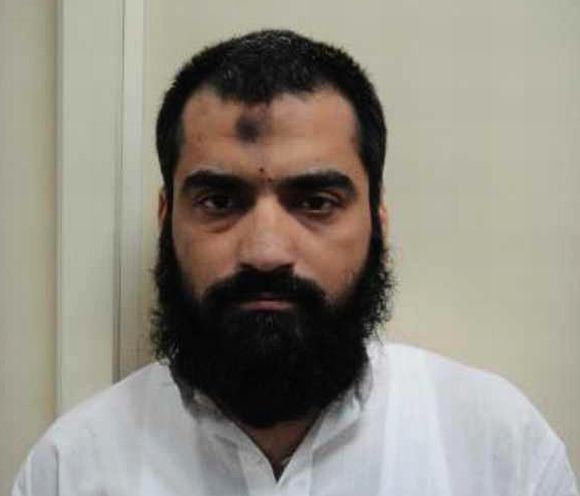
The 26/11 handler has demanded to be shifted from 'anda' cell to a normal prison.

Noted laywer Ujjwal Nikam had asked the court that Headley should be tried along with Abu Jundal.

Pakistan has said that fugitive underworld don Dawood Ibrahim is not present in the country, a day after India asserted that its most wanted terrorist was living in the neighbouring country.

India's most wanted terrorist Dawood Ibrahim is in Pakistan and joint efforts with the United States were being made to nab him, Union Home Minister Sushilkumar Shinde said on Friday.
Key 26/11 plotter Sayed Zabiuddin Ansari alias Abu Jundal's lawyer on Monday informed a Mumbai court that he wanted to cross-examine Pakistani-American terrorist David Coleman Headley for four days.

The court accepted prosecution's case that the aim of the convicted accused was to create terror in the minds of people and to eliminate public leaders like then Gujarat Chief Minister Narendra Modi and Hindu leader Pravin Togadia.

As he basks in glory after a string of arrests of several wanted terrorists during his tenure, Home Minister Sushilkumar Shinde said underworld don and India's most wanted fugitive Dawood Ibrahim will be also brought back to India to face justice.

A Mumbai court trying the case of Lashkar-e-Taiba operative and 26/11 key handler Sayed Zabiuddin Ansari alias Abu Jundal, on issued non-bailable warrant against 12 more accused in the Mumbai terror attacks case.
Five other convicts were also granted varying jail terms by a special MCOCA court.

Proceedings related to terror masterminds Yasin Bhatkal and Abdul Karim Tunda in 2013 hogged the limelight in Delhi courts, which brought down the curtains in the Batla House encounter case by giving life term to a suspected terrorist of the Indian Mujahideen module.

The Lashkar-e-Tayiba operative also revealed about his training while he deposed in front of a Mumbai court via video link.

Lashkar-e-Tayiba and the Al Qaeda were convinced that 26/11 attack masterminds Hafiz Saeed and Zakiur Rehman would face only "superficial" action from the Pakistani authorities and within months plans were afoot for another terror strike in India, Pakistani-American terrorist David Coleman Headley said on Saturday.

A Mumbai court on Thursday pardoned Pakistani-American Lashkar-e-Tayiba operative David Headley, who had surveyed targets for the 26/11 attacks, and made him an approver in the case, a move that may unravel the conspiracy behind the brazen terror assault.
 © 2026 Rediff.com - Advertise with us - Disclaimer - Privacy Policy - Sitemap - Feedback - About us - Terms of use - Grievances