
India's fertiliser subsidy bill for the current financial year (FY27) is projected to increase by approximately 20% due to surging global prices, primarily driven by the West Asia crisis, a senior official confirmed. Despite this, retail prices for urea and di-ammonium phosphate (DAP) will remain unchanged, ensuring adequate supply for the kharif season.

India is likely to witness a mixed temperature pattern along with wetter-than-usual conditions in May, with the India Meteorological Department (IMD) indicating that rainfall across the country is "most likely to be above normal" at over 110 per cent of the long period average (LPA).

Dabur India's stock has fallen over 17 per cent since the start of the Iran war, driven by concerns over a weak monsoon, the West Asian crisis, and rising input costs, which are expected to impact the company's revenues and margins, particularly affecting its significant rural sales and international markets.

A poor monsoon could drag overall economic growth and compound the impact of the West Asia conflict on the Indian economy.
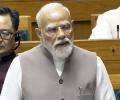
Modi said that the West Asia crisis has been going on now for more than three weeks and is having a very adverse impact on the global economy and on people's lives. He said the entire world is urging all parties for the earliest resolution of this crisis.

Prime Minister Narendra Modi convened the Cabinet Committee on Security to address the impact of the West Asia conflict on Indian citizens, focusing on safeguarding them from the conflict's effects and ensuring the smooth flow of essential supplies.

India addresses the escalating conflict in West Asia, outlining its diplomatic efforts to ensure energy security, the safety of its citizens, and advocating for a peaceful resolution through dialogue.

Finance Minister Nirmala Sitharaman announces increased domestic LPG production to offset import disruptions caused by Middle East tensions, alongside assurances of fertiliser availability and the clearing of UPA-era oil bonds.
Prime Minister Narendra Modi addressed Parliament on the West Asia crisis, advocating for dialogue and diplomacy, ensuring the safety of Indians in the region, and addressing concerns about fuel and food security.

Egypt, Pakistan, Saudi Arabia and Turkey met in Islamabad in what analysts say is the formal opening of a new diplomatic formation that could reshape the post-war regional order. Their immediate goal is a ceasefire; their larger ambition is to ensure that neither Iran nor Israel emerges from this war in a dominant position. Pakistan's foreign minister then flew directly to Beijing and mooted a Chinese role as guarantor of any eventual agreement. Prem Panicker continues his must read daily blog on the Gulf War.

The United States, which entered this war in expectation of a short, sharp win along the Venezuela model, is now preparing for deeper involvement in a conflict it does not fully control, without the allies it typically relies on, against an adversary that is not behaving as expected, in a global environment that is already absorbing economic shock. Prem Panicker continues his must read daily blog on the Gulf War.

Haryana Chief Minister Nayab Singh Saini has refuted claims by the opposition regarding the cancellation of old-age pensions, calling them baseless and politically motivated. He assured that the government is verifying discrepancies to ensure only eligible beneficiaries receive pensions and highlighted the increase in pension amounts and the number of beneficiaries under the current regime.

Releasing the first advanced estimate, Union Agriculture Minister Shivraj Singh Chouhan said that though excessive rainfall affected crops in some areas of the country, most parts have benefited significantly from a good monsoon, leading to overall good crop growth.

India, the world's fourth largest economy, is set to maintain the 'goldilocks' phase with tailwinds of good growth, low inflation and robust banking performance as well as reform initiatives poised to sustain the economic pace witnessed during 2025.

Overall profitability in the agriculture sector is expected to be marginally higher at the pan-India level in the 2024-25 kharif season, driven largely by higher production and low input cost, but offset by the declining price of some produce, according to a report released by Motilal Oswal Financial Services Ltd on Wednesday. The report said that region-wise farm profitability in the northern belt was expected to be relatively better than in the southern belt, while the eastern and western belts presented a mixed bag.

'Previously, contributing only 25 per cent of material costs, states now face burdens of 40 per cent to 100 per cent of total costs, ensuring poorer states will curb project approvals, directly stifling work demand.'

Rajasthan (73 per cent), Himachal Pradesh (67) and Delhi (60) saw the highest share of districts reporting excess to large excess rainfall.

Retail inflation in August rose slightly to 2.07 per cent from 1.61 per cent in the preceding month, mainly due to increase in prices of vegetables, meat and fish, according to a government data released on Friday.

Persisting uncertainties related to the US trade policies pose downside risk to the overall demand in the Indian economy while the inflation outlook for the near term has become more benign than anticipated earlier, RBI said in its latest bulletin on Thursday. In the August bulletin, the Reserve Bank of India (RBI) also said that India's sovereign rating upgrade by S&P bodes well for capital inflows and sovereign yields, going forward.

IMD data shows in the 24 hours between September 1 and 2, Haryana received 806 per cent more rainfall than normal, Punjab 759 per cent, Himachal Pradesh 510 per cent, Delhi 740 per cent, Chandigarh a staggering 1,638 per cent, and Rajasthan 193 per cent.

Wholesale price inflation (WPI) softened to 0.13 per cent in September on easing in prices of food articles and manufactured items, government data showed on Tuesday. WPI-based inflation was 0.52 per cent in August and 1.91 per cent in September last year.
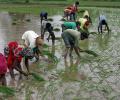
Paddy sowing so far this Kharif season is higher by 13 per cent at 4.53 lakh hectares, according to the government data. Sowing of paddy stood at 4 lakh hectares in the same period last year.
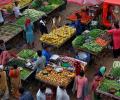
Retail inflation slipped to 1.54 per cent in September from 2.07 per cent in the preceding month mainly due to subdued prices of food items, including vegetables and pulses, according to government data released on Monday. The consumer price index (CPI) based inflation was 5.49 per cent in September 2024.

Passenger vehicle retail sales shot up 35 per cent year-on-year during the nine-day Navratri period this year, helping the overall registrations last month grow 6 per cent, as offtakes remained muted in the first 21 days of the month and only took off after the roll-out of new GST rates on September 22, dealer' body FADA said on Tuesday.
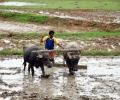
Any long dry spell could cause moisture stress in the standing crop during the crucial maturing stage and also make it prone to pest and disease attacks.

Prospects of a bumper kharif harvest are expected to lower food inflation in the coming months, making the country's inflation outlook benign, the Union Ministry of Finance (FinMin) said in its monthly economic report for October released on Monday.
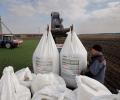
'China reduced its exports of urea to India gradually.' 'In 2020-2021 we imported 28 lakh tonnes of urea which reduced to 16 lakh tonnes in 2022-2023 and that has now reduced to 1 lakh tonnes in 2024-2025.'
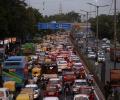
Truck rentals saw a positive momentum across most key trunk routes due to an increased pre-kharif agricultural activity and a resilient manufacturing sector. The Kolkata-Guwahati-Kolkata corridor witnessed a month-on-month (M-o-M) rise of 2.4 per cent, while the Mumbai-Chennai-Mumbai route grew by 1.9 per cent and the Delhi-Hyderabad-Delhi route saw a 1.6 per cent increase in truck rentals, said June edition of the Shriram Mobility Bulletin.

Pakistan may face a significant water shortage during the Kharif season due to reduced water supplies from India.
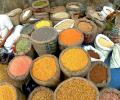
The Centre recently released the first advance estimates of kharif crops that, barring tur dal, showed a dip in production due to uneven monsoon and other natural calamities including pest attacks in cotton. The first Advance Estimates, released a few weeks back, are usually initial projections on the crop size and, more often than not, are revised as more inputs come from the fields. But, the findings have rung alarm bells in several quarters. The Centre, along with many others, is confident that as more details come, the estimates will be revised upwards.

'Marathwada is the suicide capital of Maharashtra.' 'To stop such man-made disasters, the government should immediately come up with a rightful package, not this charitable approach to compensation.'
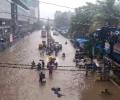
Heavy rains in Maharashtra have caused floods, road blockages, and widespread damage, resulting in casualties and displacement. The state government is monitoring the situation and coordinating rescue efforts.

'The EC should not have let the initiative go into the hands of the political leadership. By allowing this to happen, they have opened a Pandora's box.'

Automobile retail sales in India rose around 5 per cent year-on-year in June with all vehicle segments, including passenger vehicles and two-wheelers, witnessing growth, Federation of Automotive Dealers Associations (FADA) said on Monday.
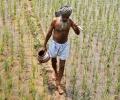
A prolonged break in monsoon rains in most parts of the country is threatening to hit the yield of kharif crops. It could even delay the upcoming rabi sowing. Major agricultural states, such as Maharashtra, Madhya Pradesh, Andhra Pradesh, Punjab, and Gujarat, have witnessed a deficit of 30-80 per cent in southwest monsoon rainfall in August compared to the long-period average for the month. Meteorologists see no big revival in monsoon rains from hereon, though they forecast "some activity" over the Bay of Bengal on September 5-6.

The Indian government has assured citizens that the country has ample food stocks to meet domestic demand, despite escalating tensions with Pakistan. The government has also warned traders against hoarding essential food items and creating artificial shortages, emphasizing that there is no need for panic buying. The food ministry detailed the country's current stock levels, showcasing a surplus over required buffer norms for rice, wheat, and pulses. Additionally, India holds substantial edible oil and sugar stocks, ensuring a strong food security position.
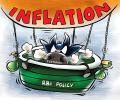
The Reserve Bank on Wednesday lowered the inflation projection for the current fiscal to 4 per cent from 4.2 per cent earlier, taking into account good agricultural output and falling crude prices.

The Indian economy could remain less affected by global trade wars than other countries because the two engines of domestic growth - consumption and investment - are likely to face a limited impact from such headwinds, according to an article on the 'State of the Economy' in the Reserve Bank of India's (RBI's) bulletin, released on Tuesday.

The Gross Value Added (GVA) in agriculture and allied activities is projected to clock its best growth in FY23 during the October-to-December quarter, at 3.7 per cent, on the back of a strong kharif harvest, according to the second advance estimates of national income. In the third quarter of FY22, GVA in the sector was 2.3 per cent at constant prices. At current prices, the growth in the third quarter of this financial year is projected at 8.6 per cent, which is almost at the same level in the corresponding quarter of FY22.

Amid low growth elsewhere, gross value added (GVA) growth in agriculture and allied activities recovered during the second quarter of the current financial year (Q2FY25) to 3.5 per cent year-on-year (Y-o-Y) due to strong monsoon. Experts feel that the rains have laid the foundation of an even better GVA performance in subsequent quarters. GVA growth in the first quarter of FY25 was 2.0 per cent.
 © 2026 Rediff.com - Advertise with us - Disclaimer - Privacy Policy - Sitemap - Feedback - About us - Terms of use - Grievances