
Lieutenant Governor Manoj Sinha asserts that the Indus Waters Treaty was a 'historic mistake' and its termination will greatly benefit Jammu and Kashmir by allowing it to harness its hydropower potential.
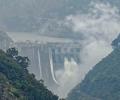
Pakistan has written to India seeking information about the Svalkot hydroelectric project on the River Chenab, according to the Foreign Office spokesperson.

A Pakistani senator has warned that India's approval of a hydel power project on the Chenab River will further inflame tensions between the two countries, particularly in light of the suspended Indus Waters Treaty.

Pakistan has voiced concerns over the alleged variations in the flow of the Chenab River and has written a letter to India seeking clarification. They also commented on an incident in Bihar involving the removal of a Muslim woman's veil.

Prime Minister Narendra Modi interacted with students on a cruise ship on the Brahmaputra River during a 'Pariksha Pe Charcha' programme on the second day of his Assam visit.

Pakistan's former foreign minister Bilawal Bhutto-Zardari on Monday said his country will go to war if India denies Islamabad its fair share of water under the Indus Waters Treaty (IWT).

Shehbaz emphasised that water was a lifeline for Pakistan, and no compromise would be made on the country's rights under international agreements, as per Geo News.
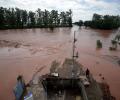
Pakistan has urged India to fully adhere to the Indus Water Treaty (IWT), expressing concerns about the level of detail in flood information shared through diplomatic channels.

Pakistan has reiterated its desire for normal neighbourly relations with India, while also criticizing India's decision to put the Indus Waters Treaty in abeyance. The Foreign Office spokesperson emphasized Pakistan's commitment to diplomacy and regional cooperation.
Experts discuss the Indus Waters Treaty, highlighting its engineering aspects and addressing criticisms of unfairness to India.

'The fight against terrorism will continue. We have set a new normal and the new normal is that we will follow an offensive strategy. Wherever terrorists are, we have to kill those terrorists and we have to destroy their infrastructure. So it is still not over but as we speak the ceasefire is still intact'

AIMIM chief Asaduddin Owaisi slammed Pakistani politician Bilawal Bhutto-Zardari for his "blood would flow in rivers" remark and called former cricketer Shahid Afridi a "joker" for his comment on the Pahalgam terror attack. Owaisi also supported India's decision to suspend the Indus Waters Treaty and called for Pakistan to be placed on the FATF grey list. He also advocated for cyber attacks against Pakistan.

External affairs ministry spokesperson Randhir Jaiswal said India will keep the IWT in abeyance until Pakistan "credibly and irrevocably" abjures its support for cross-border terrorism.

Bhutto, who served as the Foreign Minister earlier, addressed a briefing at the UN Headquarters in New York and sought reconciliation with India, making a plea for talks and Intel sharing between the two neighbours.

Pakistan's Deputy Prime Minister and Foreign Minister Ishaq Dar has warned India of a strong response, saying Pakistan will respond to a "brick with a stone" if India takes any action against Pakistan, amid heightened tensions following the April 22 terror attack in Jammu and Kashmir's Pahalgam. Dar alleged that India might have staged the Pahalgam attack to abolish the Indus Waters Treaty (IWT) and warned that any attempt by India to interfere with the treaty would be considered an act of war. He also said that Pakistan had no involvement in the Pahalgam incident and is getting support from countries like Saudi Arabia, China, the United Arab Emirates, the United Kingdom, Kuwait, Bahrain, and Hungary.

'India's letter to Pakistan on April 24 (2025; two days after the Pahalgam terrorist attack) didn't tear up the treaty -- but it did put it on ice.'

Another official said that India is planning to enhance its current hydropower capacity of around 3000 megawatts on the rivers that were earlier being used by Pakistan and a feasibility study in this regard is planned, the official said

China hopes both sides will remain restrained, move toward each other, and work together to de-escalate the situation.

He clarified that though China has not announced any such move, but even if it happens, it would in fact help mitigate the annual Assam floods.
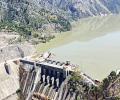
Pakistan has halted the construction of contentious canals in Punjab province after India suspended the Indus Waters Treaty following a deadly terrorist attack in Kashmir. The decision to suspend the canals project was made after Prime Minister Shehbaz Sharif met with PPP chairman Bilawal Bhutto-Zardari and agreed to address the concerns of Sindh province, where the project had sparked protests. The canals project, aimed at irrigating the desert region in Punjab, was seen as a threat to water resources in Sindh. Both sides have agreed to seek consensus on the issue in the Council of Common Interests (CCI), a high-powered inter-provincial body. Meanwhile, Pakistan has reiterated the importance of the Indus Water Treaty for its water security and economy, and condemned India's move to suspend it.
Weeks after India placed the 1960 Indus Waters Treaty (IWT) in abeyance following the April 22 Pahalgam terror attack, Pakistan has signalled its willingness to discuss New Delhi's long-standing concerns about the treaty, sources said.

It was said that Sharif wanted the PML-N-led coalition government to utilise all available diplomatic resources to restore peace between the two nuclear-armed states, saying he was not keen on taking an aggressive position, The Express Tribune reported.

The Indian Army has released a booklet on Operation Sindoor, which was launched to avenge the April 22 ghastly Pahalgam attack in which Pakistan-backed terrorists brutally killed 26 civilians, mostly tourists, and left many injured.

China on Tuesday called for a 'comprehensive and lasting ceasefire' between India and Pakistan, urging both countries to properly handle their differences through dialogue.

'China has thus far been cautious, emphasising its focus on development rather than weaponising water resources.'

India has served a formal notice to Pakistan seeking a review of the Indus Water Treaty, arguing that 'fundamental and unforeseen' changes in the circumstances require a reassessment of the pact.
The Indus system of rivers comprises the main river -- the Indus -- along with its five left bank tributaries, namely, the Ravi, the Beas, the Sutlej, the Jhelum and the Chenab. The right bank tributary, the Kabul, does not flow through India.

'Whatever we do, the purpose will be to re-establish deterrence.'
The sources said India has always been a steadfast supporter and a responsible partner in implementing the IWT in letter and spirit.

The statement of the Minister of State in the Prime Minister's office comes on the heels of India issuing a notice to Pakistan seeking a review and modification of the IWT in view of Islamabad's "intransigence" in complying with the dispute redressal mechanism of the pact that was inked over six decades ago for sharing of waters of cross-border rivers.

The accident occurred when the private boat 'Ma Kamala' was headed to Majuli from Nimati Ghat and the government-owned ferry 'Tripkai' was coming from the riverine island.
"I do not think they (World Bank) are in a position to interpret the treaty for us. It is a treaty between our two countries and our assessment of the treaty is that there is a provision of graded approach," External Affairs Ministry Spokesperson Arindam Bagchi said.

Both the countries agreed to undertake the Treaty mandated tours of both the Indus Commissioners in the Indus basin on both sides, the ministry said in a statement in New Delhi.

Water Resources Minister Saifuddin Soz emphasised that river Jhelum, on which the project is proposed to be built, is a 'symbol of our civilisation' and cannot lose the right of navigation on it.

One person was confirmed dead after a private boat heading to Majuli sank on Wednesday evening, following a head-on collision with a government-owned ferry near Nimati Ghat in Jorhat district.

He, however, said sometimes such people spread wrong news or information about China on purpose.

Pakistan criticised the laying of foundation stones for the construction of the Rattle and Kwar Hydroelectric Projects on the Chenab River in Kashmir.
In a first since the signing of the Indus Water Treaty between the two countries, three female officers will also be part of the Indian delegation, which will be advising the Indian Commissioner on various issues during the meeting, the official said.

Pakistan has raised objections to the design of India's Kiru hydroelectric plant, a mega 624 MW project over the Chenab river in Jammu and Kashmir, but New Delhi asserts that the project is fully compliant with the Indus Water Treaty, according to officials.

The CM said that initial probe indicated "mismanagement" to be the prime reason for the accident, which occurred on Wednesday evening.
 © 2026 Rediff.com - Advertise with us - Disclaimer - Privacy Policy - Sitemap - Feedback - About us - Terms of use - Grievances