
The planet experienced its warmest January on record last month despite the development of La Nia, a climate pattern that usually brings cooler global temperatures, the European climate agency said on Thursday. This comes on the heels of the Earth experiencing its hottest year on record in 2024, also the first to see global average temperatures rise 1.5 degrees Celsius above pre-industrial levels. According to the Copernicus Climate Change Service (C3S), January 2025 recorded an average temperature of 13.23 degrees Celsius, 0.09 degrees warmer than the previous hottest January (2024) and 0.79 degrees above the 1991-2020 average. Scientists also found that the Earth's temperature in January was 1.75 degrees Celsius higher than pre-industrial levels. Global temperatures have stayed above the 1.5-degree mark for 18 of the last 19 months.

The annual mean temperature in 2024 was 25.75 degrees Celsius, 0.65 degrees above the long-period average.

Spurred by cyclone Remal, the southwest monsoon set in over the Kerala coast and parts of the northeast on Thursday, a day earlier than forecast by the weather office.

The IMD said that rainfall over India in August and September would be around 106 percent of the long-period average of 422.8 mm.

India is likely to see above-normal maximum and minimum temperatures in most parts of the country in the March to May period, IMD director general Mrutyunjay Mohapatra said at a press conference.

June rainfall accounts for 15 percent of the total precipitation of 87 cm recorded during the four-month monsoon season in the country.

On May 15, the weather office had announced the onset of monsoon over Kerala by May 31.

"This year, the Southwest Monsoon is likely to set over Kerala on May 31 with a model error of four days," the India meteorological department said on Wednesday.

India is likely to see above-normal rainfall in the four-month monsoon season (June to September) with cumulative rainfall rainfall estimated at 106 percent of the long-period average (87 cm), he said.

India has received 20 per cent less rainfall since the start of the monsoon period on June 1, with the rain-bearing system making no significant progress between June 12 and 18, according to the India Meteorological Department (IMD).

Ten to 20 days of heatwave are expected against the normal of four to eight days in the entire April-June period.
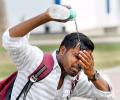
Heatwave conditions have been prevailing in Odisha since April 15 and the Gangetic West Bengal since April 17, according to the MeT department.

Lakhs of voters will have to bear the searing heat when they step out to exercise their franchise in the second phase of the Lok Sabha elections on Friday.

India is set to experience extreme heat during the April to June period, with the central and western peninsular parts expected to face the worst impact, the IMD said on Monday as the country prepares for seven-phase general elections from April 19.
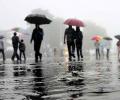
India will receive normal monsoon this season, country's meteorological department said on Wednesday in its forecast for the Southwest monsoon that covers 75 per cent of the country, and thereby may bring much-needed respite to the economy, which is reeling under the catastrophic effect of the Covid-19 pandemic.

G P Sharma, President (Meteorology) of the Skymet Weather said the Long Period Average of the rainfall during June to September will be 103 per cent with an error margin of plus or minus 5 per cent.

India will be the most consequential partner for the US in the Indo-Pacific this century, US Defence Secretary Mark Esper said Tuesday ahead of the 2+2 ministerial dialogue between the two countries next week. Esper on Tuesday told a Washington audience that he and the Secretary of State Mike Pompeo would be travelling to New Delhi next week for the 2+2 ministerial with their respective Indian counterparts Defence Minister Rajnath Singh and External Affairs Minister S Jaishankar.

As the southwest monsoon continues to narrow its overall deficit, the India Meteorological Department (IMD) on Wednesday exuded confidence that the dreaded El Nino weather pattern was unlikely to affect monsoon rains this year.

Pompeo would leave for New Delhi on June 24.

Pacific islander dances to raise climate change awareness

Though the summer is expected to be hotter, global and domestic forecasts point to good rains.

'All El Ninos are not associated with the deficient monsoon.'
 © 2026 Rediff.com - Advertise with us - Disclaimer - Privacy Policy - Sitemap - Feedback - About us - Terms of use - Grievances