
If Rakesh Sharma represented the dreams of a nascent India looking outward, Shubhanshu Shukla embodies a confident India reaching for the controls.

The Indian Space Research Organisation (ISRO) is set to welcome the new year with the launch of its first X-Ray Polarimeter Satellite that would offer insights into celestial objects like black holes, onboard a Polar Satellite Launch Vehicle rocket on Monday.

The race for space has got real, and it is attracting funding like never before. In 2022 so far, funding to private players in the space sector has jumped a whopping 61.5 per cent - soaring to $108.52 million compared to $67.2 million in 2021. Propelling it is the government's decision to open up the space sector to private players and the work done by companies like Skyroot Aerospace, the Hyderabad-based start-up behind the launch of India's first privately developed rocket on November 18.

Chandrayaan-3's success is a must for India's space ambitions; we can't afford to lose out. And for realising our space dreams, the Indian private sector must be encouraged because if we lose this race, the moon, Mars, and mineral-rich asteroids will already be crowded before we reach there.


'There are girls out there who are gonna feel self accepting through this film because she's someone who just wants to live her own life. She's not a particularly selfish person, or reckless, but well thought.'
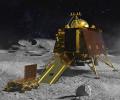
While participation of start-ups in the space sector has largely been minimal so far, their involvement will be key towards building India's very own aerospace companies such as Maxar, Elon Musk's SpaceX and Rocket Labs, according to experts.

Meet the new class of Forbes India 30 Under 30.

Was it best for J K Rowling to have ended the series with Harry Potter and the Deathly Gallows?
 © 2026 Rediff.com - Advertise with us - Disclaimer - Privacy Policy - Sitemap - Feedback - About us - Terms of use - Grievances